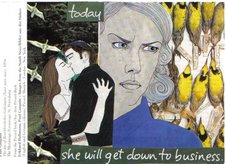
1. Have finished a great semester teaching courses that I love: fiction workshop, Modern Poetry, Native American Lit, Creative Writing Thesis class.
2. Subscribed to a new magazine of poetry: Rattle. I highly recommend it. Reasonable price, no ads, page after page of great poems.
3. Wrote a few poems myself.
4. Been reading a book about koans. Enlightening!
5. Been thinking a lot about my trip out West this summer. I want to go back.
6. Been thinking about my friend, Dawn, who just had surgery. Get well, Dawn.
7. Been thinking about friends and students, old and new.
8. Made Allen a very good stew!
9. Been enjoying the snowfall. We went out yesterday to eat and to get groceries. We picked up some five dollar movies and watched one of them in the wee hours of the morning, a movie based on a Fante novel: Ask the Dust.
10. Been sleeping late: always a treat. Drinking coffee with a spot of brandy. It's all good.
Showing posts with label movies. Show all posts
Showing posts with label movies. Show all posts
Sunday, December 20, 2009


Saturday, October 17, 2009
What I did today
1. Last night in bed watched a pretty good Hitchcock thriller called Jamaica Inn
2. Went out to eat with Allen today.
3. Cleaned and arranged the front room to be my art studio.
2. Went out to eat with Allen today.
3. Cleaned and arranged the front room to be my art studio.
Wednesday, October 14, 2009
A very good day
Had a very good day yesterday. I slept in--always a pleasure--and spent the afternoon thinking about and planning a letter to Lauren Carpenter. She was a student in many of my classes at BGSU and now has graduated.
Tomorrow the letter will be sent and it will give me so much pleasure,thinking of it making its way to her new apartment in Columbus, of her getting out of bed or coming home from work and finding it waiting for her in her mailbox.
As soon as she receives it and has a few days to take it in, I'll post it here and also at The Letter Project. I think what is in it might benefit others.
Lauren is fast becoming my muse!
Lauren has also mentioned that she'll be sending me a new letter soon. Since I started The Letter Project, my mailbox has been an exciting place again.
Watching the movie Bright Star, I was experiencing Fanny's excitement at receiving a letter in the mail. To hold an envelope in your hands with your name on it, to pause and wonder what is inside: it is better than Christmas, for we can offer this pleasure many times throughout the year, if only we would take the time.
It's so good to look forward to a real letter. As I once mentioned in a letter to my friend, Beth, letters are "fossils of feeling." This letter is at The Letter Project, too. Speaking of Beth, I wonder what has become of her? I think marital bliss has absorbed her or consumed her. I hope she's happy!
Yesterday, I also combed through my new story and made some changes. I made some decisions about how to proceed. I must teach tomorrow but then I have another long weekend to work on it. I don't know when I've been more happy about the way my writing is going. These stories just feel right. I am folding them into the material from the novel. I think it is--at last--the real story that I want to tell. What a confusing process it has been, finding my way into the river novel. So many times I've thought I had the answer, only to have the narrative bog down after 100 or so pages. I think I have found the power of the narrative now.
Tomorrow the letter will be sent and it will give me so much pleasure,thinking of it making its way to her new apartment in Columbus, of her getting out of bed or coming home from work and finding it waiting for her in her mailbox.
As soon as she receives it and has a few days to take it in, I'll post it here and also at The Letter Project. I think what is in it might benefit others.
Lauren is fast becoming my muse!
Lauren has also mentioned that she'll be sending me a new letter soon. Since I started The Letter Project, my mailbox has been an exciting place again.
Watching the movie Bright Star, I was experiencing Fanny's excitement at receiving a letter in the mail. To hold an envelope in your hands with your name on it, to pause and wonder what is inside: it is better than Christmas, for we can offer this pleasure many times throughout the year, if only we would take the time.
It's so good to look forward to a real letter. As I once mentioned in a letter to my friend, Beth, letters are "fossils of feeling." This letter is at The Letter Project, too. Speaking of Beth, I wonder what has become of her? I think marital bliss has absorbed her or consumed her. I hope she's happy!
Yesterday, I also combed through my new story and made some changes. I made some decisions about how to proceed. I must teach tomorrow but then I have another long weekend to work on it. I don't know when I've been more happy about the way my writing is going. These stories just feel right. I am folding them into the material from the novel. I think it is--at last--the real story that I want to tell. What a confusing process it has been, finding my way into the river novel. So many times I've thought I had the answer, only to have the narrative bog down after 100 or so pages. I think I have found the power of the narrative now.
Monday, October 12, 2009
What I did today
1. I slept late.
2. I had coffee with lots of cream.
3. I stepped outside this evening at about 5:30 and saw a large group of buzzards flying south. I've never before seen so many buzzards in the air; there must have been more a hundred. They were moving very slowly. Perhaps they are leaving us now, before the cold weather arrives.
4. I went out to Rudy's and had a Molson.
5. I looked at books at Books-a-Million and didn't buy anything.
6. I went with Allen to see Bright Star at Levis Commons. A triumph of a movie for Jane Campion.
2. I had coffee with lots of cream.
3. I stepped outside this evening at about 5:30 and saw a large group of buzzards flying south. I've never before seen so many buzzards in the air; there must have been more a hundred. They were moving very slowly. Perhaps they are leaving us now, before the cold weather arrives.
4. I went out to Rudy's and had a Molson.
5. I looked at books at Books-a-Million and didn't buy anything.
6. I went with Allen to see Bright Star at Levis Commons. A triumph of a movie for Jane Campion.
Sunday, May 17, 2009
Northfork
I watched the movie Northfork again today.
"And in that journey of dying, you see many things. But all of the issues I had are past, because I was to be a witness, a helper. And that is the thing I think is important about death, is the ability for us to be witnesses, not only for a person coming in, but of going out. And that is what we have here–we’ve lost our time, it’s gone. But maybe there is a birth someplace else. Maybe there is a blessing from that experience. I’m no longer afraid of death; but it’s a lesson that has taken me sixty years to learn." (Father Harlan, Northfork)
http://theresawilliams-author.blogspot.com/2006/04/northfork.html
"And in that journey of dying, you see many things. But all of the issues I had are past, because I was to be a witness, a helper. And that is the thing I think is important about death, is the ability for us to be witnesses, not only for a person coming in, but of going out. And that is what we have here–we’ve lost our time, it’s gone. But maybe there is a birth someplace else. Maybe there is a blessing from that experience. I’m no longer afraid of death; but it’s a lesson that has taken me sixty years to learn." (Father Harlan, Northfork)
http://theresawilliams-author.blogspot.com/2006/04/northfork.html
Tuesday, December 30, 2008
The Curious Case of Benjamin Button
Warning: Possible spoilers.
I watched The Curious Case of Benjamin Button yesterday afternoon. Afterwards, I went within myself, thought about the film, dreamed about it, and, when I woke up early this morning, thought on it some more. The more I thought about it, the more complicated my thoughts got. I wanted to write some thoughts down before I got to the point of giving up trying.
It's a very good movie. Brad Pitt, who is one of my favorite actors anyway, gives a beautiful performance. All the acting is first-rate. It is a fairytale for modern times, so it draws on rich archetypes and themes.
Having just taught a course on fairy tales and modern culture at the university, I couldn't help but notice a Beauty and the Beast theme in The Curious Case of Benjamin Button.
I thought a lot this morning about the baby boomers and how our films have followed our generation's maturation and development. We've had our Cinderella tales (Saturday Night Fever, Pretty Woman), our Little Red Riding Hood tales (Thelma and Louise, Company of Wolves, Michael Jackson's Thriller), and also our Beauty and the Beast tales, like The Elephant Man. We've considered various beasts, such as physical disfigurement, mental illness, AIDS, race, authority (Cuckoo's Nest, Cool Hand Luke). Even Disney's Beauty and the Beast looks slant at hyper-masculinity and fear of homosexuality. (The music for the animated feature was written by a gay man who later died of AIDS.)
The baby boomers have considered every aspect of growing up, but The Curious Case of Benjamin Button gives boomers a curious outlet for its fear of aging and death. In The Curious Case of Benjamin Button, Brad Pitt plays Benjamin, who represents the repellent beast of old age.
Benjamin, who is born old and becomes younger as the years go on, is seen as beastly by his own father, who abandons him. From a psychological point of view, we might say the father fears his own aging and death and therefore sees his son as "monstrous." Normal children see Benjamin as strange, too, as well as women in the brothel where Benjamin loses his virginity to one sympathetic prostitute.
Benjamin grows up in a sort of old folks home, where for the most part he fits right in and learns the lessons life's impermanence. He meets Daisy when, as a little child, she visits her grandmother who lives there. Daisy sees Benjamin's beauty like no other person can--even her grandmother views him as monstrous when she catches the two children baring their souls before a burning candle in a secret place under a table.
Old age is a beast, yet in The Curious Case of Benjamin Button, it is depicted as both idyllic and horrifying. In the old folks home where Benjamin grows up, there is no suffering, really, just mild indignities, usually experienced by the men (one aged man goes outside naked to raise the American flag; another man repeats again and again that he was stuck by lightening seven times). But for the most part, the old people are not in pain. The women die quietly, sometimes wearing pearls. Death is a visitor, not a horrible spectre.
Daisy's death as an old woman, though, is modern and terrible. She is in a hospital connected to tubes and her physical body is in agony. The film effectively taps into our worst nightmare. Her death happens just as Hurricane Katrina, itself a figure of death and devastation, makes landfall.
The Curious Case of Benjamin Button is based on a short story by F. Scott Fitzgerald. Fitzgerald's story begins in 1860. It is situated in the old Confederacy. However, the film begins on the day that WWI ends. This is the day that Benjamin is born. Thus he experiences the apex of his youth during the 1960s, an appropriate time setting for baby boomers.
I think that those of us who have followed Brad Pitt's career and who have loved him will feel a bit of sadness at seeing him aged. It gives you a jolt. We remember him best from Thelma and Louise, where he played a sexually charged Trickster figure. We also remember him as Achilles, the beautiful god with the fatally flawed heel who, mercifully, dies in his prime rather than suffering the debilitation of old age.
It's rather difficult to accept that Pitt is not immortal. And, furthermore, if he can age, so can we.
But The Curious Case of Benjamin Button shows us that reverse aging is no picnic, either. You still experience loss of loved ones, bodily functions, memory. You still die.
What the film says is that it is essentially how one lives that matters. Dance while you can; play the piano with your whole heart. If you aren't happy with the way your life is going, make it new: it is within your power to do that. That's not a new message, but the film finds a way to make fresh old truths. That is what art is for!
This is only a rough sketch of my ideas.
I watched The Curious Case of Benjamin Button yesterday afternoon. Afterwards, I went within myself, thought about the film, dreamed about it, and, when I woke up early this morning, thought on it some more. The more I thought about it, the more complicated my thoughts got. I wanted to write some thoughts down before I got to the point of giving up trying.
It's a very good movie. Brad Pitt, who is one of my favorite actors anyway, gives a beautiful performance. All the acting is first-rate. It is a fairytale for modern times, so it draws on rich archetypes and themes.
Having just taught a course on fairy tales and modern culture at the university, I couldn't help but notice a Beauty and the Beast theme in The Curious Case of Benjamin Button.
I thought a lot this morning about the baby boomers and how our films have followed our generation's maturation and development. We've had our Cinderella tales (Saturday Night Fever, Pretty Woman), our Little Red Riding Hood tales (Thelma and Louise, Company of Wolves, Michael Jackson's Thriller), and also our Beauty and the Beast tales, like The Elephant Man. We've considered various beasts, such as physical disfigurement, mental illness, AIDS, race, authority (Cuckoo's Nest, Cool Hand Luke). Even Disney's Beauty and the Beast looks slant at hyper-masculinity and fear of homosexuality. (The music for the animated feature was written by a gay man who later died of AIDS.)
The baby boomers have considered every aspect of growing up, but The Curious Case of Benjamin Button gives boomers a curious outlet for its fear of aging and death. In The Curious Case of Benjamin Button, Brad Pitt plays Benjamin, who represents the repellent beast of old age.
Benjamin, who is born old and becomes younger as the years go on, is seen as beastly by his own father, who abandons him. From a psychological point of view, we might say the father fears his own aging and death and therefore sees his son as "monstrous." Normal children see Benjamin as strange, too, as well as women in the brothel where Benjamin loses his virginity to one sympathetic prostitute.
Benjamin grows up in a sort of old folks home, where for the most part he fits right in and learns the lessons life's impermanence. He meets Daisy when, as a little child, she visits her grandmother who lives there. Daisy sees Benjamin's beauty like no other person can--even her grandmother views him as monstrous when she catches the two children baring their souls before a burning candle in a secret place under a table.
Old age is a beast, yet in The Curious Case of Benjamin Button, it is depicted as both idyllic and horrifying. In the old folks home where Benjamin grows up, there is no suffering, really, just mild indignities, usually experienced by the men (one aged man goes outside naked to raise the American flag; another man repeats again and again that he was stuck by lightening seven times). But for the most part, the old people are not in pain. The women die quietly, sometimes wearing pearls. Death is a visitor, not a horrible spectre.
Daisy's death as an old woman, though, is modern and terrible. She is in a hospital connected to tubes and her physical body is in agony. The film effectively taps into our worst nightmare. Her death happens just as Hurricane Katrina, itself a figure of death and devastation, makes landfall.
The Curious Case of Benjamin Button is based on a short story by F. Scott Fitzgerald. Fitzgerald's story begins in 1860. It is situated in the old Confederacy. However, the film begins on the day that WWI ends. This is the day that Benjamin is born. Thus he experiences the apex of his youth during the 1960s, an appropriate time setting for baby boomers.
I think that those of us who have followed Brad Pitt's career and who have loved him will feel a bit of sadness at seeing him aged. It gives you a jolt. We remember him best from Thelma and Louise, where he played a sexually charged Trickster figure. We also remember him as Achilles, the beautiful god with the fatally flawed heel who, mercifully, dies in his prime rather than suffering the debilitation of old age.
It's rather difficult to accept that Pitt is not immortal. And, furthermore, if he can age, so can we.
But The Curious Case of Benjamin Button shows us that reverse aging is no picnic, either. You still experience loss of loved ones, bodily functions, memory. You still die.
What the film says is that it is essentially how one lives that matters. Dance while you can; play the piano with your whole heart. If you aren't happy with the way your life is going, make it new: it is within your power to do that. That's not a new message, but the film finds a way to make fresh old truths. That is what art is for!
This is only a rough sketch of my ideas.
Monday, February 04, 2008
13/50
A revision of my critique of Hilton Als' opinion of Lola in Come Back, Little Sheba.
I disagree with Hilton Als' assessment of Shirley Booth's Lola in the film version of Come Back Little Sheba. When Doc calls Lola a "slut" and attacks her with a kitchen knife, are we to suppose that if she were more "odious" that this abuse would be more understandable or that we would sympathize more with Doc?
It is hard to sympathize with Doc, not because he is an alcoholic, but because his expectations of women are unobtainable. Als suggests that it is Lola's "demand for approval" that has smothered Doc. But it is Booth's Lola who is smothered. Her only outlets are eavesdropping, talking to the mailman, and a daily radio show called "Taboo," which helps Lola grapple with her lost self. Momentarily, young Marie, their boarder provides a diversion for Lola and a way for her to reconnect with her latent sexuality. All is lost for Lola, however. Her earthiness, her raw sexuality, her curiosity, frighten and repel Doc.
The question at the end of the movie is: can she keep wearing the mask of the housewife? Can she ever keep the house clean enough? Can she "keep busy," as her neighbor admonishes her to do? Perhaps she can, but at what cost? Booth's Lola is even more tragic than Ibsen's Nora in A Doll's House. Without resources or support, she can never leave Doc. Als ends his article by pointing out that Inge's story has much to give us, if we listen. I have listened. Kudos to Booth. Her Lola has all my sympathy and all my love.
I disagree with Hilton Als' assessment of Shirley Booth's Lola in the film version of Come Back Little Sheba. When Doc calls Lola a "slut" and attacks her with a kitchen knife, are we to suppose that if she were more "odious" that this abuse would be more understandable or that we would sympathize more with Doc?
It is hard to sympathize with Doc, not because he is an alcoholic, but because his expectations of women are unobtainable. Als suggests that it is Lola's "demand for approval" that has smothered Doc. But it is Booth's Lola who is smothered. Her only outlets are eavesdropping, talking to the mailman, and a daily radio show called "Taboo," which helps Lola grapple with her lost self. Momentarily, young Marie, their boarder provides a diversion for Lola and a way for her to reconnect with her latent sexuality. All is lost for Lola, however. Her earthiness, her raw sexuality, her curiosity, frighten and repel Doc.
The question at the end of the movie is: can she keep wearing the mask of the housewife? Can she ever keep the house clean enough? Can she "keep busy," as her neighbor admonishes her to do? Perhaps she can, but at what cost? Booth's Lola is even more tragic than Ibsen's Nora in A Doll's House. Without resources or support, she can never leave Doc. Als ends his article by pointing out that Inge's story has much to give us, if we listen. I have listened. Kudos to Booth. Her Lola has all my sympathy and all my love.
Sunday, February 03, 2008
12/50
The great Shirley Booth won a Tony for her performance in the original production of [Come Back Little] Sheba. (She also won an Oscar when she reprised the role in the 1952 film.) Her Lola, however, was too sympathetic. In the movie, she comes off as a harmless busybody with a heart the size of a Whitman's Sampler; there's no strychnine in her sugar. ... what makes her ultimately odious is her complacency, her acceptance of habit, no matter how destructive. --Hilton Als, "Desperate Housewife." The New Yorker, 2/4/08
I disagree with Hilton Als' assessment of Shirley Booth's Lola in the film version of Come Back Little Sheba.
1. First, and most of all, that she is "too sympathetic."
For anyone who has not seen the film: Lola's husband, Doc, is an alcoholic who gets drunk at the end of the film (Als calls it a "bender") and calls Lola a "slut." He also attacks her with a kitchen knife. Presumably, if Booth's Lola were more "odious," the knife attack would be more understandable. (?!)
2. Second, I must question what Als means by "too sympathetic." Does he mean "too sympathetic" in relation to Inge's original play? Inge's play seeks to put the viewer in sympathy with Doc. Inge, himself an alcoholic, apparently believed that an alcoholic's partner should "understand" the alcoholic and be an unquestioning participant in the alcoholic's life. Even, apparently, to the point of allowing one's life to be threatened.
3. Als says:
"We know that [Lola will] cook a fine meal, but how much of it will Doc have to eat to satisfy her demands for approval? We choke, just imagining it." Here he means the meal Lola will cook for Doc on the morning of his return from treatment.
Lola has cleaned the house and whitewashed her kitchen, as well as her problems. We know she is desperately unhappy: she has called her parents and told them so, but they reject her. Her father hasn't talked to her in years because she became pregnant with Doc's child out of wedlock. She married Doc and lost the child, but the parents continue to punish her by withdrawing all love and support. And because she has no support, no skills, no resources, what else is she to do, in 1952, but stay with Doc and hope for the best, just as she has hoped all those years that her little Dog, Sheba, would return to her?
4. It is hard to sympathize with Doc. He is problematic, not only because he is an alcoholic, but also because his expectations of women are unobtainable. When he isn't drinking, he smothers Lola with his expectations of womanhood. Lola mustn't use coarse language. Lola isn't as good as his mother was and apparently is not even good enough to eat off of his mother's dishes. Lola is not virginal, like Marie, their young boarder. But wait, he turns against Marie, too, when she carouses with a boy like Turk. Apparently, for Doc, a woman can only be a virgin or a mother. Lola is neither. Moreover, he clearly blames Lola that he never finished medical school. True, her pregnancy prevented him from finishing, but he is not capable of understanding his own culpability. This is most cowardly and cruel.
5. Lola is so smothered that her only outlet, it seems, is a daily radio show called "Taboo." While listening to this show, Lola can grapple with her lost self. Lola's earthiness, her raw sexuality, her curiosity, frighten and repel Doc. Is it any wonder she has become complacent and frumpy? The question at the end of the movie is: can she keep wearing the mask of the housewife? Can she keep the house clean enough for doc? Can she get up early and fix his meals? Put on a clean dress? Can she "keep busy," as her neighbor admonishes her to do?
6. Perhaps she can, but at what cost? Booth's Lola is even more tragic than Ibsen's Nora in A Doll's House. She can't leave Doc and find her lost self.
7. Als ends his article by pointing out that Inge's story has much to give us, if we listen. I have listened. Kudos to Booth. Her Lola has all my sympathy and all my love.
I disagree with Hilton Als' assessment of Shirley Booth's Lola in the film version of Come Back Little Sheba.
1. First, and most of all, that she is "too sympathetic."
For anyone who has not seen the film: Lola's husband, Doc, is an alcoholic who gets drunk at the end of the film (Als calls it a "bender") and calls Lola a "slut." He also attacks her with a kitchen knife. Presumably, if Booth's Lola were more "odious," the knife attack would be more understandable. (?!)
2. Second, I must question what Als means by "too sympathetic." Does he mean "too sympathetic" in relation to Inge's original play? Inge's play seeks to put the viewer in sympathy with Doc. Inge, himself an alcoholic, apparently believed that an alcoholic's partner should "understand" the alcoholic and be an unquestioning participant in the alcoholic's life. Even, apparently, to the point of allowing one's life to be threatened.
3. Als says:
"We know that [Lola will] cook a fine meal, but how much of it will Doc have to eat to satisfy her demands for approval? We choke, just imagining it." Here he means the meal Lola will cook for Doc on the morning of his return from treatment.
Lola has cleaned the house and whitewashed her kitchen, as well as her problems. We know she is desperately unhappy: she has called her parents and told them so, but they reject her. Her father hasn't talked to her in years because she became pregnant with Doc's child out of wedlock. She married Doc and lost the child, but the parents continue to punish her by withdrawing all love and support. And because she has no support, no skills, no resources, what else is she to do, in 1952, but stay with Doc and hope for the best, just as she has hoped all those years that her little Dog, Sheba, would return to her?
4. It is hard to sympathize with Doc. He is problematic, not only because he is an alcoholic, but also because his expectations of women are unobtainable. When he isn't drinking, he smothers Lola with his expectations of womanhood. Lola mustn't use coarse language. Lola isn't as good as his mother was and apparently is not even good enough to eat off of his mother's dishes. Lola is not virginal, like Marie, their young boarder. But wait, he turns against Marie, too, when she carouses with a boy like Turk. Apparently, for Doc, a woman can only be a virgin or a mother. Lola is neither. Moreover, he clearly blames Lola that he never finished medical school. True, her pregnancy prevented him from finishing, but he is not capable of understanding his own culpability. This is most cowardly and cruel.
5. Lola is so smothered that her only outlet, it seems, is a daily radio show called "Taboo." While listening to this show, Lola can grapple with her lost self. Lola's earthiness, her raw sexuality, her curiosity, frighten and repel Doc. Is it any wonder she has become complacent and frumpy? The question at the end of the movie is: can she keep wearing the mask of the housewife? Can she keep the house clean enough for doc? Can she get up early and fix his meals? Put on a clean dress? Can she "keep busy," as her neighbor admonishes her to do?
6. Perhaps she can, but at what cost? Booth's Lola is even more tragic than Ibsen's Nora in A Doll's House. She can't leave Doc and find her lost self.
7. Als ends his article by pointing out that Inge's story has much to give us, if we listen. I have listened. Kudos to Booth. Her Lola has all my sympathy and all my love.
Thursday, July 05, 2007
About Suffering They Were Right, The Old Masters II
 The Glass City Sky Bridge in Toledo. (The tall bridge). Five construction workers lost their lives in separate incidents during the five year building period.
 Riverfront restaurants which play music well into the night.
On the night of the 4th, Allen and I took Blue Girl out on the Maumee River in Toledo to watch the fireworks. I'm not really a fireworks sort of person, but I enjoy being an observer and particularly enjoy the lull that happens when the fireworks are over. This is the second year in a row we've taken the boat out to watch the fireworks.
We like to stay late into the night putting up and down the river, watching stray fireworks and listening to the music coming from the waterfront restaurants. Last night we laughed that after a certain hour the oldies music gave way to the "Chucka, chucka, chucka" of rap and similar youth oriented sounds. Ah to have the young blood that can party all night. I wouldn't use it to party, though, but to read and write. I've never been a party girl, nor a fireworks girl, but I do miss being able to pull those all night study and writing sessions without the kind of ramifications I face now.
The best, though, is gliding out of town on the black water. Last night the water was so calm it was like glass. That's not the most creative simile I could have used, but none other seems closer to the truth.
It was a chilly evening, and, like last year, I longingly watched a camp-like fire flaring on shore. I like the feeling of moving in and out of the bounds of "civilization." You can't call it wilderness, but it is away from the crowds. We didn't take the boat out of the water until nearly 3 a.m.
Of course, I took my thoughts about the documentary The Bridge with me, and I felt a little more melancholy than usual. I snapped a photo of the Glass City Sky Bridge which was just recently completed. Five construction workers died during the building of that bridge. On a river, bridges are everywhere and death is everywhere.
I am trying to piece together why this documentary has affected me so. Of the two of us, Allen is usually the one most greatly affected by tragedy in films. Sometimes he even has to stop watching a film all together. I attribute this to the fact that he's seen a great deal of tragedy close up, such as when he was hospitalized on Okinawa and saw many severely wounded American soldiers from the Vietnam battlefields. So Allen prefers happy movies. I'm the one who's always been drawn to the dark subjects.
I think the effect The Bridge has had on me has something to do with how I react to the threshold between life and death. It is a place of great tension for me, of great mystery. I'm less interested in what happens after death than in that moment between. Now there is life. The person has thoughts, memories. The person loves. The person has animation, a personality, a soul. Now life is gone. Where did all that go?
One of my favorite Walt Whitman poems is "The Last Invocation":
At the last, tenderly,
From the walls of the powerful, fortress'd house,
From the clasp of the knitted locks,
From the keep of the well closed doors,
Let me be wafted.
Let me glide noiselessly forth;
With the key of softness unlock the locks, with a whisper,
Set ope the doors, O Soul!
Tenderly! be not impatient!
(Strong is your hold, O mortal flesh!
Strong is your hold, O Love.)
I love the image of the body as a house. Death comes not as a terrifying presence but "with the key of softness." Death is pleasantly anticipated, greeted openly, as in this, another of Whitman's works ("The Unknown Region"):
Darest thou now O soul,
Walk out with me toward the unknown region,
Where neither ground is for the feet nor any path to follow?
No map there, nor guide,
Nor voice sounding, nor touch of human hand,
Nor face with blooming flesh, nor lips, nor eyes, are in that land.
I know it not O soul;
Nor dost thou, all is a blank before us,
All waits undream'd of in that region, that inaccessible land.
Till when the ties loosen,
All but the ties eternal,
Time and Space,
Nor darkness, gravitation, sense, nor any bounds bound us.
Then we burst forth, we float,
In Time and Space O soul, prepared for them,
Equal, equipt at last, (O joy! O fruit of all!) them to fulfil O soul.
Here, death equips the soul to enjoy unlimited freedom. And, finally, in his poem "To All, To Each" Whitman sees death as simply a new birth:
Come lovely and soothing death,
Undulate round the world, serenely arriving, arriving,
In the day, in the night, to all, to each,
Sooner or later, delicate death.
Prais'd be the fathomless universe,
For life and joy, and for objects and knowledge curious;
And for love, sweet love - But praise! praise! praise!
For the sure-enwinding arms of cool-enfolding Death.
Dark Mother, always gliding near, with soft feet,
Have none chanted for thee a chant of fullest welcome?
Then I chant it for thee - I glorify thee above all;
I bring thee a song that when thou must indeed come, come unfalteringly.
Approach, strong Deliveress!
When it is so - when thou hast taken them, I joyously sing the dead,
Lost in the loving, floating ocean of thee,
Laved in the flood of thy bliss, O Death.
From me to thee glad serenades,
Dances for thee I propose, saluting thee - adornments and feastings for thee;
And the sights of the open landscape, and the high-spread sky, are fitting,
And life and the fields, and the huge and thoughtful night.
The night, in silence, under many a star;
The ocean shore, and the husky whispering wave, whose voice I know; And the soul turning to thee, O vast and well-veil'd Death,
And the body gratefully nestling close to thee.
Over the tree-tops I float thee a song!
Over the rising and sinking waves - over the myriad fields, and the prairies wide;
Over the dense-pack'd cities all, and the teeming wharves and ways, I float this carol with joy, with joy to thee, O Death!
I'm sorry that I can't show you on Blogger exactly how the lines are supposed to be. I love the way Whitman breaks his lines. This is perhaps the most complete poem of Whitman's regarding his thoughts on death.
Look at the last three lines: they positively "send" me: "Over the rising and sinking waves--over the myriad fields, and the prairies wide;/ Over the dense-pack'd cities, all, and the teeming wharves and ways, I float this carol with joy, / with joy to thee, O death!"
It's a bit like Allen and I in our boat, floating away from the heart of Toledo, into the quiet where we could enjoy our own thoughts, experiencing the death of our social selves and a renewal of our deeper selves. This experience is indeed a "carol" that we move towards "with joy."
Any reader can see by now where I'm going with this. Those people standing on that bridge, thinking of jumping, watching the "rising and sinking waves." Is this what they were thinking?
That death was a gentle and welcoming place, release from all burdens and troubles?
If so, why does the young survivor in The Bridge say that his one thought on the way down to the water was that he wanted to live?
Whitman wrote, "Strong is your hold, O mortal flesh!" And this is what moves me about Whitman's poems and about The Bridge. The struggle between the flesh and the soul. That threshold, that place.
But Whitman's poems are not suicide poems.
And here I've got to stop because I can't process any more of this right now. I've got to think more about this, and yes, all the while remain haunted by The Bridge.
Wednesday, July 04, 2007
About Suffering They Were Right, The Old Masters
 Landscape With The Fall of Icarus by Pieter Brueghel
Icarus's legs are just barely showing. They are in the bottom half of the painting, sticking up out of the water .
 The Golden Gate Bridge
On the evening of July 2, I watched a powerful film, The Bridge. It is a documentary about the San Francisco Golden Gate Bridge and its allure to people contemplating suicide. The film, made by Eric Steel, was inspired by a 2003 New Yorker article called "Jumpers" by Tad Friend.
The most disturbing , and the most controversial, aspect of the film is that you witness actual suicides as they take place. Steel was able to capture nearly all the suicides that took place in 2004 by setting up cameras and letting them run. Steel then interviewed friends and family members of people who jumped. What emerges is a story about intense pain and desperation, people who felt they were somehow on the outside of life. What also emerges is a story about the rest of us who really don't want to know about such things because they bring us pain.
The most disturbing , and the most controversial, aspect of the film is that you witness actual suicides as they take place. Steel was able to capture nearly all the suicides that took place in 2004 by setting up cameras and letting them run. Steel then interviewed friends and family members of people who jumped. What emerges is a story about intense pain and desperation, people who felt they were somehow on the outside of life. What also emerges is a story about the rest of us who really don't want to know about such things because they bring us pain.
I haven't been able to shake the memory of the film and several ideas keep rising to the surface as being important to me. One idea concerns the creative process, a topic I've written about on the blog before. But as I sit here, trying to write this entry, I find that I can't yet be dispassionate enough to write what I want and need to write about creativity. I'm still haunted by the images in the film, the people, many of them young, who jumped from that bridge. I can't shake the thought that I witnessed their last act. One of them was a young man named Gene. I keep seeing him in my mind's eye, walking up and down the railing, his long black hair flying in the wind, waiting, searching, for the right moment to jump.
This, of course, is Eric Steel's intent: I'm not supposed to be able to shake the images. I'm supposed to be disturbed.
Watching, I thought of W.H. Auden's poem:
Musee des Beaux Arts W.H. Auden
About suffering they were never wrong,
About suffering they were never wrong,
The Old Masters; how well, they understood
Its human position; how it takes place
While someone else is eating or opening
a window or just walking dully along;
How, when the aged are reverently, passionately waiting
For the miraculous birth, there always must be
Children who did not specially want it to happen, skating
On a pond at the edge of the wood:
They never forgot
That even the dreadful martyrdom must run its course
Anyhow in a corner, some untidy spot
Where the dogs go on with their doggy life and the torturer's horse
Scratches its innocent behind on a tree.
In Breughel's Icarus, for instance: how everything turns away
Quite leisurely from the disaster; the ploughman may
Have heard the splash, the forsaken cry,
But for him it was not an important failure; the sun shone
As it had to on the white legs disappearing into the green
Water; and the expensive delicate ship that must have seen
Something amazing, a boy falling out of the sky,
had somewhere to get to and sailed calmly on.
1940
Of course Steel wants me to think of Auden's poem. The imagery is all there. The suggestion is there several times that suffering takes place all around us. Yet we don't notice because we have "somewhere to get to." We sail "calmly on."
After watching the film, I ran across this comment online by Graham Leggat: The heartrending truths in Auden and Brueghel's works—that people suffer largely unnoticed while the rest of the world goes about its business—are brought literally and painfully home in Eric Steel's The Bridge, a documentary exploration of the mythic beauty of the Golden Gate Bridge, the most popular suicide destination in the world, and the unfortunate souls drawn by its siren call.
So, it is very clear, Auden's poem is at the heart of The Bridge.
I just can't yet write about this film in the way I would like. I like the film very much, but there's much to digest, so I'll be thinking on it a while.
Saturday, April 14, 2007
Antidote for an American Myth: Little Miss Sunshine


Little Miss Sunshine: from my review at Amazon. If you haven't seen this yet, I encourage you to run out at your earliest convenience and grab a copy.
The is one of the best movies I have seen in years.
It has been described as a movie about a dysfunctional family, but I disagree. On an important level, these people are us. Do all of us win all the time?
True, in a sense, everyone in the family is a "loser." They do not succeed in that quintessential "American" way. The father isn't great at his job, the mother complains because there isn't enough money, the son is colorblind, Olive isn't "pretty" in that beauty contest kind of way, the Uncle is gay, has lost a prestigious job, and is unhappy in love, and Grandpa snorts cocaine to numb his pain.
These do not sound like unusual problems to me, but together, they do make for a lot of really funny and poignant moments.
FYI: This is not a Hollywood Myth about the underdog winning the day. I say "Yay!" Aren't you tired of those?
I think the movie wants us to ask ourselves what the word "loser" means. Each person in LITTLE MISS SUNSHINE has failed in some important dream, but are we so enraptured with the American Myth of "success" that we would truly call this family dysfunctional? The Myth tells us that "anybody" can do "anything" as long as he or she believes hard enough. I think the movie is saying that the Myth is a dysfunctional myth.
The problem with these characters in the beginning is not that they have dreams, but that they are afraid to fail. Failure in America is a dirty word: if you can't succeed in America, then where? Must we creep around in perpetual sorrow if our dreams don't come true? Maybe we are dreaming the wrong dream, anyway. Isn't that what life is for, figuring those things out?
At the end of the movie, although each character has failed in a significant way, each is a winner in a deeper sense. And they certainly do not come across to me as "losers" or as a dysfunctional family. I think they finally are seeing some things clearly for the first time.
This is a movie filled with humor and humanity. It is a wonderful antidote to a myth that would make us all feel like "losers" when things don't go our way. I wish there were more movies like this.
And by the way, I don't laugh easily at movies. But I laughed so hard at the end of this movie that my glasses steamed up.
The is one of the best movies I have seen in years.
It has been described as a movie about a dysfunctional family, but I disagree. On an important level, these people are us. Do all of us win all the time?
True, in a sense, everyone in the family is a "loser." They do not succeed in that quintessential "American" way. The father isn't great at his job, the mother complains because there isn't enough money, the son is colorblind, Olive isn't "pretty" in that beauty contest kind of way, the Uncle is gay, has lost a prestigious job, and is unhappy in love, and Grandpa snorts cocaine to numb his pain.
These do not sound like unusual problems to me, but together, they do make for a lot of really funny and poignant moments.
FYI: This is not a Hollywood Myth about the underdog winning the day. I say "Yay!" Aren't you tired of those?
I think the movie wants us to ask ourselves what the word "loser" means. Each person in LITTLE MISS SUNSHINE has failed in some important dream, but are we so enraptured with the American Myth of "success" that we would truly call this family dysfunctional? The Myth tells us that "anybody" can do "anything" as long as he or she believes hard enough. I think the movie is saying that the Myth is a dysfunctional myth.
The problem with these characters in the beginning is not that they have dreams, but that they are afraid to fail. Failure in America is a dirty word: if you can't succeed in America, then where? Must we creep around in perpetual sorrow if our dreams don't come true? Maybe we are dreaming the wrong dream, anyway. Isn't that what life is for, figuring those things out?
At the end of the movie, although each character has failed in a significant way, each is a winner in a deeper sense. And they certainly do not come across to me as "losers" or as a dysfunctional family. I think they finally are seeing some things clearly for the first time.
This is a movie filled with humor and humanity. It is a wonderful antidote to a myth that would make us all feel like "losers" when things don't go our way. I wish there were more movies like this.
And by the way, I don't laugh easily at movies. But I laughed so hard at the end of this movie that my glasses steamed up.
Thursday, February 15, 2007
Movies
I saw these questions on Cynthia's blog and thought they looked like fun. My situation is maybe different from some because I'm a teacher and have shown certain movies multiple times in my classes over a period of years:
1. Name a movie that you have seen more than ten times.
The Way West, directed by Ric Burns.
Thelma & Louise
Hearts and Minds
Magnolia
Deliverance
Regret to Inform
On and Off the Rez
Trudell
2. Name a movie that you've seen multiple times in the theater.
Tombstone (twice)
3. Name an actor that would make you more inclined to see a movie.
Johnny Depp, Robert Duvall, Sissy Spacek, Ed Harris
4. Name an actor that would make you less likely to see a movie.
Jim Carrey, Robin Williams
5. Name a movie that you can and do quote from.
Thelma and Louise: "You get what you settle for."
6. Name a movie musical that you know all of the lyrics to all of the songs.
N/A
7. Name a movie that you have been known to sing along with.
N/A
8. Name a movie that you would recommend everyone see.
12 Angry Men, An Occurrence at Owl Creek Bridge
10. Name an actor that launched his/her entertainment career in another medium but who has surprised you with his/her acting chops.
Cher
11. Have you ever seen a movie in a drive-in? If so, what?
Patton
12. Ever made out in a movie?
Patton! :-)
13. Name a movie that you keep meaning to see but just haven't yet gotten around to it.
Jean Cocteau's Beauty and the Beast
14. Ever walked out of a movie?
No, but I wanted to walk out of that Star Wars movie, the first one they came out with after the great trilogy. Boring! But I didn't want to disappoint my children.
15. Name a movie that made you cry in the theater.
Several. Such as What's Eating Gilbert Grape, Magnolia, Narnia, Pan's Labyrinth
16. Popcorn?
I love popcorn, but it is too expensive in the theater.
17. How often do go to the movies (as opposed to renting them or watching them at home)?
Maybe five times a year.
18. What's the last movie you saw in the theater?
Pan's Labyrinth.
19. What's your favorite/preferred genre of movie?
Drama
20. What's the first movie you remember seeing in the theater? An Elvis movie I went to with my mother.
21. What movie do you wish you had never seen?
That Star Wars movie.
22. What is the weirdest movie you enjoyed?
Wild at Heart
23. What is the scariest movie you've seen?
Any of the old Dracula movies. The original version of The Shining.
24. What is the funniest movie you've seen?
National Lampoon's Vacation (the one to Wally World)
1. Name a movie that you have seen more than ten times.
The Way West, directed by Ric Burns.
Thelma & Louise
Hearts and Minds
Magnolia
Deliverance
Regret to Inform
On and Off the Rez
Trudell
2. Name a movie that you've seen multiple times in the theater.
Tombstone (twice)
3. Name an actor that would make you more inclined to see a movie.
Johnny Depp, Robert Duvall, Sissy Spacek, Ed Harris
4. Name an actor that would make you less likely to see a movie.
Jim Carrey, Robin Williams
5. Name a movie that you can and do quote from.
Thelma and Louise: "You get what you settle for."
6. Name a movie musical that you know all of the lyrics to all of the songs.
N/A
7. Name a movie that you have been known to sing along with.
N/A
8. Name a movie that you would recommend everyone see.
12 Angry Men, An Occurrence at Owl Creek Bridge
10. Name an actor that launched his/her entertainment career in another medium but who has surprised you with his/her acting chops.
Cher
11. Have you ever seen a movie in a drive-in? If so, what?
Patton
12. Ever made out in a movie?
Patton! :-)
13. Name a movie that you keep meaning to see but just haven't yet gotten around to it.
Jean Cocteau's Beauty and the Beast
14. Ever walked out of a movie?
No, but I wanted to walk out of that Star Wars movie, the first one they came out with after the great trilogy. Boring! But I didn't want to disappoint my children.
15. Name a movie that made you cry in the theater.
Several. Such as What's Eating Gilbert Grape, Magnolia, Narnia, Pan's Labyrinth
16. Popcorn?
I love popcorn, but it is too expensive in the theater.
17. How often do go to the movies (as opposed to renting them or watching them at home)?
Maybe five times a year.
18. What's the last movie you saw in the theater?
Pan's Labyrinth.
19. What's your favorite/preferred genre of movie?
Drama
20. What's the first movie you remember seeing in the theater? An Elvis movie I went to with my mother.
21. What movie do you wish you had never seen?
That Star Wars movie.
22. What is the weirdest movie you enjoyed?
Wild at Heart
23. What is the scariest movie you've seen?
Any of the old Dracula movies. The original version of The Shining.
24. What is the funniest movie you've seen?
National Lampoon's Vacation (the one to Wally World)
Sunday, January 28, 2007
When Things Come Together
 Photo: Poster for Pan's Labyrinth
I've noticed that when I stay close to my creative life, things can come together in the most unpredictable ways.
Such a happy occurrence happened this month, when my studies of Federico Garcia Lorca's essay on the "Duende," my reading of Lorca's poetry, and the opportunity to see Pan's Labyrinth all came together. Pan's Labyrinth never mentions Lorca, but it is set during the Spanish Civil War, during which Lorca was killed by firing squad.
It would be easy to write a spoiler review of Pan's Labyrinth. I don't want to rob anyone of the delight and the horror that awaits. I will say, however, that I was delighted to see women in such prominent roles, strong women, and delighted by the way fairytale and reality are woven together in such a way that you are made to question which is "reality." The movie is very rich, but it is disturbing at times, and even gory, in the way of Grimm Fairytales and 20Th Century War.
Pan's Labyrinth, I think, evokes what Lorca called "Duende"; it is a work of art composed of black notes. It is a story saturated from the roots up with themes of death and regeneration.
Lorca was a beautiful poet and human being. He was almost a Spanish version of William Blake, except Lorca fastened his attention much more on death than Blake. To understand Lorca, or even to begin to (and I make no claims of understanding Lorca), you have to be able to understand the fascination Spanish culture has with death, as expressed through bull fighting and also the dark, sad songs of the gypsies: "deep songs," Lorca called them. I came to Lorca through my study of James Wright and other American poets who discovered the Spanish poets and immersed themselves in their poems. I believe it was largely as a result of discovering the Spanish poets that Wright found, at last, his voice. Although death is at the heart, a wonderful spirit of transcendence marks the work of the Spanish poets.
Lorca believed intensely in the beauty of art and wrote poems with playful and often wild juxtapositions of imagery, such as in this poem:
Nobody is asleep on earth. Nobody, nobody.
Nobody is asleep.
In a graveyard far off there is a corpse
who has moaned for three years
because of a dry countryside on his knee;
and that boy they buried this morning cried so much
it was necessary to call out the dogs to keep him quiet.
Life is not a dream.Careful!Careful!Careful!
We fall down the stairs in order to eat the moist earth
or we climb to the knife edge of the snow with the voices of the dead
dahlias.
But forgetfulness does not exist, dreams do not exist;
flesh exists. Kisses tie our mouths
in a thicket of new veins,
and whoever his pain pains will feel that pain forever
and whoever is afraid of death will carry it on his shoulders.
One day
the horses will live in the saloons
and the enraged ants
will throw themselves on the yellow skies that take refuge in the
eyes of cows.
Another day
we will watch the preserved butterflies rise from the dead
and still walking through a country of gray sponges and silent boats
we will watch our ring flash and roses spring from our tongue.
Careful!Be careful!Be careful!
The men who still have marks of the claw and the thunderstorm,
and that boy who cries because he has never heard of the invention
of the bridge,
or that dead man who possesses now only his head and a shoe,
we must carry them to the wall where the iguanas and the snakes
are waiting,
where the bear's teeth are waiting,
where the mummified hand of the boy is waiting,
and the hair of the camel stands on end with a violent blue shudder.
--------------------------------------------------
Lorca's poems give the rational mind fits, but I think few people can deny the genius and the duende (soul) of these lines:
we will watch the preserved butterflies rise from the dead
and still walking through a country of gray sponges and silent boats
we will watch our ring flash and roses spring from our tongue.
May I be fortunate enough to live long enough to see such a day.
These lines were later shaped a new way by James Wright, who wrote of the human body being about ready to break into blossom.
Wednesday, August 09, 2006
Generations
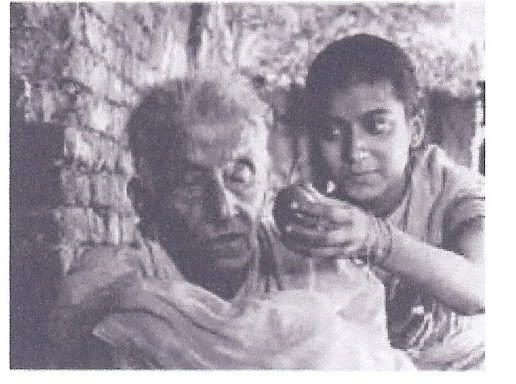
Photo: Durga gives her grandmother the stolen guava.
Those of you who used to visit me at the old AOL Journal may remember I did some entries on fairytales and myths, including Thumbelina and Persephone. Those stories have become very central in my thinking about how to tell women's stories. I finished a story this summer that somewhat draws from archetypes present in Thumbelina and Persephone. I'm working on another that also draws from the same archetypes. I think one of the breakthroughs writers make is when they recognize these ancient patterns in modern life.
As I worked on this latest story, I couldn't help thinking about a favorite movie of mine, Pather Panchali, which is no longer available to buy at Amazon, unfortunately, but which can be rented pretty easily enough.
I've read several reviews of Pather Panchali, and not one really talks about the women in the film to my satisfaction, so I hope to do that here as a way of emphasizing the Maiden/Mother/Crone archetype. Most of the reviews I've seen call Durga (the "maiden") a petty thief. I disagree, and here is my take on the movie. I've canabalized from my Amazon review. I do those from time to time, as a "no pressure way "to sharpen the critical skills.
Reviews generally focus on the main character, Apu, yet Pather Panchali is also a powerful portrayal of various phases of women's lives: maiden, mother, and crone.
Durga, the maiden, is often described as a petty thief, yet her acts often seem heroic to me and serve to underscore the pettiness and selfishness of her neighbors. Durga steals guavas and also a set of beads. Why should Durga have to steal guavas from the land that used to belong to her father? Why can't the neighbors share? They know the family is struggling with everyday survival. Does Durga eat the guavas herself? No, she gives them to her grandmother.
As for stealing the beads, Durga's desire for something pretty, while not so heroic, is perfectly understandable when one takes into account how little Durga is appreciated in a family that dotes on Apu, the boy. Yet there are no villains in this movie. All characters are fully rounded. The mother, who often seems cruel, is also a sympathetic character who tries to keep her pride in tact while descending deeper into poverty all the time.
(In fact, Durga's mother also "steals" a guava. This happens much later in the movie and suggests to me that the mother now understands the maiden's motivation for "stealing" the guavas: love).
The grandmother (Crone) is, to me, the best character in the whole movie. She's as mysterious as she is mischevious. The petty bickering between Durga's mother and grandmother doesn't show an absence of love but results from the pressures of day to day survival. The women, in fact, are woven into the same tapestry of life. In one brilliant shot, the mother is shown holding her weary back while the grandmother, bent from years of hardship and work, shuffles in the background. Life is hard and the inevitability of old age is just around the corner. How is one's hard work and sacrifice repaid? Are we destined to end up like Durga's grandmother, whom nobody seems to want? Nobody, save Durga, who has a pure heart and shows her love by bringing lovingly her hungry grandmother stolen guavas.
Yes, this is the story of Apu, a young boy, but it's also the story of the three main phases of women's lives.
Remembering ancient patterns of storytelling have become invaluable to me. These patterns exist deep within our psyche, and readers will recogize them when they read your stories.
Tuesday, June 06, 2006
Beauty Slays Me
I am just checking in briefly to say that I am okay and enjoying my break from blogging. My new computer arrived three days ago and I've been busy getting it set up and getting to know my way around the new digs. The new computer with its speed and great memory capacity gives me a sense of freedom, and I've been running with that.
However, all is not perfect. I had fooled myself into thinking I was going to be able to run with my book as soon as all responsibilities were over at work, but that hasn't been the case. What I have ended up doing is reading a lot of poetry and going through my notes to shape poems of my own which I hope, in turn, will point me toward a narrative. I was so pleased with the poems I wrote that I sent two to little magazines for consideration.
Enough of that, though. I want to write something about beauty.
On the night of May 8th, after I'd done my last blog entry for a while, I watched the film Harold and Maude again. I've seen this film many times and at different points in my life. Harold and Maude is about an unlikely romance. If you've never seen Harold and Maude, then you should, and that's all I'll say about that.
Watching Harold and Maude on May 8, I noticed what Maude says about beauty, and I was struck suddenly by how easy it is lose our ability to recognize beauty. It is so easy to become blunted.
In Harold and Maude, Maude watches seagulls with Harold. Watching the gulls, Maude tells Harold of Alfred Dreyfus, a Jewish soldier wrongfully incarcerated on Devil's Island who as a child felt amazement when he first encountered what he thought were the most fantastical birds. Later, Maude says, Dreyfus realized the birds he'd thought were so magical were "only seagulls."
I remember as a child seeing what I thought were the most fantastical flowers. They were orange and tropical and nearly as tall as I was. I told my mother I thought the flowers were pretty (she loved flowers) and she said they were only daylilies, a very common flower which she thought of as nothing more than a weed. I remember the feeling of disappointment that shot through my chest, a feeling that I was being torn apart. Through the years, I've noticed that feeling and have come to associate with it the encroachment of banality, which I want to fight.
This is the challenge of life: to keep one's initial wonderment and ability to see the beauty around us.
I think this was part of my reason for extricating myself from the Internet for a time. I'm not finished with my quest yet to rediscover wonderment and beauty.
Don't you just long to be slain by beauty?
I'll close with a poem about beauty written by Chaucer. Let's say I am reading it tonight and thinking of the "You" in the poem as a muse. What do you look for in a muse? If my muse is a person, I look for one who is courageous, strong, and kind. And one who can slay me with his or her beauty, one who can help me to see beauty, wherever it resides:
Rondel of Merciless Beauty
Your two great eyes will slay me suddenly;
Their beauty shakes me who was once serene;
Straight through my heart the wound is quick and keen.
Only your word will heal the injury
To my hurt heart, while yet the wound is clean -
Your two great eyes will slay me suddenly;
Their beauty shakes me who was once serene.
Upon my word, I tell you faithfully
Through life and after death you are my queen;
For with my death the whole truth shall be seen.
Your two great eyes will slay me suddenly;
Their beauty shakes me who was once serene;
Straight through my heart the wound is quick and keen.
Geoffrey Chaucer
However, all is not perfect. I had fooled myself into thinking I was going to be able to run with my book as soon as all responsibilities were over at work, but that hasn't been the case. What I have ended up doing is reading a lot of poetry and going through my notes to shape poems of my own which I hope, in turn, will point me toward a narrative. I was so pleased with the poems I wrote that I sent two to little magazines for consideration.
Enough of that, though. I want to write something about beauty.
On the night of May 8th, after I'd done my last blog entry for a while, I watched the film Harold and Maude again. I've seen this film many times and at different points in my life. Harold and Maude is about an unlikely romance. If you've never seen Harold and Maude, then you should, and that's all I'll say about that.
Watching Harold and Maude on May 8, I noticed what Maude says about beauty, and I was struck suddenly by how easy it is lose our ability to recognize beauty. It is so easy to become blunted.
In Harold and Maude, Maude watches seagulls with Harold. Watching the gulls, Maude tells Harold of Alfred Dreyfus, a Jewish soldier wrongfully incarcerated on Devil's Island who as a child felt amazement when he first encountered what he thought were the most fantastical birds. Later, Maude says, Dreyfus realized the birds he'd thought were so magical were "only seagulls."
I remember as a child seeing what I thought were the most fantastical flowers. They were orange and tropical and nearly as tall as I was. I told my mother I thought the flowers were pretty (she loved flowers) and she said they were only daylilies, a very common flower which she thought of as nothing more than a weed. I remember the feeling of disappointment that shot through my chest, a feeling that I was being torn apart. Through the years, I've noticed that feeling and have come to associate with it the encroachment of banality, which I want to fight.
This is the challenge of life: to keep one's initial wonderment and ability to see the beauty around us.
I think this was part of my reason for extricating myself from the Internet for a time. I'm not finished with my quest yet to rediscover wonderment and beauty.
Don't you just long to be slain by beauty?
I'll close with a poem about beauty written by Chaucer. Let's say I am reading it tonight and thinking of the "You" in the poem as a muse. What do you look for in a muse? If my muse is a person, I look for one who is courageous, strong, and kind. And one who can slay me with his or her beauty, one who can help me to see beauty, wherever it resides:
Rondel of Merciless Beauty
Your two great eyes will slay me suddenly;
Their beauty shakes me who was once serene;
Straight through my heart the wound is quick and keen.
Only your word will heal the injury
To my hurt heart, while yet the wound is clean -
Your two great eyes will slay me suddenly;
Their beauty shakes me who was once serene.
Upon my word, I tell you faithfully
Through life and after death you are my queen;
For with my death the whole truth shall be seen.
Your two great eyes will slay me suddenly;
Their beauty shakes me who was once serene;
Straight through my heart the wound is quick and keen.
Geoffrey Chaucer
Friday, April 14, 2006
Northfork
 Nick Nolte stars as Father Harlan, in Northfork. Here, he bears witness to young Irwin's death.
Northfork is a magical film about the death of a town and the death of young Irwin, an angel, according to Father Harlan.
Today in my Native American Literature class, we read aloud two essays by Native-American Linda Hogan, from her book of essays called Dwellings. One essay, "Stories of Water" is about the creative and destructive force of water and how humbling it is to be in the presence of such power.
Reflecting on the class later, as I'm prone to do, I remembered Northfork. The film is named for the town, which is to be flooded, lost to technological progress. As the town nears extinction, so does an orphan boy, named Irwin, who, as he slips toward death, has the most precious dreams.
At the end of the film, Father Harlan expresses his sorrow and his acceptance of life's pain. As Hogan speaks of being humbled by earth's power, Father Harlan speaks of being humbled in the presence of death. The impending death of the town, the death of Irwin. Water will cover all. There's something truly Biblical about the story. Nolte's voice is strong and quiet. It cracks with age, but he doesn't sound old. He's saintlike, but also profoundly human. He sounds almost timeless.
Northfork and Dwellings are both works to transport the soul.
Father Harlan: "And in that journey of dying, you see many things. But all of the issues I had are past, because I was to be a witness, a helper. And that is the thing I think is important about death, is the ability for us to be witnesses, not only for a person coming in, but of going out. And that is what we have here–we’ve lost our time, it’s gone. But maybe there is a birth someplace else. Maybe there is a blessing from that experience. I’m no longer afraid of death; but it’s a lesson that has taken me sixty years to learn."
Sunday, April 09, 2006
Capote
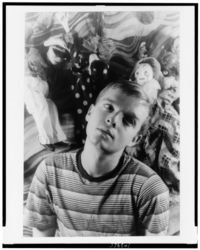
Photo: Truman Capote, 1924-1984.
I finally got to see Capote. Allen and I rented it and watched it on Saturday, along with Good Night and Good Luck and Broken Flowers.
After the movies, I did a bit of Internet research on the films and ran across Capote's burial site. This is a great site where you can find the graves of many of your favorite authors. I enjoy this site, although my family finds it morbid.
All night, after I'd gone to bed, the three movies swirled in my dreams, mixing with personal experiences. I can't say they were bad dreams, but very strange. I think the three movies together touched on many anxieties I have, both public and private.
Broken Flowers makes me think about how I have always feared coming to the end of my life and thinking that my life has had no meaning.
Good Night and Good Luck makes me think about inhumanity in the world, how politics and inhumanity become synonymous.
Capote certainly brings to the fore many thoughts about writing, why we do it, what the consequences of writing are. I believe so far in my blogs, I've only addressed the positive consequences of writing. Capote suggests there are places our writing can take us that are dangerous to our inner well-being. I have always thought there is a boundary in us, that, once crossed, destines us to be wanderers in our own lives, lost. Perhaps Truman Capote crossed that line.
Sunday, February 19, 2006
Speaking of Saints
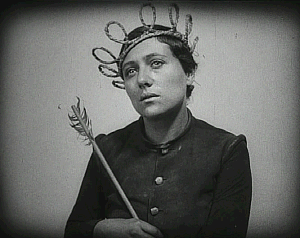
I just watched the most amazing film: The Passion of Joan of Arc, directed by Carl Dreyer. It's bitter cold tonight, single digits, and we heat only with wood. The house has been cold all day. Allen went to bed just after midnight. At around one a.m., I wrapped myself in a blanket and had a cup of homemade cherry wine in my hand. I clicked "play," not really expecting to be transported by the experience. I just had a mild curiosity, that's all. I haven't been feeling well the last few days, and I thought it'd be a good way to spend some time. My eyes were tired from reading and I felt plain tired all over.
I'd bought the film several weeks ago and was saving it for just the right time. I knew almost nothing about it, but on the strength of the reviews and my interest in mythology and saints, I took a chance.
If I could have only one word to describe it, I would use: "Arresting." The film was made in 1928. It's a silent film. My version has music from "Voices of Light." The music draws from the writing of women mystics, including Joan herself.
The film shows a true female hero who passes through her ordeal in such a human way, showing her terror, her faith, her temptation, and her final act of defiant love. The camera work is expressive, and the imagery potent. Masterful! I am in complete awe as I write this entry right now.
I know this is a film I will watch again and again. Please, if you've never seen it, buy it, rent it, borrow it, or steal it. Get the DVD version, from the Criterion Collection.
If you're a poet, story-teller, or novelist, you will be deeply inspired by this film. The experience of watching it is like being witness to a grand myth unfolding before your eyes. (Not myth as in lie, but myth as in a timeless heroic story).
Sunday, January 29, 2006
The Meaning of Birthdays
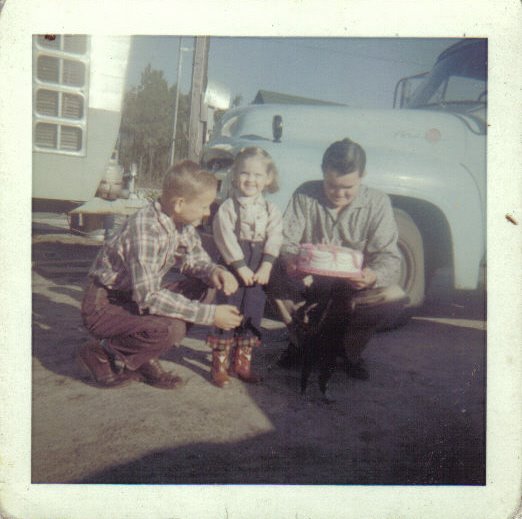
That is me in the middle, wearing cowboy boots. On the right is my brother, Jack, dead since 1999. That is my birthday cake he's holding. Checking out the cake is a cat, nameless to me now. On the left is my other brother, Houston. Behind us is my father's old Ford (back when Fords were king of the road) and the trailer we lived in.
~~~~~~~~~~~~~~~~~~~~~~~~~
I had my 50th birthday this week, on 1/24, causing me to speculate on the meaning of birthdays. These little celebrations that happen in honor of our birth are so precious. Look at the pink-festooned cake, made by my mother in her little girl's honor. Look at me standing there in my "Aw shucks" stance. I remember being a little embarrassed by so much fuss. I still don't like a lot of fuss, but I'd be lying if I said I didn't appreciate acknowledgment.
Birthdays do give us a little window of time to reflect; that's their gift to us. Now everything in life will be filtered through the prism of my being 50 years old.
Since I'm 50, I'm going to adopt a kind of Bette Davis I'm-gonna-do-what-I-want-and-if-you-don't-like-it-then-tough stance. That means I'll be spending long hours at my various desks, writing. I used to feel guilty about the time I spent behind closed doors writing. I don't want to do that anymore. I feel like Thelma did in Thelma and Louise, when she said, "Something's crossed over in me and I can't go back."
I don't want to go back. Like Thelma said on the edge of the precipace: "Let's keep goin'."
I want to go ahead. And I will.
Monday, November 21, 2005
Rashomon
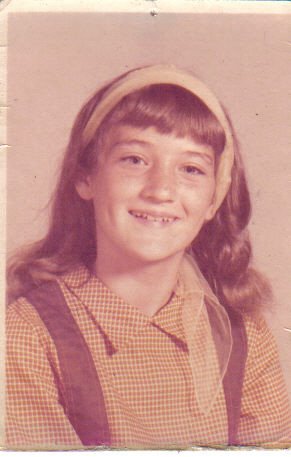
Who and what do you see when you look at this photograph?
The photograph is of me in the 6th grade. I look happy in my headscarf and hand-me-down dress. In reality, my brother had just gone to Vietnam and I feared for his life every day. Another reality was that my father had stepped up his drinking to the point that our whole family was in turmoil. I would go to school every day frightened, not of school but of what I might return home to.
But looking at the photo now, I can almost believe that the child looking back at me is happy.
---------------------------------------------------------
I guess I'll know I'm over feeling sad about leaving my AOL Journal when my first thought here at Blogger is not how sad I am that I'm not posting in my AOL Journal.
Ah well. Over at my AOL Journal, I recently did an entry about "Reality," and Vince posted a one word response: RASHOMON. I'd never heard of Rashomon, but because it came from Vince, who introduced me to the excellent book, Denial of Death, I thought I should check it out.
I did a quick Internet search and found out it is the name of a movie directed by Akira Kurosawa. The term "Rashomon" has entered our vernacular to mean the unreliability of "truth." If I'd heard of the "Rashomon Effect" before, I didn't recall it, but apparently it is a common way of referring to the phenomenon of eye-witnesses having different accounts of what happened at the same event.
I rented Rashomon from our video store and watched it twice this evening, once with and once without the commentary. It is a powerful film. What struck me the most --and everyone will come away from the film with different thoughts because it's that kind of film--was the message that we come to believe the realities we create for ourselves.
The film definitely opens up a new way for me to think about my own writing. It deepened my insight into what motivates people to lie. As the film says, we all lie.
This is where someone who prizes authenticity begins to get into severe trouble, I think. If our self-concept is based on authenticity yet all human beings lie, then who are we? (Add to this the dilemma that the purpose of the artist, according to Picasso, is to lie in order to depict the truth.)
I know that I need to work at adopting a more playful orientation toward life, one taking into consideration the natural failings of human beings, my own failings. I've known this for a long time.
I believe this recognition on my part of what I need to do is why I am so drawn to the Trickster figure in mythology. That Trickster is an ornery trouble maker who turns reality upside down. The Trickster is always mixing volatile cocktails of fantasy and reality.
I highly recommend Rashomon. Thank you, Vince, for telling me about it.
Here is the original entry from AOL:
What is Reality?
What is the truth?
I'm thinking now of the writer whose self-concept depends on authenticity.
Does this describe you? It describes me.
Perhaps I'm more comfortable writing fiction than non-fiction because I worry that non-fiction has to be completely "true," detail by detail, and I drive myself mad trying to get all the details "right."
I'm finding more and more that I don't know how to tell "the truth." I only know how to tell "my truth." And in telling "my truth," I find myself constantly departing from facts and into the realm of mythology. I believe there is so much truth in myths.
A wonderful poem by Rabia al Basri explains the difficulties of writing from the heart, of writing, to, for, out of, or about the Divine source (by Divine source, I mean that mysterious place our creativity and imagination comes from):
REALITY
In love, nothing exists between heart and heart.
Speech is born out of longing,
True description from the real taste.
The one who tastes, knows;
the one who explains, lies.
How can you describe the true form of Something
In whose presence you are blotted out?
And in whose being you still exist?
And who lives as a sign for your journey?
Subscribe to:
Posts (Atom)
Subscribe To


 Posts
All Comments
Posts
All Comments
Dreaming
About Me
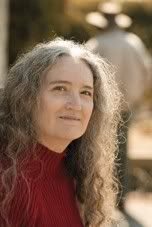
- Theresa Williams
- Northwest Ohio, United States
- "I was no better than dust, yet you cannot replace me. . . Take the soft dust in your hand--does it stir: does it sing? Has it lips and a heart? Does it open its eyes to the sun? Does it run, does it dream, does it burn with a secret, or tremble In terror of death? Or ache with tremendous decisions?. . ." --Conrad Aiken
Facebook Badge


Subscribe
Posts
All Comments
Fave Painting: Eden
Fave Painting: The Three Ages of Man and Death
by Albrecht Dürer
My Original Artwork: Triptych
Wishing
Little Deer
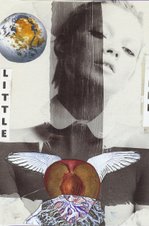
Transformation
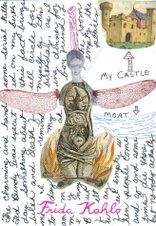
Looking Forward, Looking Back