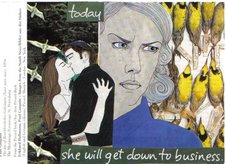
Brenda Ueland, bless her old soul, speaks of the necessity of the writer for what she called "moodling." She meant slowing your pace, diddling around, until you find the origin of your inner resources. It's a concept tailor made for me.
My mind catches fire, but not before lots of poking around in the ashes, searching for embers.
I came to this blog three times already, trying to think of something to say. Then moodled around on the computer while listening to music. Dylan's "Not Dark Yet" was playing as I read a status update from Amy Newman, a fine poet I met when she was a visiting writer at BGSU. She wrote of October and how we can't trust its pretty days.
That prompted me to find an October poem, and I stumbled on this one by Frost:
October
by Robert Frost
O hushed October morning mild,
Thy leaves have ripened to the fall;
Tomorrow's wind, if it be wild,
Should waste them all.
The crows above the forest call;
Tomorrow they may form and go.
O hushed October morning mild,
Begin the hours of this day slow.
Make the day seem to us less brief.
Hearts not averse to being beguiled,
Beguile us in the way you know.
Release one leaf at break of day;
At noon release another leaf;
One from our trees, one far away.
Retard the sun with gentle mist;
Enchant the land with amethyst.
Slow, slow!
For the grapes' sake, if they were all,
Whose leaves already are burnt with frost,
Whose clustered fruit must else be lost--
For the grapes' sake along the all.
What is left for me to say, except Frost has said it all, bundled all my perceptions of October and presented them to me as a gift. "Make the day seem to us less brief," he writes. October does remind us there is no forever.
Nothing profound from me here. Just moodling.
Showing posts with label poem. Show all posts
Showing posts with label poem. Show all posts
Wednesday, October 21, 2009


Wednesday, January 07, 2009
Dreams II: Our Thoughts Are Hooks
Ever since the other night when I had so many beautiful dreams, I've wanted to repeat the experience. But the subconscious does what it wants, and last night I dreamed of the beach again, but it was not a pleasant dream--no snow falling like flower petals into the sea.
Instead, the dream was discomfiting, although it has been hard for me to say why. Tonight as I was going through a poetry anthology, I found a poem that felt familiar, though it was only a familiarity-in-strangeness. I don't recall ever having read the poem before, and the event described in the poem is not exactly like that of my dream. Still, the poem captures the eeriness of my dream.
"Head of a Doll" by Charles Simic:
Whose demon are you,
Whose god? I asked
Of the painted mouth
Half buried in the sand.
A brooding gull
Made a brief assessment,
And tiptoed away
Nodding to himself.
At dusk a firefly or two
Dowsed its eye pits.
And later, toward midnight,
I even heard mice.
There is a sense of menace in this poem. The doll is no mere toy but a talisman which carries the speaker into a realm of deep mystery.
For centuries dolls have housed powerful spirits. Kachinas, for instance, are an important part of Pueblo cosmology. In the fairy tale, "Baba Yaga," Vasilissa carries a doll which is animated with the spirit of her dead mother. The speaker recognizes that the doll--whether god or demon, is representative of an unassuageable fear.
It doesn't take the "brooding gull" long to size up the situation. He nods and tiptoes away, quite the way anyone might act when encountering a deep, inevitable, and perhaps uncomfortable truth.
In the Baba Yaga tale, the doll's eyes shine like fireflies with the spirit of the girl's mother. In Simic's poem, however, the fireflies do not animate the doll but call attention only to its dilapidation. The mice, nocturnal creatures associated with wastage and death, complete the thought: This is a poem of change and disintegration, about the ravages of time.
My dream was also about change: loss and disintegration. In the dream, I was younger. I was married to a man whom I did not recognize, a man much different than my husband in real life. The dream-husband was selfish and vain. He couldn't love me because he only loved himself. We had a child. The child and I went for a swim and then came back onto the sand.
I left a child on the beach alone. When I returned, the child was gone. I called and called, but nothing answered. A little ways into the surf was a broken statue of a mother with child.
I believe I dreamed this at least partly in response to the death of John Travolta's son, which happened in the Bahamas. Upon hearing of the death, I felt the loss myself, though I could not situate the feeling exactly.
Simic's poem identifies the origin of the pain as somewhere ancient, as part of my genetic memory. In another poem, Simic explains further. He writes of how we may come to our understanding of life.
He says it's like fishing in the dark: our thoughts are hooks, our hearts the raw bait.
Instead, the dream was discomfiting, although it has been hard for me to say why. Tonight as I was going through a poetry anthology, I found a poem that felt familiar, though it was only a familiarity-in-strangeness. I don't recall ever having read the poem before, and the event described in the poem is not exactly like that of my dream. Still, the poem captures the eeriness of my dream.
"Head of a Doll" by Charles Simic:
Whose demon are you,
Whose god? I asked
Of the painted mouth
Half buried in the sand.
A brooding gull
Made a brief assessment,
And tiptoed away
Nodding to himself.
At dusk a firefly or two
Dowsed its eye pits.
And later, toward midnight,
I even heard mice.
There is a sense of menace in this poem. The doll is no mere toy but a talisman which carries the speaker into a realm of deep mystery.
For centuries dolls have housed powerful spirits. Kachinas, for instance, are an important part of Pueblo cosmology. In the fairy tale, "Baba Yaga," Vasilissa carries a doll which is animated with the spirit of her dead mother. The speaker recognizes that the doll--whether god or demon, is representative of an unassuageable fear.
It doesn't take the "brooding gull" long to size up the situation. He nods and tiptoes away, quite the way anyone might act when encountering a deep, inevitable, and perhaps uncomfortable truth.
In the Baba Yaga tale, the doll's eyes shine like fireflies with the spirit of the girl's mother. In Simic's poem, however, the fireflies do not animate the doll but call attention only to its dilapidation. The mice, nocturnal creatures associated with wastage and death, complete the thought: This is a poem of change and disintegration, about the ravages of time.
My dream was also about change: loss and disintegration. In the dream, I was younger. I was married to a man whom I did not recognize, a man much different than my husband in real life. The dream-husband was selfish and vain. He couldn't love me because he only loved himself. We had a child. The child and I went for a swim and then came back onto the sand.
I left a child on the beach alone. When I returned, the child was gone. I called and called, but nothing answered. A little ways into the surf was a broken statue of a mother with child.
I believe I dreamed this at least partly in response to the death of John Travolta's son, which happened in the Bahamas. Upon hearing of the death, I felt the loss myself, though I could not situate the feeling exactly.
Simic's poem identifies the origin of the pain as somewhere ancient, as part of my genetic memory. In another poem, Simic explains further. He writes of how we may come to our understanding of life.
He says it's like fishing in the dark: our thoughts are hooks, our hearts the raw bait.
Wednesday, December 24, 2008
The Circus Animals' Desertion IV
 "The Circus Animals' Desertion IV"
This is the last in my series of pictures depicting Yeats's "The Circus Animals' Desertion." This photo illustrates the last lines:
I must lie down where all ladders start
In the foul rag and bone shop of the heart.
I chose to depict a death-in-life scene, showing the broken refuse of human dreams next to signs of new life. The poor chariot has flat tires, the circus animals are ghost-like, and the snakes devour the eggs, but many eggs do continue, and those hatch new birds. Snakes in my pictures are never bad: they are symbols of regeneration.
Yeats says that his "masterful" images of the past "grew in pure mind" but they began out of:
a mound of refuse or the sweepings of a street,
Old kettles, old bottles, and a broken can,
Old iron, old bones, old rags, that raving slut
Who keeps the till...
Our best work comes not from glorious themes but from that which the mind has discarded as unimportant. That is where the imagination resides, in the heart where broken images are waiting for us to make them into new art.
Tuesday, December 23, 2008
The Circus Animals' Desertion III
 "The Circus Animals' Desertion III"
In stanzas 2-4, Yeats tells us that he can do little but "enumerate old themes." In stanza 4, he says of what he has written:
It was the dream itself enchanted me:
character isolated by deed.
To engross the present and dominate memory.
Players and painted stage took all my love,
And not those things they were emblems of.
In my drawing, each character is isolated by a deed: walking on stilts, tug of war, balancing on a pig, training a dog to jump through a hoop. My little goat is watching with amusement from behind the curtain.
Monday, December 22, 2008
The Circus Animals' Desertion II
 "The Circus Animals' Desertion II"
In the first stanza of "The Circus Animals' Desertion," Yeats writes:
I sought a theme and sought for it in vain
I sought it daily for six weeks or so.
Maybe at last, being but a broken man,
I must be satisfied with my heart, although
Winter and summer till old age began
My circus animals were all on show
...that burnished chariot,
Lion and woman and the lord knows what.
Yeats looks back on his former poems with an element of regret. He seems to think that, like a circus, his early work was all for show. Yeats wants to find a way back to the true heart of his work.
My little drawing is of the chariot, the lion, and the woman, as well as a few circus animals. The clownish goat is my favorite, so I will probably put him in every picture I draw in this series.
~~~~~~~~~~~~~~~~~~~~~~~~~~~~~~~~
On another note: it has been so cold today. Last night, high winds shook the icy trees. All night ice shards were hurled against the house. The dogs were very upset by all the wild noise. I've never seen weather exactly like this before. It has just been a bitter, bitter night and day.
At around 7 a.m. our electricity went out and stayed off all day. It wasn't restored until almost 7 p.m. We heat with wood, so we were fairly warm, although the temperatures continued to drop through the day until it was below zero. The wind sucked the warmth out of this old house and before we knew it our pipes were starting to freeze in the bathrooms. This is not a problem we usually have. We caught the problem just in time.
Sunday, December 21, 2008
The Circus Animals' Desertion
 "The Circus Animals' Desertion"
I wanted to do a simple drawing today with ink and colored pencils. I love folk art, and I wanted to do a drawing in that style. Doing folk art lets you be creative in such a pure and childlike way.
I based the images on a poem by Yeats called "The Circus Animals' Desertion." It is about the awful moment when inspiration deserts us, when we fear our creative life is dead. In the first stanza he writes:
I sought a theme and sought for it in vain,
I sought it daily for six weeks or so.
In this picture, the animals represent the imagination. The people have chained a bear to a tree. The horse, which is symbolic of primal energy, has been tamed and is in service to humans. The goat and the unicorn are escaping into the sky, not only an open sky, but the night sky, a place of dreams.
Some people do not notice the animals' escape; others look into the sky and gesture to the animals longingly. The man on the horse tries to stop the animals by using force. I think each person in the picture says something about how we deal with the loss of our creative power. I remember what John Trudell said in the documentary about him: Our power comes from our relationship to life.
I may do a whole series of these and base them on different lines from Yeats's poem. I had such a good time doing this.
Monday, December 01, 2008
Poem
Back then I realized
everything was in him:
the nervous ants I had played with as a child,
the sad birds I had found and buried,
new landscapes,
sermons that sang to me.
Back then he dreamed the world
and I was in his dream.
everything was in him:
the nervous ants I had played with as a child,
the sad birds I had found and buried,
new landscapes,
sermons that sang to me.
Back then he dreamed the world
and I was in his dream.
Sunday, November 23, 2008
Poem
NOVEMBER NIGHT
One a.m., no moon.
Train crosses highway six.
Distant lights erase
my own cold stars.
I remember the long-ago
bright face of a child.
He had sparklers in his hands.
One a.m., no train in sight.
And distant lights
erase my own cold stars.
One a.m., no moon.
Train crosses highway six.
Distant lights erase
my own cold stars.
I remember the long-ago
bright face of a child.
He had sparklers in his hands.
One a.m., no train in sight.
And distant lights
erase my own cold stars.
Poem
Writing late tonight,
I have remembered the beach
at Provincetown.
Remembered standing
on the sand, listening
to voices, clanking of glasses
and plates.
I was alone.
Everyone was so far away.
I have remembered the beach
at Provincetown.
Remembered standing
on the sand, listening
to voices, clanking of glasses
and plates.
I was alone.
Everyone was so far away.
Saturday, November 22, 2008
"Biscuits"--Revised
BISCUITS
Things in your house
wait patiently for you
to touch them--flour,
butter, thin air.
Cooking is an alchemy
of sadness and desire.
Do it from scratch.
You can.
You already know how.
Sift dry things
into a glass bowl.
Use more sugar
than it says.
There is not enough
sweetness in the world.
Butter must be cold.
It is like your heart,
like your hands, cold.
In your case maybe
numb, too, from loss
and grief.
Chop butter into fragments.
Yes, things go to pieces.
It has always been this way.
Consider the gods
whose flesh was torn for the people.
Add milk, about a cup of that.
It came from a mother's warm body.
Knead. Press.
Fold dough into dough.
It will become resilient, alive
beneath your hands.
The only proper shape
for biscuits is the circle,
infinity's shape,
the snake biting its tail,
the moon before it loses
itself to darkness again.
They will rise like Lazarus!
Just wait. They will.
Oh, wait.
Wait.
Just wait and see.
Things in your house
wait patiently for you
to touch them--flour,
butter, thin air.
Cooking is an alchemy
of sadness and desire.
Do it from scratch.
You can.
You already know how.
Sift dry things
into a glass bowl.
Use more sugar
than it says.
There is not enough
sweetness in the world.
Butter must be cold.
It is like your heart,
like your hands, cold.
In your case maybe
numb, too, from loss
and grief.
Chop butter into fragments.
Yes, things go to pieces.
It has always been this way.
Consider the gods
whose flesh was torn for the people.
Add milk, about a cup of that.
It came from a mother's warm body.
Knead. Press.
Fold dough into dough.
It will become resilient, alive
beneath your hands.
The only proper shape
for biscuits is the circle,
infinity's shape,
the snake biting its tail,
the moon before it loses
itself to darkness again.
They will rise like Lazarus!
Just wait. They will.
Oh, wait.
Wait.
Just wait and see.
Friday, October 17, 2008
Juniper madness
Original Poem (rough draft) based on fairy tale, "The Juniper Tree"
In April, on the day of her marriage,
she planted a Juniper into the wet-black ground
that was covered in robins
bobbing their heads
in search of worms.
She planted the Juniper
for want of an evergreen,
for want of something that lives
forever. She had always known
she would never live to be old.
It did not make her sad,
not very, but she wanted to
leave some mark upon the world,
even if it were only a little tree that
she had planted.
But the tree did not stay little.
It grew quickly, and by
Christmas it was the height
of three men. She decorated it with
lights, paper chains, and beautiful
glass apples that shone in the sun.
She tied seed bundles to the branches
so the cardinals would sit in the Juniper
and sing to her all day long
their sad, pretty song.
In April, on the day of her marriage,
she planted a Juniper into the wet-black ground
that was covered in robins
bobbing their heads
in search of worms.
She planted the Juniper
for want of an evergreen,
for want of something that lives
forever. She had always known
she would never live to be old.
It did not make her sad,
not very, but she wanted to
leave some mark upon the world,
even if it were only a little tree that
she had planted.
But the tree did not stay little.
It grew quickly, and by
Christmas it was the height
of three men. She decorated it with
lights, paper chains, and beautiful
glass apples that shone in the sun.
She tied seed bundles to the branches
so the cardinals would sit in the Juniper
and sing to her all day long
their sad, pretty song.
Subscribe to:
Posts (Atom)
Subscribe To


 Posts
All Comments
Posts
All Comments
Dreaming
About Me
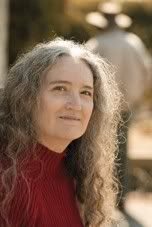
- Theresa Williams
- Northwest Ohio, United States
- "I was no better than dust, yet you cannot replace me. . . Take the soft dust in your hand--does it stir: does it sing? Has it lips and a heart? Does it open its eyes to the sun? Does it run, does it dream, does it burn with a secret, or tremble In terror of death? Or ache with tremendous decisions?. . ." --Conrad Aiken
Facebook Badge

Subscribe
Posts
All Comments
Fave Painting: Eden
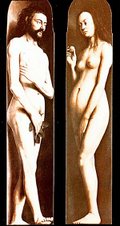
Fave Painting: The Three Ages of Man and Death
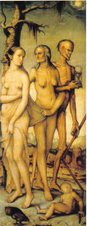
by Albrecht Dürer
My Original Artwork: Triptych
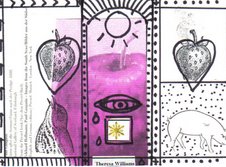
Wishing
Little Deer
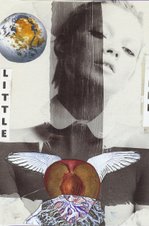
Transformation
Looking Forward, Looking Back