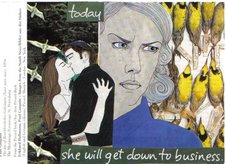
When the ground is snow-covered you really wonder why this isn't called Winter Semester.
I looked around my livingroom this afternoon. Since we gave up TV, the chairs are no longer pointed at the tube. They are pointed at the woodheater. This is one reason why I love winter, the woodheater. I love it that fire is the focal point of our house. I always feel sad when spring arrives and the heater goes dead.
I am excited to think of my students reading James Wright and Georg Trakl together.
Showing posts with label poetry. Show all posts
Showing posts with label poetry. Show all posts
Thursday, January 14, 2010


Sunday, December 20, 2009
Potpourri
1. Have finished a great semester teaching courses that I love: fiction workshop, Modern Poetry, Native American Lit, Creative Writing Thesis class.
2. Subscribed to a new magazine of poetry: Rattle. I highly recommend it. Reasonable price, no ads, page after page of great poems.
3. Wrote a few poems myself.
4. Been reading a book about koans. Enlightening!
5. Been thinking a lot about my trip out West this summer. I want to go back.
6. Been thinking about my friend, Dawn, who just had surgery. Get well, Dawn.
7. Been thinking about friends and students, old and new.
8. Made Allen a very good stew!
9. Been enjoying the snowfall. We went out yesterday to eat and to get groceries. We picked up some five dollar movies and watched one of them in the wee hours of the morning, a movie based on a Fante novel: Ask the Dust.
10. Been sleeping late: always a treat. Drinking coffee with a spot of brandy. It's all good.
2. Subscribed to a new magazine of poetry: Rattle. I highly recommend it. Reasonable price, no ads, page after page of great poems.
3. Wrote a few poems myself.
4. Been reading a book about koans. Enlightening!
5. Been thinking a lot about my trip out West this summer. I want to go back.
6. Been thinking about my friend, Dawn, who just had surgery. Get well, Dawn.
7. Been thinking about friends and students, old and new.
8. Made Allen a very good stew!
9. Been enjoying the snowfall. We went out yesterday to eat and to get groceries. We picked up some five dollar movies and watched one of them in the wee hours of the morning, a movie based on a Fante novel: Ask the Dust.
10. Been sleeping late: always a treat. Drinking coffee with a spot of brandy. It's all good.
Monday, December 14, 2009
When You Least Expect It
Sometimes writing happens when you least expect it. I took a long bath tonight and reread The Essential Haiku (ed. Robert Hass). My reading gave me the idea to try something. (I seem to always get my best ideas in the bathtub).
When I got out of the tub, I grabbed my little journal and wrote a brand new poem based loosely on the Renga form. Then I rewrote an impromptu poem I'd done when I was in California recently, again loosely adopting the Renga form. I was very happy with the results!
When I got out of the tub, I grabbed my little journal and wrote a brand new poem based loosely on the Renga form. Then I rewrote an impromptu poem I'd done when I was in California recently, again loosely adopting the Renga form. I was very happy with the results!
Wednesday, October 21, 2009
Moodling
Brenda Ueland, bless her old soul, speaks of the necessity of the writer for what she called "moodling." She meant slowing your pace, diddling around, until you find the origin of your inner resources. It's a concept tailor made for me.
My mind catches fire, but not before lots of poking around in the ashes, searching for embers.
I came to this blog three times already, trying to think of something to say. Then moodled around on the computer while listening to music. Dylan's "Not Dark Yet" was playing as I read a status update from Amy Newman, a fine poet I met when she was a visiting writer at BGSU. She wrote of October and how we can't trust its pretty days.
That prompted me to find an October poem, and I stumbled on this one by Frost:
October
by Robert Frost
O hushed October morning mild,
Thy leaves have ripened to the fall;
Tomorrow's wind, if it be wild,
Should waste them all.
The crows above the forest call;
Tomorrow they may form and go.
O hushed October morning mild,
Begin the hours of this day slow.
Make the day seem to us less brief.
Hearts not averse to being beguiled,
Beguile us in the way you know.
Release one leaf at break of day;
At noon release another leaf;
One from our trees, one far away.
Retard the sun with gentle mist;
Enchant the land with amethyst.
Slow, slow!
For the grapes' sake, if they were all,
Whose leaves already are burnt with frost,
Whose clustered fruit must else be lost--
For the grapes' sake along the all.
What is left for me to say, except Frost has said it all, bundled all my perceptions of October and presented them to me as a gift. "Make the day seem to us less brief," he writes. October does remind us there is no forever.
Nothing profound from me here. Just moodling.
My mind catches fire, but not before lots of poking around in the ashes, searching for embers.
I came to this blog three times already, trying to think of something to say. Then moodled around on the computer while listening to music. Dylan's "Not Dark Yet" was playing as I read a status update from Amy Newman, a fine poet I met when she was a visiting writer at BGSU. She wrote of October and how we can't trust its pretty days.
That prompted me to find an October poem, and I stumbled on this one by Frost:
October
by Robert Frost
O hushed October morning mild,
Thy leaves have ripened to the fall;
Tomorrow's wind, if it be wild,
Should waste them all.
The crows above the forest call;
Tomorrow they may form and go.
O hushed October morning mild,
Begin the hours of this day slow.
Make the day seem to us less brief.
Hearts not averse to being beguiled,
Beguile us in the way you know.
Release one leaf at break of day;
At noon release another leaf;
One from our trees, one far away.
Retard the sun with gentle mist;
Enchant the land with amethyst.
Slow, slow!
For the grapes' sake, if they were all,
Whose leaves already are burnt with frost,
Whose clustered fruit must else be lost--
For the grapes' sake along the all.
What is left for me to say, except Frost has said it all, bundled all my perceptions of October and presented them to me as a gift. "Make the day seem to us less brief," he writes. October does remind us there is no forever.
Nothing profound from me here. Just moodling.
Friday, August 14, 2009
A New Poetry
I have bought a new camera with all kinds of capability (the question: am I capable?) I want to use the camera lens to make a new (for me) kind of poetry. I am just a beginner and expect to make lots of bad pictures. As soon as I have some decent examples I'll begin posting them.
I also want to cut some photographs for use in collages. I'll use others as a reference for drawings.
It feels good to be thinking about visual art. Hopefully this will not distract me from my writing but keep my mind alive for writing.
FYI: It is a Canon 50D. It is a digital SLR camera. In design it bears some resemblance to Allen's old 35 mm Nikon.
I used the Nikon a little bit years ago, but film and developing were expensive for us and I didn't feel like I had much opportunity for experimentation or even learning. Now when I make a horrible picture, I can just delete it.
I also want to cut some photographs for use in collages. I'll use others as a reference for drawings.
It feels good to be thinking about visual art. Hopefully this will not distract me from my writing but keep my mind alive for writing.
FYI: It is a Canon 50D. It is a digital SLR camera. In design it bears some resemblance to Allen's old 35 mm Nikon.
I used the Nikon a little bit years ago, but film and developing were expensive for us and I didn't feel like I had much opportunity for experimentation or even learning. Now when I make a horrible picture, I can just delete it.
Sunday, August 09, 2009
Accidental Enlightenment
I was sorting through some books tonight because I want to make a special shelf for my books on Haiku and related subjects, such as Zen. I ran across my little edition of Zen stories called Zen Flesh, Zen Bones. Always a favorite of mine, it nevertheless had not been looked at in some time by me. I opened to a random page and read:
Then, trying to decide where to put There is No Road, a book of poems by Antonio Machado (1875-1939), I opened the book and read:
A university student while visiting Gasan asked him: "Have you ever read the Christian Bible?"
"No, read it to me," said Gasan.The student opened the Bible and read from St. Matthew. "And why take ye thought for raiment? Consider the lilies of the field, how they grow. They toil not, neither do they spin, and yet I say unto you that even Solomon in all his glory was not arrayed like one of these. ... Take therefore no thought for the morrow, for the morrow shall take thought for the things of itself."
Gasan said: "Whoever uttered those words I consider an enlightened man."
The student continued reading: "Ask and it shall be given you, seek and ye shall find, knock and it shall be opened unto you. For everyone that asketh receiveth, and he that seeketh findeth, and to him that knocketh, it shall be opened."
Gasan remarked: "That is excellent. Whoever said that is not far from Buddhahood."
Then, trying to decide where to put There is No Road, a book of poems by Antonio Machado (1875-1939), I opened the book and read:
I love Jesus, who said to us:
Heaven and earth will pass away.
When heaven and earth pass,
my word will remain.
Jesus, what was your word?
Love? Forgiveness? Charity?
All your words were
one word: awareness.
Sunday, March 22, 2009
Spring Stillness
It is spring. We have many cold days ahead here, but the frogs are back, and the buzzards. I hear birds on my way to the truck to go to work.
Tonight I have been listening to a lone frog who stays by the shallow pond Allen dug years ago. The pond dries up in summer, but in spring it is filled with life. The frog sounds like the teeth of a comb being pulled across the edge of a table.
It's often windy here, so when we experience a still evening, it is special. Tonight I was reading a collection of Charles Simic's early poems. "Evening" spoke to me the most. In "Evening," Simic writes:
I love how Simic shows how we connect to earth and therein lies a kind of peace. I also love how he addresses simplicity in the next stanza:
This stanza suggests that we cannot control what happens in our lives. We don't know what our "final direction" will be. In our still moments we understand the life-death cycle. Our birth and death come from the same source: when we are still we see that. Life becomes simple. In the last stanza, Simic addresses human knowledge:
I think of Walt Whitman's poem about grass, how it symbolizes eternity (the beautiful uncut hair of graves). The grass repeats the same word again and again. What is the word? Tonight, I think the word is eternity. Eternity is experienced in the moment of stillness--it is not a feature of a hereafter.
Sing, my little frog. Sing on.
Tonight I have been listening to a lone frog who stays by the shallow pond Allen dug years ago. The pond dries up in summer, but in spring it is filled with life. The frog sounds like the teeth of a comb being pulled across the edge of a table.
It's often windy here, so when we experience a still evening, it is special. Tonight I was reading a collection of Charles Simic's early poems. "Evening" spoke to me the most. In "Evening," Simic writes:
The snail gives off stillness.
The weed is blessed.
At the end of a long day
The man finds joy, the water peace.
I love how Simic shows how we connect to earth and therein lies a kind of peace. I also love how he addresses simplicity in the next stanza:
Let all be simple. Let all stand still
Without a final direction.
That which brings you into the world
To take you away at death
Is one and the same;
The shadow long and pointy
Is its church.
This stanza suggests that we cannot control what happens in our lives. We don't know what our "final direction" will be. In our still moments we understand the life-death cycle. Our birth and death come from the same source: when we are still we see that. Life becomes simple. In the last stanza, Simic addresses human knowledge:
At night some understand what the grass says.
The grass knows a word or two.
It is not much. It repeats the same word
Again and again, but not too loudly...
I think of Walt Whitman's poem about grass, how it symbolizes eternity (the beautiful uncut hair of graves). The grass repeats the same word again and again. What is the word? Tonight, I think the word is eternity. Eternity is experienced in the moment of stillness--it is not a feature of a hereafter.
Sing, my little frog. Sing on.
Wednesday, February 25, 2009
This day
Variation On a Poem by
Ann Lauterbach
This day I am sure of myself.
This day I am sure of myself.
I know what insecurity is.
It is bad weather.
I know what bad weather is.
This day I am sure of myself.
You leave the house happy.
Soon there is gnashing of teeth.
I can't help my insecurity.
This day I am sure of myself.
What will happen tomorrow?
There will be gnashing of teeth.
Tomorrow is its own country.
This day I am sure of myself.
Tomorrow is its own country.
Tomorrow has its own weather.
Tomorrow's weather is uncertain.
Today is a sound of people gnashing.
Everyone is insecure.
Everyone gnashes their teeth over losses.
Everyone's losses
will be felt tomorrow.
Snow is white ash.
This day I am sure of myself.
Snow floats down.
The sound is burning ash.
The sky is gnashing its teeth.
Today I am sure of myself.
The sky is a mouth.
The weather uncertain.
What is this ash?
The sky has lips and a mouth.
Today I am sure of myself.
My pain is yesterday.
My pain is insecurity.
Today is yesterday.
Here is the glove
That doesn't have a hand.
Here is the stove.
When is yesterday coming?
Here is my poem.
It has no book to live in.
Here is my path.
The gravel is loose.
Here is our truck.
It carries me home.
Here is the place
where I brush my teeth.
The wood is white like teeth.
The wood burns in the stove.
Empty the ashes.
Today I am sure of myself.
Ann Lauterbach
This day I am sure of myself.
This day I am sure of myself.
I know what insecurity is.
It is bad weather.
I know what bad weather is.
This day I am sure of myself.
You leave the house happy.
Soon there is gnashing of teeth.
I can't help my insecurity.
This day I am sure of myself.
What will happen tomorrow?
There will be gnashing of teeth.
Tomorrow is its own country.
This day I am sure of myself.
Tomorrow is its own country.
Tomorrow has its own weather.
Tomorrow's weather is uncertain.
Today is a sound of people gnashing.
Everyone is insecure.
Everyone gnashes their teeth over losses.
Everyone's losses
will be felt tomorrow.
Snow is white ash.
This day I am sure of myself.
Snow floats down.
The sound is burning ash.
The sky is gnashing its teeth.
Today I am sure of myself.
The sky is a mouth.
The weather uncertain.
What is this ash?
The sky has lips and a mouth.
Today I am sure of myself.
My pain is yesterday.
My pain is insecurity.
Today is yesterday.
Here is the glove
That doesn't have a hand.
Here is the stove.
When is yesterday coming?
Here is my poem.
It has no book to live in.
Here is my path.
The gravel is loose.
Here is our truck.
It carries me home.
Here is the place
where I brush my teeth.
The wood is white like teeth.
The wood burns in the stove.
Empty the ashes.
Today I am sure of myself.
Tuesday, February 24, 2009
25 Books of Poems and 1 Book of Stories that Made Me Want to Be a Poet
This prompt is going around Facebook, and I was tagged.
25 Books of Poems and 1 Book of Stories that Made Me Want to Be a Poet
1. Leaves of Grass, Walt Whitman
2. Duino Elegies, Rilke
3. The Essential Rumi, trans. Coleman Barks
4. 2o Love Poems and a Song of Despair, Pablo Neruda
5. The World of the Ten Thousand Things, Charles Wright
6. Migration, W. S. Merwin
7. Loosestrife, Stephen Dunn
8. The Great Fires, Jack Gilbert
9. Book of Nightmares, Galway Kinnell
10. Collected Poems, Stanley Kunitz
11. Without End, Adam agajewski
12. The Wild Iris, Louise Gluck
13. Sonnets to Orpheus, Rilke
14. Hafiz of Shiraz, trans. Peter Avery & John Heath-Stubbs
15. Questions for Ecclesiastes, Mark Jarman
16. Show Yourself to My Soul, Rabindranath Tagore
17. Above the River, James Wright
18. Birdsong, Rumi
19. The Selected Poems of Federico Garcia Lorca
20. There is No Road, Antonio Machado
21. Narrow Road to the Interior, Matsuo Basho, trans. Sam Hamill
22. Book of Hours, Rilke
23. Love-In-Idleness, John Bradley
24. Dream Songs, John Berryman
25. The Beforelife, Franz Wright
1. Winesburg, Ohio, Sherwood Anderson
25 Books of Poems and 1 Book of Stories that Made Me Want to Be a Poet
1. Leaves of Grass, Walt Whitman
2. Duino Elegies, Rilke
3. The Essential Rumi, trans. Coleman Barks
4. 2o Love Poems and a Song of Despair, Pablo Neruda
5. The World of the Ten Thousand Things, Charles Wright
6. Migration, W. S. Merwin
7. Loosestrife, Stephen Dunn
8. The Great Fires, Jack Gilbert
9. Book of Nightmares, Galway Kinnell
10. Collected Poems, Stanley Kunitz
11. Without End, Adam agajewski
12. The Wild Iris, Louise Gluck
13. Sonnets to Orpheus, Rilke
14. Hafiz of Shiraz, trans. Peter Avery & John Heath-Stubbs
15. Questions for Ecclesiastes, Mark Jarman
16. Show Yourself to My Soul, Rabindranath Tagore
17. Above the River, James Wright
18. Birdsong, Rumi
19. The Selected Poems of Federico Garcia Lorca
20. There is No Road, Antonio Machado
21. Narrow Road to the Interior, Matsuo Basho, trans. Sam Hamill
22. Book of Hours, Rilke
23. Love-In-Idleness, John Bradley
24. Dream Songs, John Berryman
25. The Beforelife, Franz Wright
1. Winesburg, Ohio, Sherwood Anderson
Wednesday, January 07, 2009
Dreams II: Our Thoughts Are Hooks
Ever since the other night when I had so many beautiful dreams, I've wanted to repeat the experience. But the subconscious does what it wants, and last night I dreamed of the beach again, but it was not a pleasant dream--no snow falling like flower petals into the sea.
Instead, the dream was discomfiting, although it has been hard for me to say why. Tonight as I was going through a poetry anthology, I found a poem that felt familiar, though it was only a familiarity-in-strangeness. I don't recall ever having read the poem before, and the event described in the poem is not exactly like that of my dream. Still, the poem captures the eeriness of my dream.
"Head of a Doll" by Charles Simic:
Whose demon are you,
Whose god? I asked
Of the painted mouth
Half buried in the sand.
A brooding gull
Made a brief assessment,
And tiptoed away
Nodding to himself.
At dusk a firefly or two
Dowsed its eye pits.
And later, toward midnight,
I even heard mice.
There is a sense of menace in this poem. The doll is no mere toy but a talisman which carries the speaker into a realm of deep mystery.
For centuries dolls have housed powerful spirits. Kachinas, for instance, are an important part of Pueblo cosmology. In the fairy tale, "Baba Yaga," Vasilissa carries a doll which is animated with the spirit of her dead mother. The speaker recognizes that the doll--whether god or demon, is representative of an unassuageable fear.
It doesn't take the "brooding gull" long to size up the situation. He nods and tiptoes away, quite the way anyone might act when encountering a deep, inevitable, and perhaps uncomfortable truth.
In the Baba Yaga tale, the doll's eyes shine like fireflies with the spirit of the girl's mother. In Simic's poem, however, the fireflies do not animate the doll but call attention only to its dilapidation. The mice, nocturnal creatures associated with wastage and death, complete the thought: This is a poem of change and disintegration, about the ravages of time.
My dream was also about change: loss and disintegration. In the dream, I was younger. I was married to a man whom I did not recognize, a man much different than my husband in real life. The dream-husband was selfish and vain. He couldn't love me because he only loved himself. We had a child. The child and I went for a swim and then came back onto the sand.
I left a child on the beach alone. When I returned, the child was gone. I called and called, but nothing answered. A little ways into the surf was a broken statue of a mother with child.
I believe I dreamed this at least partly in response to the death of John Travolta's son, which happened in the Bahamas. Upon hearing of the death, I felt the loss myself, though I could not situate the feeling exactly.
Simic's poem identifies the origin of the pain as somewhere ancient, as part of my genetic memory. In another poem, Simic explains further. He writes of how we may come to our understanding of life.
He says it's like fishing in the dark: our thoughts are hooks, our hearts the raw bait.
Instead, the dream was discomfiting, although it has been hard for me to say why. Tonight as I was going through a poetry anthology, I found a poem that felt familiar, though it was only a familiarity-in-strangeness. I don't recall ever having read the poem before, and the event described in the poem is not exactly like that of my dream. Still, the poem captures the eeriness of my dream.
"Head of a Doll" by Charles Simic:
Whose demon are you,
Whose god? I asked
Of the painted mouth
Half buried in the sand.
A brooding gull
Made a brief assessment,
And tiptoed away
Nodding to himself.
At dusk a firefly or two
Dowsed its eye pits.
And later, toward midnight,
I even heard mice.
There is a sense of menace in this poem. The doll is no mere toy but a talisman which carries the speaker into a realm of deep mystery.
For centuries dolls have housed powerful spirits. Kachinas, for instance, are an important part of Pueblo cosmology. In the fairy tale, "Baba Yaga," Vasilissa carries a doll which is animated with the spirit of her dead mother. The speaker recognizes that the doll--whether god or demon, is representative of an unassuageable fear.
It doesn't take the "brooding gull" long to size up the situation. He nods and tiptoes away, quite the way anyone might act when encountering a deep, inevitable, and perhaps uncomfortable truth.
In the Baba Yaga tale, the doll's eyes shine like fireflies with the spirit of the girl's mother. In Simic's poem, however, the fireflies do not animate the doll but call attention only to its dilapidation. The mice, nocturnal creatures associated with wastage and death, complete the thought: This is a poem of change and disintegration, about the ravages of time.
My dream was also about change: loss and disintegration. In the dream, I was younger. I was married to a man whom I did not recognize, a man much different than my husband in real life. The dream-husband was selfish and vain. He couldn't love me because he only loved himself. We had a child. The child and I went for a swim and then came back onto the sand.
I left a child on the beach alone. When I returned, the child was gone. I called and called, but nothing answered. A little ways into the surf was a broken statue of a mother with child.
I believe I dreamed this at least partly in response to the death of John Travolta's son, which happened in the Bahamas. Upon hearing of the death, I felt the loss myself, though I could not situate the feeling exactly.
Simic's poem identifies the origin of the pain as somewhere ancient, as part of my genetic memory. In another poem, Simic explains further. He writes of how we may come to our understanding of life.
He says it's like fishing in the dark: our thoughts are hooks, our hearts the raw bait.
Monday, December 22, 2008
The Circus Animals' Desertion II
 "The Circus Animals' Desertion II"
In the first stanza of "The Circus Animals' Desertion," Yeats writes:
I sought a theme and sought for it in vain
I sought it daily for six weeks or so.
Maybe at last, being but a broken man,
I must be satisfied with my heart, although
Winter and summer till old age began
My circus animals were all on show
...that burnished chariot,
Lion and woman and the lord knows what.
Yeats looks back on his former poems with an element of regret. He seems to think that, like a circus, his early work was all for show. Yeats wants to find a way back to the true heart of his work.
My little drawing is of the chariot, the lion, and the woman, as well as a few circus animals. The clownish goat is my favorite, so I will probably put him in every picture I draw in this series.
~~~~~~~~~~~~~~~~~~~~~~~~~~~~~~~~
On another note: it has been so cold today. Last night, high winds shook the icy trees. All night ice shards were hurled against the house. The dogs were very upset by all the wild noise. I've never seen weather exactly like this before. It has just been a bitter, bitter night and day.
At around 7 a.m. our electricity went out and stayed off all day. It wasn't restored until almost 7 p.m. We heat with wood, so we were fairly warm, although the temperatures continued to drop through the day until it was below zero. The wind sucked the warmth out of this old house and before we knew it our pipes were starting to freeze in the bathrooms. This is not a problem we usually have. We caught the problem just in time.
Monday, December 01, 2008
Poem
Back then I realized
everything was in him:
the nervous ants I had played with as a child,
the sad birds I had found and buried,
new landscapes,
sermons that sang to me.
Back then he dreamed the world
and I was in his dream.
everything was in him:
the nervous ants I had played with as a child,
the sad birds I had found and buried,
new landscapes,
sermons that sang to me.
Back then he dreamed the world
and I was in his dream.
Sunday, November 23, 2008
Poem
NOVEMBER NIGHT
One a.m., no moon.
Train crosses highway six.
Distant lights erase
my own cold stars.
I remember the long-ago
bright face of a child.
He had sparklers in his hands.
One a.m., no train in sight.
And distant lights
erase my own cold stars.
One a.m., no moon.
Train crosses highway six.
Distant lights erase
my own cold stars.
I remember the long-ago
bright face of a child.
He had sparklers in his hands.
One a.m., no train in sight.
And distant lights
erase my own cold stars.
Poem
JERRY
Jerry lived in a trailer park,
in an eight-wide with cigarette smoke
baked into the walls by hot summers.
He was ex-army and had never
been to war. After he got cancer in his lungs,
he sometimes ate lunch at our house.
Jerry would laugh like everybody else
at a joke somebody had made.
He still smoked, and did not seem sad at all.
But at night he came to our steps, crying.
He did not see darkness as the limitless world
the soul enters at death.
For him it was a void, a swallowing.
Jerry lived in a trailer park,
in an eight-wide with cigarette smoke
baked into the walls by hot summers.
He was ex-army and had never
been to war. After he got cancer in his lungs,
he sometimes ate lunch at our house.
Jerry would laugh like everybody else
at a joke somebody had made.
He still smoked, and did not seem sad at all.
But at night he came to our steps, crying.
He did not see darkness as the limitless world
the soul enters at death.
For him it was a void, a swallowing.
Poem
Writing late tonight,
I have remembered the beach
at Provincetown.
Remembered standing
on the sand, listening
to voices, clanking of glasses
and plates.
I was alone.
Everyone was so far away.
I have remembered the beach
at Provincetown.
Remembered standing
on the sand, listening
to voices, clanking of glasses
and plates.
I was alone.
Everyone was so far away.
Friday, November 21, 2008
For Those Who Presently Don't Want to Cook
Biscuits
Not those out of a can or box
but those that come together
from raw materials you have
around the house, things
waiting patiently for you to touch them.
You will make them from flour,
butter, and thin air, these biscuits,
from an anchemy of sadness
and desire, this bread.
Maybe somebody told you once
you are not capable of making
biscuits the old-fashioned way,
probably due to some genetic
deficiency on your part. Do not listen.
Do not listen to them.
The way is ancient:
you can do it. You already know how.
Sift flour, baking powder, and salt
into a clear glass bowl: sugar, too.
Put in more sugar than it says to.
There is not enough sweetness
in the world.
It is important that the butter is cold.
The butter is like your heart, maybe,
icy with rage. After all, there is a wind blowing
across some vast emptiness inside you.
Or the butter is like your hands, maybe,
which are also cold, which are also numb
from loss and grief.
Take something you usually chop with.
Cut the butter into fragments.
They will cover themselves in flour,
which is the staff of life.
Adding milk is the final step,
a cup or so of that white magic
that comes from a mother's warm body.
You must knead, now. This is the best part.
Press the dough; fold it into itself.
It will become resilient and
alive beneath your hands.
Roll the dough out.
Cut from it the most perfect circles.
The circle is the shape of infinity;
it is the shape of a snake biting
its own tail, of the moon before
it begins to lose itself to darkness again.
The fire in your oven will make them
rise like Lazarus!
They will be delicious.
Just wait, oh just wait and see.
--------------------------------------------
My biscuit recipe:
Make them for yourself and
for someone you love...
2 cups all-purpose flour
1 tablespoon baking powder
2 teaspoons sugar
1/4 teaspoon salt
1 stick of butter
2/3- 1 cup milk
Stir together flour, baking powder, sugar, and salt. Cut in butter until mixture resembles coarse crumbs. Make a well in the center; add milk. Stir just till dough clings together.
On a lightly floured surface, knead dough gently. Roll dough to 1/2 inch thickness. Cut with biscuit cutter. Transfer biscuits to baking sheet. Bake in a 450 degree oven for 10 or 12 minutes or till golden.
Not those out of a can or box
but those that come together
from raw materials you have
around the house, things
waiting patiently for you to touch them.
You will make them from flour,
butter, and thin air, these biscuits,
from an anchemy of sadness
and desire, this bread.
Maybe somebody told you once
you are not capable of making
biscuits the old-fashioned way,
probably due to some genetic
deficiency on your part. Do not listen.
Do not listen to them.
The way is ancient:
you can do it. You already know how.
Sift flour, baking powder, and salt
into a clear glass bowl: sugar, too.
Put in more sugar than it says to.
There is not enough sweetness
in the world.
It is important that the butter is cold.
The butter is like your heart, maybe,
icy with rage. After all, there is a wind blowing
across some vast emptiness inside you.
Or the butter is like your hands, maybe,
which are also cold, which are also numb
from loss and grief.
Take something you usually chop with.
Cut the butter into fragments.
They will cover themselves in flour,
which is the staff of life.
Adding milk is the final step,
a cup or so of that white magic
that comes from a mother's warm body.
You must knead, now. This is the best part.
Press the dough; fold it into itself.
It will become resilient and
alive beneath your hands.
Roll the dough out.
Cut from it the most perfect circles.
The circle is the shape of infinity;
it is the shape of a snake biting
its own tail, of the moon before
it begins to lose itself to darkness again.
The fire in your oven will make them
rise like Lazarus!
They will be delicious.
Just wait, oh just wait and see.
--------------------------------------------
My biscuit recipe:
Make them for yourself and
for someone you love...
2 cups all-purpose flour
1 tablespoon baking powder
2 teaspoons sugar
1/4 teaspoon salt
1 stick of butter
2/3- 1 cup milk
Stir together flour, baking powder, sugar, and salt. Cut in butter until mixture resembles coarse crumbs. Make a well in the center; add milk. Stir just till dough clings together.
On a lightly floured surface, knead dough gently. Roll dough to 1/2 inch thickness. Cut with biscuit cutter. Transfer biscuits to baking sheet. Bake in a 450 degree oven for 10 or 12 minutes or till golden.
Friday, October 17, 2008
Juniper madness
Original Poem (rough draft) based on fairy tale, "The Juniper Tree"
In April, on the day of her marriage,
she planted a Juniper into the wet-black ground
that was covered in robins
bobbing their heads
in search of worms.
She planted the Juniper
for want of an evergreen,
for want of something that lives
forever. She had always known
she would never live to be old.
It did not make her sad,
not very, but she wanted to
leave some mark upon the world,
even if it were only a little tree that
she had planted.
But the tree did not stay little.
It grew quickly, and by
Christmas it was the height
of three men. She decorated it with
lights, paper chains, and beautiful
glass apples that shone in the sun.
She tied seed bundles to the branches
so the cardinals would sit in the Juniper
and sing to her all day long
their sad, pretty song.
In April, on the day of her marriage,
she planted a Juniper into the wet-black ground
that was covered in robins
bobbing their heads
in search of worms.
She planted the Juniper
for want of an evergreen,
for want of something that lives
forever. She had always known
she would never live to be old.
It did not make her sad,
not very, but she wanted to
leave some mark upon the world,
even if it were only a little tree that
she had planted.
But the tree did not stay little.
It grew quickly, and by
Christmas it was the height
of three men. She decorated it with
lights, paper chains, and beautiful
glass apples that shone in the sun.
She tied seed bundles to the branches
so the cardinals would sit in the Juniper
and sing to her all day long
their sad, pretty song.
Wednesday, October 08, 2008
Juniper Tree #1

A Poem I wrote recently based loosely on the fairy tale "The Juniper Tree" ...
When I Was a Child
When I was a child,
I buried dead birds
and said prayers for them
over graves decorated
with popsicle stick crosses.
When I ceased to be a child,
my mother ate poison berries and died.
Her body was buried in the yard,
under the Christmas cedar.
I cried, but I wasn't worried.
I waited for the resurrection to happen.
One day, I put a dead bird in a box
and covered it with a lid.
I put the box on a shelf.
The next day I lifted the lid and
stopped believing in the miracle.
Another mother took my good mother's place.
She had a different understanding
of what we would be to each other.
I was no longer a child by then.
I've said it twice, and I'll say it again:
I was no longer a child by then.
Hello, death, I said, Hello.
Goodbye, Mother, Goodbye.
When I Was a Child
When I was a child,
I buried dead birds
and said prayers for them
over graves decorated
with popsicle stick crosses.
When I ceased to be a child,
my mother ate poison berries and died.
Her body was buried in the yard,
under the Christmas cedar.
I cried, but I wasn't worried.
I waited for the resurrection to happen.
One day, I put a dead bird in a box
and covered it with a lid.
I put the box on a shelf.
The next day I lifted the lid and
stopped believing in the miracle.
Another mother took my good mother's place.
She had a different understanding
of what we would be to each other.
I was no longer a child by then.
I've said it twice, and I'll say it again:
I was no longer a child by then.
Hello, death, I said, Hello.
Goodbye, Mother, Goodbye.
Saturday, September 20, 2008
Starting from the Lowest Possible Place
"I must lie down where all the ladders start," wrote Yeats in The Circus Animals' Desertion, "In the foul rag and bone shop of the heart."
This poem, one of his last, shows a poet searching for inspiration. The speaker concludes it may be found not in the beauty of the heart's core but within "a mound of refuse or the sweepings of a street, / Old kettles, old bottles, and a broken can, / Old iron, old bones, old rags ..."
In this stanza, Yeats reveals an important life truth. It is one he has explored before; In his poem, The Coming of Wisdom with Time, Yeats wrote that "leaves are many" but "the root is one." As a youth, the speaker "swayed my leaves and flowers in the sun" but now says it may be time to "wither into the truth." No matter how showy the leaves, the root that taps the earth for water and nourishment is the true place. It is also a dark place.
In both poems, Yeats rejects the romanticism of his earlier work. As he wrote in a letter to Lady Gregory: "We must accept the baptism of the gutter." The human condition need not be transcended if one learns to accept it with gusto.
Years later, the poet Theodore Roethke would also recognize that his most masterful poetry came from a primal place. Roethke, like Yeats, wanted to achieve human sanctity. In Roethke's mature work, inspiration often came from the most lowly of places, such as when he wrote of the worm climbing up the winding stair. Nature might also be menacing as in his poem Orchids:
They lean over the path,
Adder-mouthed,
Swaying close to the face,
Coming out, soft and deceptive,
Limp and damp, delicate as a young bird's tongue;
Their fluttery fledgling lips
Move slowly,
Drawing in the warm air.
In the second stanza, the orchids are described as "So many devouring infants" with "Lips neither dead nor alive" and "Loose ghostly mouths / Breathing."
Yeats's baptism of the gutter is made real in Roethke's poem Cuttings (later):
This urge, wrestle, resurrection of dry sticks,
Cut stems struggling to put down feet,
What saint strained so much,
Rose on such lopped limbs to a new life?
I can hear, underground, that sucking and sobbing,
In my veins, in my bones I feel it, --
The small waters seeping upward,
The tight grains parting at last.
When sprouts break out,
Slippery as fish,
I quail, lean to beginnings, sheath-wet.
The second stanza is lusty. It mirrors Yeats's thought that if we can accept the limitations of life boldly, we will find inspiration aplenty. Yeats said that such acceptance allows us to come into our "force."
We come into our strength as artists and as people when we quit trying to transform ugliness into beauty. Ugliness is what it is. Learn to live with it. Lift it up. Study and reveal it. Let it give you life, just as beauty does.
This poem, one of his last, shows a poet searching for inspiration. The speaker concludes it may be found not in the beauty of the heart's core but within "a mound of refuse or the sweepings of a street, / Old kettles, old bottles, and a broken can, / Old iron, old bones, old rags ..."
In this stanza, Yeats reveals an important life truth. It is one he has explored before; In his poem, The Coming of Wisdom with Time, Yeats wrote that "leaves are many" but "the root is one." As a youth, the speaker "swayed my leaves and flowers in the sun" but now says it may be time to "wither into the truth." No matter how showy the leaves, the root that taps the earth for water and nourishment is the true place. It is also a dark place.
In both poems, Yeats rejects the romanticism of his earlier work. As he wrote in a letter to Lady Gregory: "We must accept the baptism of the gutter." The human condition need not be transcended if one learns to accept it with gusto.
Years later, the poet Theodore Roethke would also recognize that his most masterful poetry came from a primal place. Roethke, like Yeats, wanted to achieve human sanctity. In Roethke's mature work, inspiration often came from the most lowly of places, such as when he wrote of the worm climbing up the winding stair. Nature might also be menacing as in his poem Orchids:
They lean over the path,
Adder-mouthed,
Swaying close to the face,
Coming out, soft and deceptive,
Limp and damp, delicate as a young bird's tongue;
Their fluttery fledgling lips
Move slowly,
Drawing in the warm air.
In the second stanza, the orchids are described as "So many devouring infants" with "Lips neither dead nor alive" and "Loose ghostly mouths / Breathing."
Yeats's baptism of the gutter is made real in Roethke's poem Cuttings (later):
This urge, wrestle, resurrection of dry sticks,
Cut stems struggling to put down feet,
What saint strained so much,
Rose on such lopped limbs to a new life?
I can hear, underground, that sucking and sobbing,
In my veins, in my bones I feel it, --
The small waters seeping upward,
The tight grains parting at last.
When sprouts break out,
Slippery as fish,
I quail, lean to beginnings, sheath-wet.
The second stanza is lusty. It mirrors Yeats's thought that if we can accept the limitations of life boldly, we will find inspiration aplenty. Yeats said that such acceptance allows us to come into our "force."
We come into our strength as artists and as people when we quit trying to transform ugliness into beauty. Ugliness is what it is. Learn to live with it. Lift it up. Study and reveal it. Let it give you life, just as beauty does.
Subscribe to:
Posts (Atom)
Subscribe To


 Posts
All Comments
Posts
All Comments
Dreaming
About Me
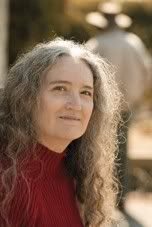
- Theresa Williams
- Northwest Ohio, United States
- "I was no better than dust, yet you cannot replace me. . . Take the soft dust in your hand--does it stir: does it sing? Has it lips and a heart? Does it open its eyes to the sun? Does it run, does it dream, does it burn with a secret, or tremble In terror of death? Or ache with tremendous decisions?. . ." --Conrad Aiken
Facebook Badge

Subscribe
Posts
All Comments
Fave Painting: Eden
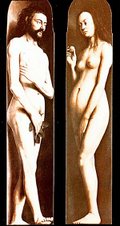
Fave Painting: The Three Ages of Man and Death
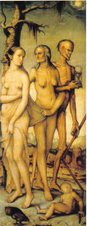
by Albrecht Dürer
My Original Artwork: Triptych
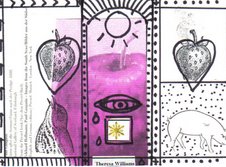
Wishing
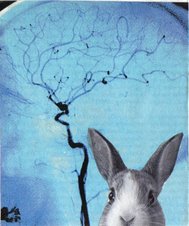
Little Deer
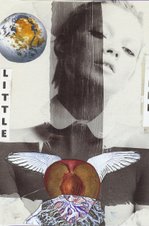
Transformation
Looking Forward, Looking Back