For starters, this link will take you to an overview of Bob Woodward's new book about how the present administration has been in a state of denial about how the war is going in Iraq. Woodward is going to be on 60 Minutes Sunday night; I wouldn't miss it for anything.
Images of war shatter me and move my thinking toward Apocalypse.
I have been asking my composition students to write about the effects of war. I showed them two films, The Grave of the Fireflies and Regret to Inform. Fireflies is an anime tale about the firebombing of Japan during WWII. Regret to Inform is a heartbreaking documentary account of the toll of the Vietnam War on several women, mostly wives, both American and Vietnamese. The stories of the women are threaded together by one American woman's journey to visit the place where her husband, Jeff, died. One of my students, who is a soldier, was very affected by Regret to Inform, saying it has changed everything about his thinking regarding war. After reading his remarks in an in-class writing, I nearly cried.
Papers to grade this weekend and all week long. Papers, papers, papers.
I've been reading so much non-fiction lately that I'm starting to get hungry for fiction again. I just ordered three novels: The Road by Cormac McCarthy, The Echo Maker by Richard Powers, and The Lay of the Land by Richard Ford. I've read McCarthy and Ford before, but not Powers. I especially look forward to The Road. I like McCarthy's dark, Faulknerian view of life and his prose sweeps you away like a rough river. I think all three of these novels may be Apocalyptic in their own way.
Saturday, September 30, 2006
Saturday, September 23, 2006
When Nations grow Old...
"When Nations grow Old, The Arts grow Cold, and Commerce settles on every Tree." --William Blake


The Permanent Realities of Every Thing
He whose face gives no light,
shall never become a star.
In every bosom
a Universe expands as wings.
This world of Imagination
is a World of Eternity:
It is the Divine bosom
into which we shall all go
After the death of the Vegetated body.
This World of Imagination is Infinite and Eternal,
Whereas the world of Generation or Vegetation
Is Finite and Temporal.
There Exists in that Eternal World
The Permanent Realities of Every Thing
Which we see reflected
In this Vegetable Glass of Nature.
by William Blake
shall never become a star.
In every bosom
a Universe expands as wings.
This world of Imagination
is a World of Eternity:
It is the Divine bosom
into which we shall all go
After the death of the Vegetated body.
This World of Imagination is Infinite and Eternal,
Whereas the world of Generation or Vegetation
Is Finite and Temporal.
There Exists in that Eternal World
The Permanent Realities of Every Thing
Which we see reflected
In this Vegetable Glass of Nature.
by William Blake
Tombs
Over the weekend I received an e-mail from a colleague who had recently given me a copy of story she'd been working on so I could give her some comments on it. This colleague got her Master's in Fine Arts (MFA) in Poetry writing and this was her first story attempt.
In the e-mail, my colleage told me not to bother anymore to read and comment on the story, that she'd shared it with a former professor and he'd told her, pretty much, that the story is rubbish and she should stick to poetry.
I hadn't read the story yet, but now I was really curious, so I got it out of my brief case and read it, and I could feel that familiar anger that has to do with the Tersteegs, the "everlasting no." My colleague's professor had given her awful advice, one of those cold, academic responses that make story-telling sound like some kind of specialized skill rather than an innate need.
So now because of the soul-crushing "advice" she'd received, my colleague was ready to give up on story writing all together. I told her I hope she continues to work on her story, that even if it never sees publication, it's still important that she writes it, that she lives with it for a while, that she gives it a chance before she strangles it while it's still in the cradle.
"Sure," I told my colleague. "There are techniques and skills that we acquire along the way, but not knowing those isn't a reason to stop writing stories!"
It's a lovely story, by the way, of a young woman's sexual awakening.
After going through this experience with my colleague, I read Robert Pinsky's column in the Washington Post about the poet Hart Crane, whose editor took him to task for some of the details he used in "Melville's Tomb."
At Melville's Tomb
by Hart Crane
Often beneath the wave, wide from this ledge
The dice of drowned men's bones he saw bequeath
An embassy. Their numbers as he watched,
Beat on the dusty shore and were obscured.
And wrecks passed without sound of bells,
The calyx of death's bounty giving back
A scattered chapter, livid hieroglyph,
The portent wound in corridors of shells.
Then in the circuit calm of one vast coil,
Its lashings charmed and malice reconciled,
Frosted eyes there were that lifted altars;
And silent answers crept across the stars.
Compass, quadrant and sextant contrive
No farther tides . . . High in the azure steeps
Monody shall not wake the mariner.
This fabulous shadow only the sea keeps.
Of Crane's poem, Pinsky says, "[It] is lucid in its overall sweep, and that lucidity of the whole depends upon dramatic mystery of texture and detail. In Crane's somberly ornamented tribute to his predecessor, Melville, human instruments of perception are effective but doomed by their limitations. The lifted eyes of religion, the sextant of navigation, Melville's genius: All are ways toward knowledge that contrive or discover meanings, despite their mortal limitations. In a word, they are tragic."
Crane's editor, though, (another Tersteeg?) didn't understand how a portent could possibly be wound in a shell, and so on. Pinsky writes, "Anyone who has ever tried to explain a joke, or a piece of music, or a passion, can sympathize with Crane's exasperated effort to illuminate the essential shadows. Most things people say have denotative as well as connotative meanings. Just as poems often involve quite strict, straightforward logic, even a purchase order may use one term rather than another just because it feels right."
Amen.
My colleague was ready to take her former professor's advice, she said, because she had placed him upon a pedestal. She is now coming to realize, I hope, that for her to elevate him this way is unrealistic, perhaps even dangerous to her art.
Of course, Crane didn't listen to his editor and change his poem. He knew what felt right. But people who are just beginning to explore a certain kind of writing are vulnerable to "advice." You have to be very careful about giving artists advice, because you can never know what beautiful, dramatic, tragic, unique thing you might be killing.
There are all sorts of tombs. There are the ones people's bodies are buried in, but there are also the tombs that our passions and our greatest ideas are buried in. We bury them ourselves, of course, but it's the Tersteegs who helped kill them in the first place. We can't let the Tersteegs define our art; they're not the boss of us. They don't know everything.
There's a threshold that no teacher or mentor can cross. Only the writer knows where she or he has to go. Neither the Tersteegs nor the Beatrices of the world can go there for us or tell us how to get across that threshold, either.
In the e-mail, my colleage told me not to bother anymore to read and comment on the story, that she'd shared it with a former professor and he'd told her, pretty much, that the story is rubbish and she should stick to poetry.
I hadn't read the story yet, but now I was really curious, so I got it out of my brief case and read it, and I could feel that familiar anger that has to do with the Tersteegs, the "everlasting no." My colleague's professor had given her awful advice, one of those cold, academic responses that make story-telling sound like some kind of specialized skill rather than an innate need.
So now because of the soul-crushing "advice" she'd received, my colleague was ready to give up on story writing all together. I told her I hope she continues to work on her story, that even if it never sees publication, it's still important that she writes it, that she lives with it for a while, that she gives it a chance before she strangles it while it's still in the cradle.
"Sure," I told my colleague. "There are techniques and skills that we acquire along the way, but not knowing those isn't a reason to stop writing stories!"
It's a lovely story, by the way, of a young woman's sexual awakening.
After going through this experience with my colleague, I read Robert Pinsky's column in the Washington Post about the poet Hart Crane, whose editor took him to task for some of the details he used in "Melville's Tomb."
At Melville's Tomb
by Hart Crane
Often beneath the wave, wide from this ledge
The dice of drowned men's bones he saw bequeath
An embassy. Their numbers as he watched,
Beat on the dusty shore and were obscured.
And wrecks passed without sound of bells,
The calyx of death's bounty giving back
A scattered chapter, livid hieroglyph,
The portent wound in corridors of shells.
Then in the circuit calm of one vast coil,
Its lashings charmed and malice reconciled,
Frosted eyes there were that lifted altars;
And silent answers crept across the stars.
Compass, quadrant and sextant contrive
No farther tides . . . High in the azure steeps
Monody shall not wake the mariner.
This fabulous shadow only the sea keeps.
Of Crane's poem, Pinsky says, "[It] is lucid in its overall sweep, and that lucidity of the whole depends upon dramatic mystery of texture and detail. In Crane's somberly ornamented tribute to his predecessor, Melville, human instruments of perception are effective but doomed by their limitations. The lifted eyes of religion, the sextant of navigation, Melville's genius: All are ways toward knowledge that contrive or discover meanings, despite their mortal limitations. In a word, they are tragic."
Crane's editor, though, (another Tersteeg?) didn't understand how a portent could possibly be wound in a shell, and so on. Pinsky writes, "Anyone who has ever tried to explain a joke, or a piece of music, or a passion, can sympathize with Crane's exasperated effort to illuminate the essential shadows. Most things people say have denotative as well as connotative meanings. Just as poems often involve quite strict, straightforward logic, even a purchase order may use one term rather than another just because it feels right."
Amen.
My colleague was ready to take her former professor's advice, she said, because she had placed him upon a pedestal. She is now coming to realize, I hope, that for her to elevate him this way is unrealistic, perhaps even dangerous to her art.
Of course, Crane didn't listen to his editor and change his poem. He knew what felt right. But people who are just beginning to explore a certain kind of writing are vulnerable to "advice." You have to be very careful about giving artists advice, because you can never know what beautiful, dramatic, tragic, unique thing you might be killing.
There are all sorts of tombs. There are the ones people's bodies are buried in, but there are also the tombs that our passions and our greatest ideas are buried in. We bury them ourselves, of course, but it's the Tersteegs who helped kill them in the first place. We can't let the Tersteegs define our art; they're not the boss of us. They don't know everything.
There's a threshold that no teacher or mentor can cross. Only the writer knows where she or he has to go. Neither the Tersteegs nor the Beatrices of the world can go there for us or tell us how to get across that threshold, either.
Friday, September 22, 2006
Meant for Now
Wakefulness isn’t meant for a later date. ... Our creative lives -- the lives we’ve always wanted, full of revelry and rejoicing and the intricate textures of grief, the lives of potential fulfilled, time fattened with intention; they are meant for now.
--Elizabeth Andrew, in an essay entitled “Praying in Place”
--Elizabeth Andrew, in an essay entitled “Praying in Place”
Subscribe to:
Posts (Atom)
Subscribe To


 Posts
All Comments
Posts
All Comments
Dreaming
About Me
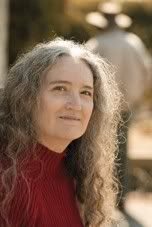
- Theresa Williams
- Northwest Ohio, United States
- "I was no better than dust, yet you cannot replace me. . . Take the soft dust in your hand--does it stir: does it sing? Has it lips and a heart? Does it open its eyes to the sun? Does it run, does it dream, does it burn with a secret, or tremble In terror of death? Or ache with tremendous decisions?. . ." --Conrad Aiken
Facebook Badge

Subscribe
Posts
All Comments
Fave Painting: Eden
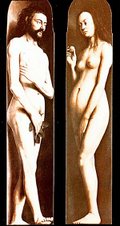
Fave Painting: The Three Ages of Man and Death
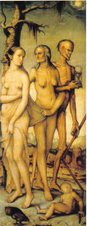
by Albrecht Dürer
My Original Artwork: Triptych
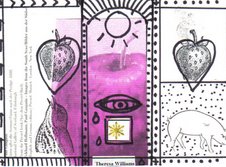
Wishing
Little Deer
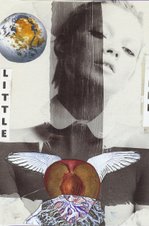
Transformation
Looking Forward, Looking Back