Showing posts with label Eugene O'Neill. Show all posts

Friday, March 31, 2006

He said, She said


I asked for and received permission to post the following e-mail I received from a man I met when I taught workshops at Esalen in Big Sur, CA. His name is John. We stay in contact mainly through the Yahoo site that The Sun Magazine set up for attendees and group leaders of the Sun workshops at Esalen to keep contact with each other. I was happily surprised to find a personal e-mail from John after I posted my first entry on Eugene O'Neill.

I'm posting this for two reasons:

1) I think John really expresses well what kind of writer O'Neill was.
2) Another person e-mailed me to say she has always felt that O'Neill spoke to her in a profound way, that his family in Long Day's Journey into Night represents her dysfunctional family. But she didn't want to say so on the blog; I'm not sure why. I think John's e-mail will inspire her.
~~~~~~~~~~~~~~~~~~~~~~~~~~~~~~~~~~~~~~

Dear Theresa:

I caught some of the documentary, but missed the first half. I ate, slept and drank O’Neill when I was in the Navy: read all his plays and read whatever biographical info that was around back in the 60’s. Having read A Long Day’s Journey into Night several times (and I need to reread it again!) I am always amazed at how well he depicted my dysfunctional family as well!

O’Neill would be a classic example of one who has been to the Dark Side and back. He clearly knew the Shadow and the Shadow knew him! As Edmund suggests from the bow sprint, “…As it is I will always be a stranger who never feels at home, who does not really want and is not really wanted, who can never belong, who must always be a little in love with death.” O’Neill was a long distance ocean swimmer and purportedly once confided in another that his secret wish was to chase the moon beam out across the ocean and get so far out that he could never get back!

Wednesday, March 29, 2006

More thoughts on O'Neill


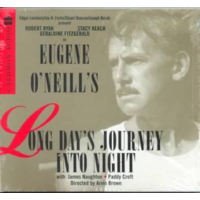
Yes, I am on another one of my tangents. Now, it is Eugene O'Neill. In my last entry, I shared the speech by Edmund in Long Day's Journey into Night. It is a beautiful speech about momentary connection, momentary belonging.

Tonight, I was watching Boston Legal, one of my few TV indulgences other than PBS. In the episode I watched tonight, Alan Shore, one of the lawyers in the firm, develops a devastating psychological condition causing him to mix up his words occasionally and speak in a kind of "gibberish." Shore says this condition is devastating to him because he has always felt disconnected from the world, and words are all he has. If he loses his ability with language, he fears he will be completely alone.

Which brings me back to O'Neill. In the PBS documentary, the portrait that emerges of O'Neill is that he was a very lonely child and very lonely adult. He felt as though he did not belong anywhere. He was an unwanted child. His mother had lost Edmund to measles and felt she didn't deserve to have another child. She also blamed Eugene for her drug addiction. So all O'Neill had was books. His books were his company, his friends, his sense of belonging. Language was his way to belong, to communicate. He had to write! O'Neill wrote all his plays out in pencil. I think now about the documentary again, how he fought the tremor in his hands by writing smaller and smaller until he was cramming a thousand or more words on a single page. His wife had to use a magnifying glass to read it in order to type it for him.

As a result of his lonely existence, O'Neill plumbed the depths of his pain in an effort to understand himself. He was willing to go into the darkest parts of his psyche in order to do this.

Lately, I have been studying the Gospel according to Thomas. One passage in this Gospel says: "Jesus said: When you give rise to that which is within you, what you have will save you. If you do not give rise to it, what you do not have will destroy you."

In other words, what is inside of us is the supernatural light of creation. If it shines, it gives us life. If it doesn't shine, our world is darkness. O'Neill knew the darkness well. He tried to run from it by drinking. He lived a self-destructive lifestyle that nearly killed him. When he was well, he felt as though he had been raised from the dead.

In the Thomas Gospel also: "Jesus said: One who knows everything else but who does not know himself knows nothing."

So salvation rests within us. O'Neill, I think, found a kind of salvation once he'd finished Long Day's Journey into Night. It is indeed hard to dive that deep, that far, into what frightens you most. But if we don't know ourselves, we don't have access to our own light. If we access our own light, perhaps we will also illuminate the world. Jesus seems to be saying that if we substitute knowledge in general for self-knowledge, we are misguided.

Sometimes I worry that in writing about my own life, I write a lesser kind of story. Deep down, I know this isn't true. As long as I'm not self-indulgent, as long as I connect my pain to something greater than myself, I'm telling a story for the ages.

Monday, March 27, 2006

Something Greater


I just watched a documentary on PBS about Eugene O'Neill. The documentary was directed by Ric Burns (Ken Burns' brother), whose work I've admired for years, especially his documentary The Way West. It's been a long time since I've thought about O'Neill's work. I watched The Iceman Cometh about a year ago. And I do remember that as a child I watched Long Day's Journey into Night on television and was struck by the power of it. My blogging friends will recognize a certain pattern in my youthful reading and movie-watching habits. From an early age I was drawn to dark tragedies and adult themes.

Watching the documentary tonight, I saw a particularly handsome actor (Robert Sean Leonard) speaking the words of Edmund from Long Day's Journey into Night and suddenly remembered that I'd once copied this speech into one of my school notebooks. I don't remember how old I was, but I must have been in junior high. Edmund is the character who is the voice of Eugene O'Neill, and Edmund is the real name of O'Neill's dead baby brother. So O'Neill purposely chose to speak though "a ghost."

Today, I gave a taped interview with a student. I was trying to explain to her how I've come to feel that writing takes me to a sacred space. Edmund's words, below, describe how he felt when he was near the sea. It's the same way I feel when I write, when the writing is happening as it should:


EDMUND: ... I lay on the bowsprit, facing astern, with the water foaming into spume under me, the masts with every sail white in the moonlight, towering high above me. I became drunk with the beauty and the singing rhythm of it, and for a moment I lost myself--actually lost my life. I was set free. I dissolved in the sea, became white sails and flying spray, became beauty and rhythm, became moonlight and the ship and the high dim-starred sky. I belonged without, past or future, within peace and unity and a wild joy, within something greater than my own life, or the life of Man, to Life itself. To God if you want to put it that way. ... And several other times in my life, when I was swimming far out, or lying alone on the beach, I have had the same experience. Became the sun, the hot sand, green seaweed anchored to a rock, swaying in the tide. Like a saint's vision of beatitude. Like the veil of things as they seem drawn back by an unseen hand. For a second you see--and seeing the secret, are the secret. For a second there is meaning. Then the hand lets the veil fall and you are alone, lost in the fog again, and you stumble on toward nowhere, for no good reason. It was a great mistake my being born a man, I would have been much more successful as a seagull or a fish. As it is I will always be a stranger who never feels at home, who does not really want and is not really wanted, who can never belong, who must always be a little in love with death.

Dreaming

Dreaming

About Me

My photo
Northwest Ohio, United States
"I was no better than dust, yet you cannot replace me. . . Take the soft dust in your hand--does it stir: does it sing? Has it lips and a heart? Does it open its eyes to the sun? Does it run, does it dream, does it burn with a secret, or tremble In terror of death? Or ache with tremendous decisions?. . ." --Conrad Aiken

Followers

Search This Blog

Epistle, by Archibald MacLeish

What I'm Listening To

My Music

Great Artists

www.flickr.com
This is a Flickr badge showing public photos from theresarrt7. Make your own badge here.

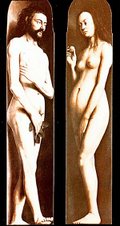
Fave Painting: Eden

Fave Painting:  Eden

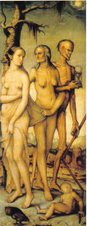
Fave Painting: The Three Ages of Man and Death

Fave Painting:  The Three Ages of Man and Death
by Albrecht Dürer

From the First Chapter

The Secret of Hurricanes : That article in the Waterville Scout said it was Shake- spearean, all that fatalism that guides the Kennedys' lives. The likelihood of untimely death. Recently, another one died in his prime, John-John in an airplane. Not long before that, Bobby's boy. While playing football at high speeds on snow skis. Those Kennedys take some crazy chances. I prefer my own easy ways. Which isn't to say my life hasn't been Shake-spearean. By the time I was sixteen, my life was like the darkened stage at the end of Hamlet or Macbeth. All littered with corpses and treachery.

My Original Artwork: Triptych

My Original Artwork:  Triptych

Wishing

Wishing

Little Deer

Little Deer

Transformation

Transformation

Looking Forward, Looking Back

Looking Forward, Looking Back
CURRENT MOON
Powered By Blogger

Labels