Edward Thomas is one of my favorite poets of the Modern era. He's often lumped in with the "war poets" of that time, and he could write convincingly of ugliness and despair. But it's a sweet poem, "Words" that brings me to Thomas today.
It's natural for writers to reflect on the sources of their inspiration. Few have done it as gently and honestly as Thomas has here. He speaks directly to "Words," not cajoling or begging or feeling sorry for himself. He simply asks for the blessing to be able to say what he needs to say.
In speaking of writing, we often say that we "use" words. It's as though words are a resource not unlike the oil we pump from the bottom of the ocean. After reading Thomas's poem, the idea of "using" words seems coarse. Thomas says the word "use," too, but, ah, it's the way he says it in conjunction with "choose" which has about it a sweet whiff of grace.
It's good to remind ourselves where it all begins, in the kind of glory that Thomas shows in his poem "Words," in the humility Thomas expresses, in his love for the words that patiently give themselves to us.
Words
Out of us all
That make rhymes
Will you choose
Sometimes -
As the winds use
A crack in a wall
Or a drain,
Their joy or their pain
To whistle through -
Choose me,
You English words?
I know you:
You are light as dreams,
Tough as oak,
Precious as gold,
As poppies and corn,
Or an old cloak:
Sweet as our birds
To the ear,
As the burnet rose
In the heat
Of Midsummer:
Strange as the races
Of dead and unborn:
Strange and sweet
Equally,
And familiar,
To the eye,
As the dearest faces
that a man knows,
And as lost homes are:
But though older far
Than oldest yew, -
As our hills are, old, -
Worn new
Again and again:
Young as our streams
After rain:
And as dear
As the earth which you prove
That we love.
Make me content
With some sweetness
From Wales
Whose nightingales
Have no wings, -
From Wiltshire and Kent
And Herefordshire, -
And the villages there, -
From the names, and the things
No less.
Let me sometimes dance
With you,
Or climb
Or stand perchance
In ecstasy,
Fixed and free
In a rhyme,
As poets do.
Edward Thomas
Showing posts with label Modern Poetry. Show all posts
Showing posts with label Modern Poetry. Show all posts
Monday, September 06, 2010


Wednesday, October 21, 2009
Moodling
Brenda Ueland, bless her old soul, speaks of the necessity of the writer for what she called "moodling." She meant slowing your pace, diddling around, until you find the origin of your inner resources. It's a concept tailor made for me.
My mind catches fire, but not before lots of poking around in the ashes, searching for embers.
I came to this blog three times already, trying to think of something to say. Then moodled around on the computer while listening to music. Dylan's "Not Dark Yet" was playing as I read a status update from Amy Newman, a fine poet I met when she was a visiting writer at BGSU. She wrote of October and how we can't trust its pretty days.
That prompted me to find an October poem, and I stumbled on this one by Frost:
October
by Robert Frost
O hushed October morning mild,
Thy leaves have ripened to the fall;
Tomorrow's wind, if it be wild,
Should waste them all.
The crows above the forest call;
Tomorrow they may form and go.
O hushed October morning mild,
Begin the hours of this day slow.
Make the day seem to us less brief.
Hearts not averse to being beguiled,
Beguile us in the way you know.
Release one leaf at break of day;
At noon release another leaf;
One from our trees, one far away.
Retard the sun with gentle mist;
Enchant the land with amethyst.
Slow, slow!
For the grapes' sake, if they were all,
Whose leaves already are burnt with frost,
Whose clustered fruit must else be lost--
For the grapes' sake along the all.
What is left for me to say, except Frost has said it all, bundled all my perceptions of October and presented them to me as a gift. "Make the day seem to us less brief," he writes. October does remind us there is no forever.
Nothing profound from me here. Just moodling.
My mind catches fire, but not before lots of poking around in the ashes, searching for embers.
I came to this blog three times already, trying to think of something to say. Then moodled around on the computer while listening to music. Dylan's "Not Dark Yet" was playing as I read a status update from Amy Newman, a fine poet I met when she was a visiting writer at BGSU. She wrote of October and how we can't trust its pretty days.
That prompted me to find an October poem, and I stumbled on this one by Frost:
October
by Robert Frost
O hushed October morning mild,
Thy leaves have ripened to the fall;
Tomorrow's wind, if it be wild,
Should waste them all.
The crows above the forest call;
Tomorrow they may form and go.
O hushed October morning mild,
Begin the hours of this day slow.
Make the day seem to us less brief.
Hearts not averse to being beguiled,
Beguile us in the way you know.
Release one leaf at break of day;
At noon release another leaf;
One from our trees, one far away.
Retard the sun with gentle mist;
Enchant the land with amethyst.
Slow, slow!
For the grapes' sake, if they were all,
Whose leaves already are burnt with frost,
Whose clustered fruit must else be lost--
For the grapes' sake along the all.
What is left for me to say, except Frost has said it all, bundled all my perceptions of October and presented them to me as a gift. "Make the day seem to us less brief," he writes. October does remind us there is no forever.
Nothing profound from me here. Just moodling.
Wednesday, December 24, 2008
The Circus Animals' Desertion IV
 "The Circus Animals' Desertion IV"
This is the last in my series of pictures depicting Yeats's "The Circus Animals' Desertion." This photo illustrates the last lines:
I must lie down where all ladders start
In the foul rag and bone shop of the heart.
I chose to depict a death-in-life scene, showing the broken refuse of human dreams next to signs of new life. The poor chariot has flat tires, the circus animals are ghost-like, and the snakes devour the eggs, but many eggs do continue, and those hatch new birds. Snakes in my pictures are never bad: they are symbols of regeneration.
Yeats says that his "masterful" images of the past "grew in pure mind" but they began out of:
a mound of refuse or the sweepings of a street,
Old kettles, old bottles, and a broken can,
Old iron, old bones, old rags, that raving slut
Who keeps the till...
Our best work comes not from glorious themes but from that which the mind has discarded as unimportant. That is where the imagination resides, in the heart where broken images are waiting for us to make them into new art.
Tuesday, December 23, 2008
The Circus Animals' Desertion III
 "The Circus Animals' Desertion III"
In stanzas 2-4, Yeats tells us that he can do little but "enumerate old themes." In stanza 4, he says of what he has written:
It was the dream itself enchanted me:
character isolated by deed.
To engross the present and dominate memory.
Players and painted stage took all my love,
And not those things they were emblems of.
In my drawing, each character is isolated by a deed: walking on stilts, tug of war, balancing on a pig, training a dog to jump through a hoop. My little goat is watching with amusement from behind the curtain.
Monday, December 22, 2008
The Circus Animals' Desertion II
 "The Circus Animals' Desertion II"
In the first stanza of "The Circus Animals' Desertion," Yeats writes:
I sought a theme and sought for it in vain
I sought it daily for six weeks or so.
Maybe at last, being but a broken man,
I must be satisfied with my heart, although
Winter and summer till old age began
My circus animals were all on show
...that burnished chariot,
Lion and woman and the lord knows what.
Yeats looks back on his former poems with an element of regret. He seems to think that, like a circus, his early work was all for show. Yeats wants to find a way back to the true heart of his work.
My little drawing is of the chariot, the lion, and the woman, as well as a few circus animals. The clownish goat is my favorite, so I will probably put him in every picture I draw in this series.
~~~~~~~~~~~~~~~~~~~~~~~~~~~~~~~~
On another note: it has been so cold today. Last night, high winds shook the icy trees. All night ice shards were hurled against the house. The dogs were very upset by all the wild noise. I've never seen weather exactly like this before. It has just been a bitter, bitter night and day.
At around 7 a.m. our electricity went out and stayed off all day. It wasn't restored until almost 7 p.m. We heat with wood, so we were fairly warm, although the temperatures continued to drop through the day until it was below zero. The wind sucked the warmth out of this old house and before we knew it our pipes were starting to freeze in the bathrooms. This is not a problem we usually have. We caught the problem just in time.
Sunday, December 21, 2008
The Circus Animals' Desertion
 "The Circus Animals' Desertion"
I wanted to do a simple drawing today with ink and colored pencils. I love folk art, and I wanted to do a drawing in that style. Doing folk art lets you be creative in such a pure and childlike way.
I based the images on a poem by Yeats called "The Circus Animals' Desertion." It is about the awful moment when inspiration deserts us, when we fear our creative life is dead. In the first stanza he writes:
I sought a theme and sought for it in vain,
I sought it daily for six weeks or so.
In this picture, the animals represent the imagination. The people have chained a bear to a tree. The horse, which is symbolic of primal energy, has been tamed and is in service to humans. The goat and the unicorn are escaping into the sky, not only an open sky, but the night sky, a place of dreams.
Some people do not notice the animals' escape; others look into the sky and gesture to the animals longingly. The man on the horse tries to stop the animals by using force. I think each person in the picture says something about how we deal with the loss of our creative power. I remember what John Trudell said in the documentary about him: Our power comes from our relationship to life.
I may do a whole series of these and base them on different lines from Yeats's poem. I had such a good time doing this.
Saturday, September 20, 2008
Starting from the Lowest Possible Place
"I must lie down where all the ladders start," wrote Yeats in The Circus Animals' Desertion, "In the foul rag and bone shop of the heart."
This poem, one of his last, shows a poet searching for inspiration. The speaker concludes it may be found not in the beauty of the heart's core but within "a mound of refuse or the sweepings of a street, / Old kettles, old bottles, and a broken can, / Old iron, old bones, old rags ..."
In this stanza, Yeats reveals an important life truth. It is one he has explored before; In his poem, The Coming of Wisdom with Time, Yeats wrote that "leaves are many" but "the root is one." As a youth, the speaker "swayed my leaves and flowers in the sun" but now says it may be time to "wither into the truth." No matter how showy the leaves, the root that taps the earth for water and nourishment is the true place. It is also a dark place.
In both poems, Yeats rejects the romanticism of his earlier work. As he wrote in a letter to Lady Gregory: "We must accept the baptism of the gutter." The human condition need not be transcended if one learns to accept it with gusto.
Years later, the poet Theodore Roethke would also recognize that his most masterful poetry came from a primal place. Roethke, like Yeats, wanted to achieve human sanctity. In Roethke's mature work, inspiration often came from the most lowly of places, such as when he wrote of the worm climbing up the winding stair. Nature might also be menacing as in his poem Orchids:
They lean over the path,
Adder-mouthed,
Swaying close to the face,
Coming out, soft and deceptive,
Limp and damp, delicate as a young bird's tongue;
Their fluttery fledgling lips
Move slowly,
Drawing in the warm air.
In the second stanza, the orchids are described as "So many devouring infants" with "Lips neither dead nor alive" and "Loose ghostly mouths / Breathing."
Yeats's baptism of the gutter is made real in Roethke's poem Cuttings (later):
This urge, wrestle, resurrection of dry sticks,
Cut stems struggling to put down feet,
What saint strained so much,
Rose on such lopped limbs to a new life?
I can hear, underground, that sucking and sobbing,
In my veins, in my bones I feel it, --
The small waters seeping upward,
The tight grains parting at last.
When sprouts break out,
Slippery as fish,
I quail, lean to beginnings, sheath-wet.
The second stanza is lusty. It mirrors Yeats's thought that if we can accept the limitations of life boldly, we will find inspiration aplenty. Yeats said that such acceptance allows us to come into our "force."
We come into our strength as artists and as people when we quit trying to transform ugliness into beauty. Ugliness is what it is. Learn to live with it. Lift it up. Study and reveal it. Let it give you life, just as beauty does.
This poem, one of his last, shows a poet searching for inspiration. The speaker concludes it may be found not in the beauty of the heart's core but within "a mound of refuse or the sweepings of a street, / Old kettles, old bottles, and a broken can, / Old iron, old bones, old rags ..."
In this stanza, Yeats reveals an important life truth. It is one he has explored before; In his poem, The Coming of Wisdom with Time, Yeats wrote that "leaves are many" but "the root is one." As a youth, the speaker "swayed my leaves and flowers in the sun" but now says it may be time to "wither into the truth." No matter how showy the leaves, the root that taps the earth for water and nourishment is the true place. It is also a dark place.
In both poems, Yeats rejects the romanticism of his earlier work. As he wrote in a letter to Lady Gregory: "We must accept the baptism of the gutter." The human condition need not be transcended if one learns to accept it with gusto.
Years later, the poet Theodore Roethke would also recognize that his most masterful poetry came from a primal place. Roethke, like Yeats, wanted to achieve human sanctity. In Roethke's mature work, inspiration often came from the most lowly of places, such as when he wrote of the worm climbing up the winding stair. Nature might also be menacing as in his poem Orchids:
They lean over the path,
Adder-mouthed,
Swaying close to the face,
Coming out, soft and deceptive,
Limp and damp, delicate as a young bird's tongue;
Their fluttery fledgling lips
Move slowly,
Drawing in the warm air.
In the second stanza, the orchids are described as "So many devouring infants" with "Lips neither dead nor alive" and "Loose ghostly mouths / Breathing."
Yeats's baptism of the gutter is made real in Roethke's poem Cuttings (later):
This urge, wrestle, resurrection of dry sticks,
Cut stems struggling to put down feet,
What saint strained so much,
Rose on such lopped limbs to a new life?
I can hear, underground, that sucking and sobbing,
In my veins, in my bones I feel it, --
The small waters seeping upward,
The tight grains parting at last.
When sprouts break out,
Slippery as fish,
I quail, lean to beginnings, sheath-wet.
The second stanza is lusty. It mirrors Yeats's thought that if we can accept the limitations of life boldly, we will find inspiration aplenty. Yeats said that such acceptance allows us to come into our "force."
We come into our strength as artists and as people when we quit trying to transform ugliness into beauty. Ugliness is what it is. Learn to live with it. Lift it up. Study and reveal it. Let it give you life, just as beauty does.
Monday, April 21, 2008
45/50
from Preludes
by T. S. Eliot
The winter evening settles down
With smell of steaks in passageways,
Six o'clock.
The burnt-out ends of smoky days.
And now a gusty shower wraps
The grimy scraps
Of withered leaves about your feet
And newspapers from vacant lots;
The showers beat
On broken blinds and chimney-pots,
And at the corner of the street
A lonely cab-horse steams and stamps,
And then the lighting of the lamps.
Ah, the boredom and the horror of human life. Eliot captured it like none other, I think.
Even as the Spring semester winds down (one more week!), I'm thinking ahead to Fall and teaching Modern Poetry again.
by T. S. Eliot
The winter evening settles down
With smell of steaks in passageways,
Six o'clock.
The burnt-out ends of smoky days.
And now a gusty shower wraps
The grimy scraps
Of withered leaves about your feet
And newspapers from vacant lots;
The showers beat
On broken blinds and chimney-pots,
And at the corner of the street
A lonely cab-horse steams and stamps,
And then the lighting of the lamps.
Ah, the boredom and the horror of human life. Eliot captured it like none other, I think.
Even as the Spring semester winds down (one more week!), I'm thinking ahead to Fall and teaching Modern Poetry again.
Saturday, April 19, 2008
42/50
I am so tired of Robert Frost's two most famous poems. Whose woods are these? And two roads diverged. I've heard these poems repeated and repeated, endured countless references to them in the media and in student work to the point of becoming so sick and tired of Robert Frost. And all those images of him on TV shaking that gray head of his...and those eyebrows! Those eyebrows!
And that's why I've put off getting into Robert Frost's poetry. However, tonight I was skimming through an anthology and found a Frost poem that I like very much. I really must look at some of his less read work. He was a stunning poet.
Desert Places
by Robert Frost
Snow falling and night falling fast oh fast
In a field I looked into going past,
And the ground almost covered smooth in snow,
But a few weeds and stubble showing last.
I know, I know, another snowy evening. But this poem makes me curious to look back at that other, oft repeated poem. Maybe there's something I can salvage from that old standby. The woods are lovely, dark, and deep. Suddenly that sounds a bit menacing. The first line in this stanza certainly sounds menacing: snow and night falling "fast oh fast." It feels almost apocalyptic. The weeds and stubble showing through the snow has always gripped my attention and tried to tell me some strange, elusive truth.
The woods around it have it--it is theirs,
All animals are smothered in their lairs.
I am too absent-spirited to count;
The loneliness includes me unawares.
Notice, the animals aren't "safe" in their lairs, but smothered in them. Even the promise of home and a warm bed holds no appeal to this speaker. And the speaker doesn't even warrant being counted among the living: "I am too absent-spirited to count..." Even loneliness, personified here, doesn't notice the speaker! That is an extreme form of alienation.
And lonely as it is that loneliness
Will be more lonely ere it will be less--
A blanker whiteness of benighted snow
With no expression, nothing to express.
As profound as this present loneliness is, the speaker knows it will grow before it will diminish. Life will become an even "blanker whiteness" than it is now. The speaker is nearly completely hollowed out, having "no expression, nothing to express.
They cannot scare me with their empty spaces
Between stars--on stars where no human race is.
I have it in me so much nearer home
To scare myself with my own desert places.
The speaker cannot be frightened by any form of alienation, not even the vastness, the airless void, of outer space. The speaker's "own desert places" are places most terrifying and void of spiritual significance. It is the void in the speaker's own psyche.
Thankfully, there have been few times in my life when I've felt this empty and alone. But I have felt it, and so I know how true this poem is to the experience.
I really must begin paying more attention to Frost. I've got to shake my head free from the old prejudices that have gripped me so long.
And that's why I've put off getting into Robert Frost's poetry. However, tonight I was skimming through an anthology and found a Frost poem that I like very much. I really must look at some of his less read work. He was a stunning poet.
Desert Places
by Robert Frost
Snow falling and night falling fast oh fast
In a field I looked into going past,
And the ground almost covered smooth in snow,
But a few weeds and stubble showing last.
I know, I know, another snowy evening. But this poem makes me curious to look back at that other, oft repeated poem. Maybe there's something I can salvage from that old standby. The woods are lovely, dark, and deep. Suddenly that sounds a bit menacing. The first line in this stanza certainly sounds menacing: snow and night falling "fast oh fast." It feels almost apocalyptic. The weeds and stubble showing through the snow has always gripped my attention and tried to tell me some strange, elusive truth.
The woods around it have it--it is theirs,
All animals are smothered in their lairs.
I am too absent-spirited to count;
The loneliness includes me unawares.
Notice, the animals aren't "safe" in their lairs, but smothered in them. Even the promise of home and a warm bed holds no appeal to this speaker. And the speaker doesn't even warrant being counted among the living: "I am too absent-spirited to count..." Even loneliness, personified here, doesn't notice the speaker! That is an extreme form of alienation.
And lonely as it is that loneliness
Will be more lonely ere it will be less--
A blanker whiteness of benighted snow
With no expression, nothing to express.
As profound as this present loneliness is, the speaker knows it will grow before it will diminish. Life will become an even "blanker whiteness" than it is now. The speaker is nearly completely hollowed out, having "no expression, nothing to express.
They cannot scare me with their empty spaces
Between stars--on stars where no human race is.
I have it in me so much nearer home
To scare myself with my own desert places.
The speaker cannot be frightened by any form of alienation, not even the vastness, the airless void, of outer space. The speaker's "own desert places" are places most terrifying and void of spiritual significance. It is the void in the speaker's own psyche.
Thankfully, there have been few times in my life when I've felt this empty and alone. But I have felt it, and so I know how true this poem is to the experience.
I really must begin paying more attention to Frost. I've got to shake my head free from the old prejudices that have gripped me so long.
I think I need to learn the lesson that the great critic Lionel Trilling learned in 1958:
Saturday, April 05, 2008
34/50
Dream
Last night I dreamed I was doing some research on Emily Dickinson and I found some artwork she had done, specifically a "needlepoint" that she had made for D. H. Lawrence. The subject matter was the nude female human form. That Emily, who knew?
Last night I dreamed I was doing some research on Emily Dickinson and I found some artwork she had done, specifically a "needlepoint" that she had made for D. H. Lawrence. The subject matter was the nude female human form. That Emily, who knew?
Tuesday, November 13, 2007
Emily Dickinson Dysfunction, Part 2
I might not have ever come back to Emily Dickinson, except that I felt I had to cover her to some extent in the Modern Poetry course. Almost all the textbooks credit Whitman and Dickinson as being important forerunners to Modern Poetry. While discussing Dickinson, however, I had to admit to my students that I felt as though I was being "busted," my lack of appreciation for her work made real in front of my captive audience. Some of the students spoke of their appreciation for her work; others fell in my camp, not totally turned off to her but rather perplexed regarding her work.
Subsequently, I have made it my goal to get to know Emily as best I can.
I used to be disappointed in myself for not being a fast learner, for being someone who had to struggle toward enlightenment. But now I recognize that for me the struggle is part of the blessing. Getting to know Emily and to admire her work (as I feel I am capable of doing) is going to be a significant journey for me.
As it has turned out, I share more with Emily than I ever could have imagined.
Although in the past I have been put off by her stark style, her ambiguous punctuation and capitalization, the contradictory interpretations of her work that perplex, I am just now coming to know the brilliant possibilities of her poetry.
More to come.
Subsequently, I have made it my goal to get to know Emily as best I can.
I used to be disappointed in myself for not being a fast learner, for being someone who had to struggle toward enlightenment. But now I recognize that for me the struggle is part of the blessing. Getting to know Emily and to admire her work (as I feel I am capable of doing) is going to be a significant journey for me.
As it has turned out, I share more with Emily than I ever could have imagined.
Although in the past I have been put off by her stark style, her ambiguous punctuation and capitalization, the contradictory interpretations of her work that perplex, I am just now coming to know the brilliant possibilities of her poetry.
More to come.
Monday, November 12, 2007
On Nov. 12
On this day in 1935, 27-year-old Theodore Roethke was hospitalized for the first of the manic-depressive breakdowns that would recur throughout his life. Roethke had just begun a teaching post at Michigan State University and, according to colleagues, had been drinking heavily all semester, dozens of cups of coffee and bottles of cola a day as well as alcohol. On the previous evening, a cold one, he had taken a long walk in the woods without a coat and eventually with only one shoe; the next morning, after deciding "to cut my eight o'clock class deliberately just to see how long they would stick around," Roethke took another walk in the woods, also coatless. He was shivering and delirious when he arrived at the dean's office, where he planned "to explain one or two things about this experiment"; the dean, trained as a mathematician, called for the doctors. Roethke later told friends that while on his first walk he had had a mystical experience with a tree -- even pointed out the tree, while retrieving his shoe. The tree taught him "the secret of Nijinsky," he said, perhaps referring to that passage in Nijinsky's diary -- written while Nijinsky was a mental patient -- that describes learning from a tree that "human beings do not understand feelings."
Wednesday, June 27, 2007
Preparing for the Fall
 My note taking and letter writing desk. My Walt Whitman Box seems to be right at home.
For the last week or so I've been taking a lot of notes in preparation for teaching the course in Modern Poetry in the Fall. It's a 300-level course, so class periods are going to have to be devoted to considerably more than asking the students, "What do you think this means?" Truthfully, I can't think of an artistic movement more complex or confusing than Modernism, and the last thing I want is for the students to throw their hands up in despair.
Last night I worked on Hart Crane and Wallace Stevens. I still have a lot to sort through regarding Stevens, but I wanted to tackle Ezra Pound this evening. This is the desk where I do my note taking and prepare my lesson plans. I write letters at this desk, as well. Occasionally I grade papers here, too, although in winter I most often do that in a cozy chair beside the wood stove.
Thursday, June 07, 2007
Reading, Researching, and Pulling Weeds
 Sweet Pea glances up at me this afternoon as I write my blog entry.
 The nest I found on the ground as I was pulling weeds in my flower garden this morning. Finding the nest made me think of Lorine Niedecker's life and poems.
I'm sitting at my computer after a morning of pulling weeds in my flower garden. Sweet Pea is in her basket at my feet. She's been romping with Buddha all morning, and she's very content to be still. Soon, she'll be sleeping.
The flower garden was far gone. It's a simple garden of hardy perennials, which explains why there was anything in the garden left worth saving. It'd been neglected for two years: 2005 because of the Ohio River float and 2006 because of some family health issues. Allen and I have a swinging bench overlooking the garden. We sit and have our coffee there most days.
I've been embarrassed to look out over the garden. Its sorry state makes me feel neglectful and inept. So this morning, I finally went out there and started hoeing and pulling. Yesterday was cool and beautiful: why didn't I do it yesterday? Today, heat is churning up from Texas (I'd been warned about this by the weatherman yesterday) and it wasn't long before I was sweating, although I was doing the work during the cool of the day and while the garden was in shade.
Most of the weeds were easy to pull. There's a kind of sticky weed that gets all over everything that put hitchers all over my pants, some thistle, field daisies.
I got a start when I yanked a canopy of brush and weeds and saw a beautiful little bird's nest. What kind of bird builds its nest on the ground--does anybody out there know?
This is how it works for me: my mind gets in a groove, a rut. It's the kind of mindset that says that weeds are bad and I'm a lazy woman. Then something seemingly small leads me to epiphany. It happened during a walk in Southern Ohio a few years ago. I was hot and my hip ached. I sat on a cool rock to rest and noticed tiny sedum growing on the rock's surface. Touching the sedum gave me strength and made me feel connected to life.
This morning, I gasped when I saw the nest, and then I felt my whole body relax. Although, I felt like an intruder on something intimate and sacred, I felt awakened and alive to that intimacy, to that sacredness.
The experience made me think of some reading and research I'd been doing last night. I'd been reading about Lorine Niedecker. I'll be teaching her work in the class on Modern Poetry in the fall. Anyone who has ever studied Modern Poetry knows it's dominated by men, very powerful men: Pound, Eliot, William Carlos Williams, Jeffers, Wallace Stevens and the likes of them. (These men are worthy of study!)
There are a few women whose names everyone knows, like Moore and Millay. Anthologies sometimes boast of adding more women poets to the mix, but women are still not well represented in any anthology. (I read that Hugh Kenner, a scholar in the field who was hard of hearing, and a critic I greatly admire, used to turn off his hearing aid when women complained that he neglected women writers.)
Unlike Moore and Millay, Lorine Niedecker is not well known and her work is seldom read. She lived a solitary life in Wisconsin, in a rustic cabin that often flooded. In one of her poems she wrote about how little possessions meant to her, saying that she was willing to give her things to the flood. She wrote about things she saw every day, short poems of great beauty and power. She had an affair with Louis Zukofsky whose poetry is better known than hers and whom--if you can believe what you read--she never really got over.
I've read Zukofsky's work and--on a personal level--much prefer Niedecker's.
She did editing work for a time, but when her eyesight became poor, she made a living scrubbing hospital floors. The people who lived near Lorine Niedecker didn't even know until after her death that she was a poet. She thought if they knew, they'd hold her at a distance and hide all the aspects of themselves that she loved observing.
This is one of my--so far--favorite poems of hers:
Wilderness
You are the man
You are my other country
and I find it hard going
You are the prickly pear
You are the prickly pear
You are the sudden violent storm
the torrent to raise the river
the torrent to raise the river
to float the wounded doe
~~~~~~~~~~~~~~~~~~~~~~
I don't know that I'd have the courage to live as she did, geographically and socially isolated, without amenities that make life so easy and nice. But when I found the bird's nest, I felt Niedecker's wilderness in an instant. I saw that nature is my other country.
And I thought of Lorine Niedecker, living alone, writing of the things I ignore on a daily basis, writing of the great sacred things I miss because my mind is in a groove, on a selfish and boring plane.
Subscribe to:
Posts (Atom)
Subscribe To


 Posts
All Comments
Posts
All Comments
Dreaming
About Me
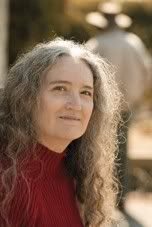
- Theresa Williams
- Northwest Ohio, United States
- "I was no better than dust, yet you cannot replace me. . . Take the soft dust in your hand--does it stir: does it sing? Has it lips and a heart? Does it open its eyes to the sun? Does it run, does it dream, does it burn with a secret, or tremble In terror of death? Or ache with tremendous decisions?. . ." --Conrad Aiken
Facebook Badge

Subscribe
Posts
All Comments
Fave Painting: Eden
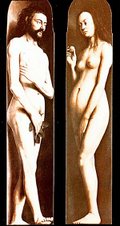
Fave Painting: The Three Ages of Man and Death
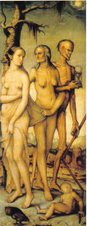
by Albrecht Dürer
My Original Artwork: Triptych
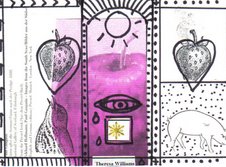
Wishing
Little Deer
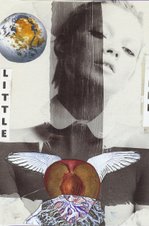
Transformation
Looking Forward, Looking Back