Showing posts with label holiday. Show all posts

Monday, February 14, 2011

Goings On


I got up today to Valentine surprises. 

Allen had already been to town and bought the balloon (which I found floating up out of the bathtub), the flower, the onions (I love sweet onions--I can eat them like apples.  I've always, always loved onions.  When I was a baby, and my family was traveling across the country, my mother gave me green onions to suck on to keep me quiet.  Allen knows how much I love onions!)  He also brought two cream puffs, my favorite pastry, and he's going to cook my supper tonight. 

Such goings on.

In other news, I have two non-fiction pieces in an online magazine called Talking Writing.  You'll find them here: 
 
 
and here:
 
 
They've invited me to be a regular contributor.  It feels good to be writing essays again.  I love Talking Writing, since there's nothing I like talking about better than writing.  This magazine is all about "talking" writing, so leave a comment if you feel so moved. 
 
I had a short story published in September 2010 in The Sun. 
 
In April, I'll be flying to San Antonio.  I'll be on a creative panel there for the American Culture/Pop Culture conference, reading several of my haibun.  Go here:  http://twilliams-creative-writing.blogspot.com/  if you want to read some of the haibun.   Or click on the Publications Page on this blog. 
 
Such goings on.


Saturday, December 20, 2008

Making Christmas #3

Happy Holidays!

Tuesday, December 16, 2008

Making Christmas #2

I've been thinking about stars a lot lately; they seem to be in everything I make, whether visual or written.

Saturday, December 13, 2008

Making Christmas #1

Making your own Christmas cards is fun.

Thursday, January 03, 2008

The New Year

1. This is my 300th post.
2. I vow to create at least 50 posts during 2008.
3. I vow to complete at least two short stories and to work on my new novel during 2008.
4. That is enough vowing for now.

Saturday, November 24, 2007

Thanksgiving was excellent

Thanksgiving was excellent. Everyone was well, and the food all turned out fine.

Turkey
dressing
macaroni and cheese
noodle salad (with garden peas, broccoli, red pepper, green pepper, celery, grated colby cheese)
baked beans
sweet potato casserole
cranberry sauce (whole berry)
fruitcake
banana bread
biscuits

We all laughed a lot. I got some good photos.

Thursday, July 05, 2007

About Suffering They Were Right, The Old Masters II

The Glass City Sky Bridge in Toledo. (The tall bridge). Five construction workers lost their lives in separate incidents during the five year building period.
Riverfront restaurants which play music well into the night.

On the night of the 4th, Allen and I took Blue Girl out on the Maumee River in Toledo to watch the fireworks. I'm not really a fireworks sort of person, but I enjoy being an observer and particularly enjoy the lull that happens when the fireworks are over. This is the second year in a row we've taken the boat out to watch the fireworks.


We like to stay late into the night putting up and down the river, watching stray fireworks and listening to the music coming from the waterfront restaurants. Last night we laughed that after a certain hour the oldies music gave way to the "Chucka, chucka, chucka" of rap and similar youth oriented sounds. Ah to have the young blood that can party all night. I wouldn't use it to party, though, but to read and write. I've never been a party girl, nor a fireworks girl, but I do miss being able to pull those all night study and writing sessions without the kind of ramifications I face now.


The best, though, is gliding out of town on the black water. Last night the water was so calm it was like glass. That's not the most creative simile I could have used, but none other seems closer to the truth.


It was a chilly evening, and, like last year, I longingly watched a camp-like fire flaring on shore. I like the feeling of moving in and out of the bounds of "civilization." You can't call it wilderness, but it is away from the crowds. We didn't take the boat out of the water until nearly 3 a.m.


Of course, I took my thoughts about the documentary The Bridge with me, and I felt a little more melancholy than usual. I snapped a photo of the Glass City Sky Bridge which was just recently completed. Five construction workers died during the building of that bridge. On a river, bridges are everywhere and death is everywhere.


I am trying to piece together why this documentary has affected me so. Of the two of us, Allen is usually the one most greatly affected by tragedy in films. Sometimes he even has to stop watching a film all together. I attribute this to the fact that he's seen a great deal of tragedy close up, such as when he was hospitalized on Okinawa and saw many severely wounded American soldiers from the Vietnam battlefields. So Allen prefers happy movies. I'm the one who's always been drawn to the dark subjects.


I think the effect The Bridge has had on me has something to do with how I react to the threshold between life and death. It is a place of great tension for me, of great mystery. I'm less interested in what happens after death than in that moment between. Now there is life. The person has thoughts, memories. The person loves. The person has animation, a personality, a soul. Now life is gone. Where did all that go?


One of my favorite Walt Whitman poems is "The Last Invocation":


At the last, tenderly,
From the walls of the powerful, fortress'd house,
From the clasp of the knitted locks,
From the keep of the well closed doors,
Let me be wafted.
Let me glide noiselessly forth;
With the key of softness unlock the locks, with a whisper,
Set ope the doors, O Soul!
Tenderly! be not impatient!
(Strong is your hold, O mortal flesh!
Strong is your hold, O Love.)


I love the image of the body as a house. Death comes not as a terrifying presence but "with the key of softness." Death is pleasantly anticipated, greeted openly, as in this, another of Whitman's works ("The Unknown Region"):


Darest thou now O soul,
Walk out with me toward the unknown region,
Where neither ground is for the feet nor any path to follow?
No map there, nor guide,
Nor voice sounding, nor touch of human hand,
Nor face with blooming flesh, nor lips, nor eyes, are in that land.
I know it not O soul;
Nor dost thou, all is a blank before us,
All waits undream'd of in that region, that inaccessible land.
Till when the ties loosen,
All but the ties eternal,
Time and Space,
Nor darkness, gravitation, sense, nor any bounds bound us.
Then we burst forth, we float,
In Time and Space O soul, prepared for them,
Equal, equipt at last, (O joy! O fruit of all!) them to fulfil O soul.


Here, death equips the soul to enjoy unlimited freedom. And, finally, in his poem "To All, To Each" Whitman sees death as simply a new birth:


Come lovely and soothing death,
Undulate round the world, serenely arriving, arriving,
In the day, in the night, to all, to each,
Sooner or later, delicate death.
Prais'd be the fathomless universe,
For life and joy, and for objects and knowledge curious;
And for love, sweet love - But praise! praise! praise!
For the sure-enwinding arms of cool-enfolding Death.
Dark Mother, always gliding near, with soft feet,
Have none chanted for thee a chant of fullest welcome?
Then I chant it for thee - I glorify thee above all;
I bring thee a song that when thou must indeed come, come unfalteringly.
Approach, strong Deliveress!
When it is so - when thou hast taken them, I joyously sing the dead,
Lost in the loving, floating ocean of thee,
Laved in the flood of thy bliss, O Death.
From me to thee glad serenades,
Dances for thee I propose, saluting thee - adornments and feastings for thee;
And the sights of the open landscape, and the high-spread sky, are fitting,
And life and the fields, and the huge and thoughtful night.
The night, in silence, under many a star;
The ocean shore, and the husky whispering wave, whose voice I know; And the soul turning to thee, O vast and well-veil'd Death,
And the body gratefully nestling close to thee.
Over the tree-tops I float thee a song!
Over the rising and sinking waves - over the myriad fields, and the prairies wide;
Over the dense-pack'd cities all, and the teeming wharves and ways, I float this carol with joy, with joy to thee, O Death!


I'm sorry that I can't show you on Blogger exactly how the lines are supposed to be. I love the way Whitman breaks his lines. This is perhaps the most complete poem of Whitman's regarding his thoughts on death.

Look at the last three lines: they positively "send" me: "Over the rising and sinking waves--over the myriad fields, and the prairies wide;/ Over the dense-pack'd cities, all, and the teeming wharves and ways, I float this carol with joy, / with joy to thee, O death!"


It's a bit like Allen and I in our boat, floating away from the heart of Toledo, into the quiet where we could enjoy our own thoughts, experiencing the death of our social selves and a renewal of our deeper selves. This experience is indeed a "carol" that we move towards "with joy."


Any reader can see by now where I'm going with this. Those people standing on that bridge, thinking of jumping, watching the "rising and sinking waves." Is this what they were thinking?
That death was a gentle and welcoming place, release from all burdens and troubles?


If so, why does the young survivor in The Bridge say that his one thought on the way down to the water was that he wanted to live?
Whitman wrote, "Strong is your hold, O mortal flesh!" And this is what moves me about Whitman's poems and about The Bridge. The struggle between the flesh and the soul. That threshold, that place.


But Whitman's poems are not suicide poems.


And here I've got to stop because I can't process any more of this right now. I've got to think more about this, and yes, all the while remain haunted by The Bridge.

Tuesday, January 02, 2007

Throwing off routine


Top photo: Ohio River at Martins Ferry
Bottom photo: Broken shaft from the John Porter: monument to yellow fever victims at Gallipolis.

Allen and I felt we had gotten into a rut lately. So when several favorable situations converged, making travel possible over New Year's, we took a two day road trip along the Ohio River. We went to Wheeling, West Virgina and spent the night; then to Martins Ferry, OH, Parkersburg, West Virginia, Pomeroy, OH and Gallipolis, OH.

My main goal was to get some video footage of the river for a film I want to make about James Wright for my seminar next semester. That's why we started in Wheeling and Martins Ferry--that's where Wright grew up. Admittedly, I am in the rudimentary stages in my film-making abilities, but film as a vehicle for story-telling excites me just now.

The weather was unseasonably warm, cloudy and still the first day at Martins Ferry. We stood at the same spot at which we landed back in 2004 with our boat during our Ohio River journey. Just off to the right, there, is a stand of willows--that is where we spent the night in our boat back then.

Afterwards, we drove to Pomeroy and Gallipolis because we had such fond memories of both places. It was colder on the second day, and windy. The river was choppy. The second photo is a partial depiction of an unusual monument in Gallipolis to yellow fever victims. That is a broken rocker shaft from the John Porter from New Orleans. The broken shaft kept the boat from proceeding further than Gallipolis. Passengers aboard the John Porter carried Yellow Fever, which spread among the people at Gallipolis, killing 66 in 1878.

I like the monument. I remembered it after returning from the river journey, but I had no photo of it. I was happy to be able to get a photo this time. As much as being a monument to the 66 who died, this is a monument to chance. The shaft is an agent of chance. Had it never broken, history would have been different. Looking at the shaft, I'm invited to wonder at what small object might play a role in my own destiny. The shaft reminds me that I can't control every situation in my life.

We spent New Year's Eve in a motel at Parkersburg. I think this is the first time in my life I've ever spent New Year's Eve in a motel room. Maybe a motel room is the perfect symbol for where I am in my life just now. Motel rooms are at once public and private spaces. In many ways, art is the same. It comes from an intimate space, yet it occupies a public space. Somehow the artist has to reconcile these two extremes. I lay awake all night thinking of all sorts of creative projects I'd like to do. This short trip was very good for the imagination.

It's good to get away from the familiar haunts of your life now and then. The imagination thrives when you can throw off your routines and expectations.

In other words, I had fun.

Tuesday, December 26, 2006

Shedding Some Light

Photo: One of Philip Guston's lightbulb drawings. As a child, Guston used to hide in his closet and draw pictures. Doing so calmed him and made him happy. The lightbulb image is a manifestation from his closet. He replicated the lightbulb image in several paintings and drawings throughout his lifetime.


Christmas Vacation is always a great time for teachers to get caught up on their reading. I have started Herzog by Saul Bellow. I finished Cormac McCarthy's The Road in one long evening, and it was excellent: eloquent, disturbing, and archetypal. The plot is very simple: a man and his son try to survive after an apocalyptic disaster. I love the stripped down mechanism by which McCarthy tells the story. It isn't quite as blunt as Hemingway because McCarthy enjoys the occasional metaphoric flourish, but one could draw parallels to Hemingway's "Big Two-Hearted River" or perhaps even Crane's "Blue Hotel" or "The Open Boat." McCarthy, though, doesn't exactly fit into the framework of realism that Hemingway and Crane do. McCarthy seems to be exploring the advantages and disadvantages of self-sufficiency vs. community.

I also reread one of the texts I'll be using in my seminar next semester, Gregory Orr's Poetry As Survival. Orr experienced a psychic wound as a child when he accidentally killed his brother in a hunting accident.

In Poetry As Survival, Orr writes: "To say that I was horrified and traumatized by the event is only to state the obvious." The point, says Orr, is that his writing got him beyond the horror and the paralysis.

Of course, it isn't enough to have a psychic wound and to write about it--great writing comes about only through a careful and (usually) long apprenticeship, Orr explains.

The first half of Poetry As Survival explains the psychology of writing and healing. Orr's writing is thoughtful and engaging. He has the ability to explain complex concepts in a way that is easy for the reader to understand. For instance, in explaining the "self," Orr writes: "The self, in my image, is like a tiny island in a vast sea of chaos, and it's also like those conch shells you lift to your ear to hear the ocean's roar: the chaos of the sea is inside the self also."

Throughout, Orr seeks to explain how writing can give order to the seemingly chaotic life.

The second half of the book deals with writers of the personal lyric, focusing on early practitioners like Blake, Wordsworth, and Whitman. In addition, Orr writes of several poets as being his "heroes." In doing so, amazingly, he humanizes them, makes them real people rather than the marble statues they seem to be in poetry anthologies.

Other poets Orr discusses are: Plath, Roethke, Dickinson, Keats, and Wilfred Owen.

One of my favorite revelations in the book was Orr's brief discussion of the Polish poet Tadeusz Rozewicz, whose "In the Middle of Life" portrays, in Orr's words, "a shell-shocked, traumatized veteran who must relearn everything from scratch and through elementary incantatory repetitions." Here is a selection from Rozewicz's poem:

After the end of the world
after my death
I found myself in the middle of life
I created myself
constructed life
people animals landscapes

this is a table I was saying
this is a table
on the table are lying bread a knife
the knife serves to cut the bread
people nourish themselves with bread

one should love man
I was learning by night and day
what one should love
I answered man

this is a window I was saying
this is a window
beyond the window is a garden
in the garden I see an apple tree
the apple tree blossoms
the blossoms fall off
the fruits take form
they ripen my father is picking up an apple
that man who is picking up an apple
is my father
I was sitting on the threshold of the house

that old woman who
is pulling a goat on a rope
is more necessary
and more precious
than the seven wonders of the world
whoever thinks and feels
that she is not necessary
he is guilty of genocide ...

It is intriguing how that last stanza has parallels to McCarthy's The Road. The great battle in The Road is how to keep your humanity in the face of overwhelming loss, fear, and senseless killing. The Road is not a Science Fiction tale: it really is a book about how we deal with life every day, the extent to which we allow ourselves to become genocidal in our thoughts--whoever thinks and feels/that she is not necessary/he is guilty of genocide. So it shouldn't be surprising that Rozewicz's poetry and McCarthy's book would say some of the same things: Rozewicz was writing in the aftermath of WWII horrors.

One of the reasons I want to do the seminar is because courses in literary criticism erase from consideration the writer's original and personal motivations for writing. I do think literary criticism is important, but there needs to be balance. Too often, I think, works are treated as cadavers, opened and probed objectively on a slab.

Orr, in contrast, brings poets and their poems fully alive. The experience of reading this book was thoroughly rewarding. Gregory Orr's Poetry As Survival is a great companion to DeSalvo's Writing as a Way of Healing: How Telling Our Stories Transforms Our Lives.

By the way, if anyone runs across a poetry collection by Tadeusz Rozewicz, I'd appreciate knowing about it. I would love to read more of his work.

Tuesday, December 19, 2006

Toy Stories, Part II


Photos: Sameen's project in Women's Studies.

This semester, I taught one section of Women's Studies. At the end of the semester, the students each did a presentation on whatever she would like. The Barbie project was done by Sameen, a young woman of Middle Eastern descent who has multiple Barbies. The Barbie for her project is decked out in stickers, saying things like "anorexia" and "hooters" to call attention to Barbie's potential negative influence on girls. As for Sameen, she said she used to dream of looking just like Barbie, although this could never happen since she is short and her skin and hair are dark. Sameen confessed to the class that she'd always felt inferior to the doll.

I must admit, I never liked Barbie Dolls. I never had one and I never wanted one. I didn't have anything in common with her at all and she didn't have anything I wanted: the fast-paced life, the fakey-looking boyfriend, the glitzy clothes, the pink plastic house. Even her name. Those dolls always had perky names, those "ie" or "y" names, like Barbie and Tammy. I wasn't a perky child. I was calm and quiet. In a group of other children, I'd sit alone and fold my hands in my lap and just observe. I didn't feel lonely or left out. But I did feel different, set apart, and this was a curiosity to me.

I visited a few friends who had a Barbie and watched with curiousity as they played with it. I just didn't get it.

Of course, I was the odd child who played with her stuffed, glass, and plastic animals, creating all kinds of adventures for them to go on. I even had a plastic turkey I was quite fond of.

This semester in Women's Studies, a number of my students admitted to having had eating disorders; at least two had undergone therapy for years. Not one of them blames Barbie completely, but Sameen, at least, felt Barbie with her waspy waist should bear at least part of the blame.

I know a number of people will think it's silly to blame a doll. Maybe you had a Barbie and you came out just fine. And, after all, I had a toy turkey: I never wanted to be a turkey, did I? But that would be missing the point; just like we miss the point when we say we play violent video games but never killed anyone. The point is, some children ARE suseptible to these things and we don't know the full extent of these influences yet.

Barbie has been a controversial toy for some time. One of the texts we used in class, now called Body Outlaws, first had "Barbie" in its title. The toy company sued and the author changed her title. However, the critical essay about Barbie remains in the text.

I wonder how many girls will receive a Barbie under the tree this Christmas. There are very few things as beautiful as children playing with their toys. But not all toys are innocent, I think.

Monday, December 18, 2006

Toy Stories, Part I


With Christmas just around the corner, it seems appropriate to tell a few toy stories. Here is the first in an installment of three.


This Santa is old but he is new to our house. I spied him in the Goodwill the other evening, sitting on the floor next to a big tub of plastic toys.

First, you have to understand something about me: I am not that much for Christmas decorations, especially "cute" ones. I actually dislike "cute" toys all together. Care Bears? Forget about it. Trolls? You're getting closer. Hobgoblins? You're definitely in my territory. Three of my most prized toys are Jack, the mayor, and Sally from The Nightmare Before Christmas.

Back to Christmas: My preference is to decorate as the ingenious peoples of the Pacific Northwest did, with black crows. There is something awesome in the power of crows. In the old origin stories, crow brought back the sun and saved the Earth from eternal darkness.

So this might explain my attraction to this particular Santa; I mean, isn't he creepy? He looks like an evil Gnome in a Santa suit. So many of the toys of the late 1950s and early 1960s had this look. I think they're wonderful.

So there he was, this evil Santa, sitting in the Goodwill, so well taken care of he looks like he came straight out of some grandma's closet. He's a soft stuffed toy, about two feet tall. Looking at him, I could imagine some child many years ago, not unlike myself, carrying him around the house with pride and sleeping with him at night, dreaming of snow and compassion and goodness everywhere.

Santa didn't have a price on him. I said to a woman next to me digging in the plastic toys, "He isn't priced. Do you think he's just here for decoration?"

"That's what I thought," she said. "He's really old."

I set Santa back down and walked away. I walked past him several times, casting longing glances at him. Then Allen walked by, and I said, "Look at this Santa. Isn't he creepy?"

Allen said, "He is that. You want him, don't you?" Allen knows how much I like creepy toys.

I grabbed Santa up into my arms and said, "But I think he might just be decoration."

Allen took him and said, "He's for sale, don't worry."

We went to the check out. The women at the counter commenced oohing and ahhing. They said he'd just been put out on the floor. I started to get nervous. My creepy Santa was creating a great stir. A stranger came up to me and said, "So you're buying the Santa. I was going to get him, just so's to give him a good home."

The woman behind the cash register said, "I can't sell him to you because there's no price on him. It's a new policy. We can't sell stuff's that ain't priced."

Another woman behind the counter picked up Santa and patted his behind. She put him over her shoulder like she was going to burp him. Everybody was falling in love with my evil Santa and I could feel him slipping away.

Allen started getting unnerved. He hates it when I suffer disappointment. He asked what we could do, then. He expressed in clear language that we wanted that Santa, no matter what. The woman behind the register said the only thing we could do was come back the next morning, after he'd been priced and put back out on the floor.

"Okay, but I'm gonna be here at 9 a.m.," Allen said forcefully.

"Well, he won't be out until about 9:15," the woman said.

"Well, that means I'll be here when he goes out on the floor, won't it?" Allen said.

I could tell Allen was getting upset at the thought of Santa disappearing from my arms. He didn't like the Santa, but he knew how much I did.

Back in the truck, Santa-less, Allen and I speculated that: a. Santa would be gone the next morning, or b. the price would be exorbitant.

That night, I looked up my Santa on eBay. One just like him was going for $46.00. I slept fitfully, imagining owning my creepy Santa and also trying to prepare myself for life without him.

The next morning I stayed warm under the covers as Allen slid out of bed and into the cold and dark. It was a bad-weather day, blustery and mean.

I heard the front door close softly, and I knew Allen was out on a mission. I couldn't sleep, and lay there, waiting.

When I heard the door open, I jumped up and there Allen was, holding my Santa. "How much was he?" I asked.

"Two dollars!" Allen said.

"Two dollars! You're kidding!" There it was, the price tag.

I could hardly believe it. Neither (a) nor (b) had come true, so I felt like I'd gotten my Christmas miracle.

Wednesday, July 05, 2006

Independence Day


Our Independence Day Celebrations were safe and happy. Those are the two things I wish most for each and every day. We had our three sons over for a cookout on Saturday the 1st. We had beef and chicken kabobs, mounds of them, and I thought I'd made too many, but at the end of the night, nothing was left. For the middle son I always make mashed potatoes--this time I used half and half, garlic, and lots of butter. We took our big stereo out onto the patio. This stereo has such grand speakers that if you crank them halfway you can hear the music anywhere on our property, and we live on 12 acres. I bought this system fifteen years ago with extra money I'd earned from supplemental teaching jobs. It cost a lot of money, but I've never regretted buying it because the family enjoys it so much. I burned five "party" CDs with favorite songs. For Allen, Stevie Ray Vaughan's "Pride and Joy." For the boys, many of their favorites, like "American Pie" and Creedence Clearwater Revival.

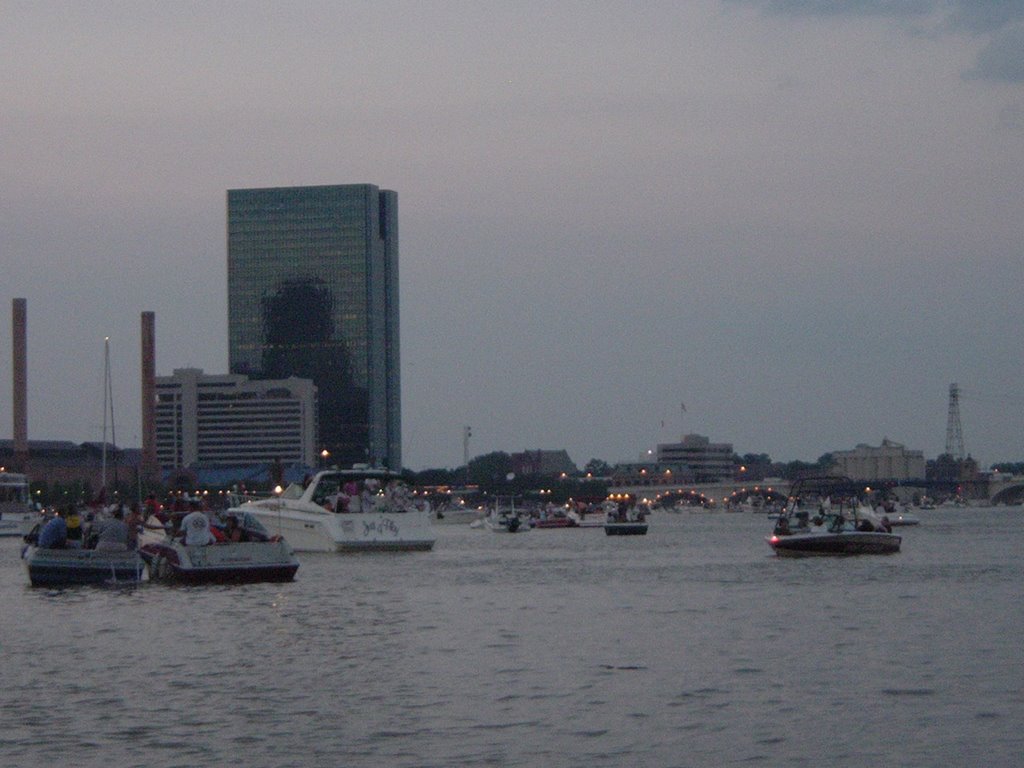
Then on the 4th, Allen and I set out for the river to watch the Toledo fireworks. It's one of the events Toledo puts on that always brings out lots of people. Generally I don't care for big celebrations or crowds, but this would be one exception. If you're going to watch fireworks, the only way to do it is on the river in a boat, I think. Hundreds of boats come out for the event, gather at the observation points just before dusk, and wait patiently for the show. This year, there was a boatload of young men just behind us. As the fireworks burst in the sky, they were screaming, "Woohoo!" and "Yeah!" and "Happy Birthday, America!" They were so authentic in their enthusiasm that it made me feel happy.

"The Star Spangled Banner" echoed across the water in a most ghostly fashion. The sound was hollow and other-worldly, or like a dream.

I'm always turned off by hyper-patriotism, but I didn't see any of that. Just a lot of good people out to enjoy the evening and participate in something good. The photos show the water just at dusk and then as dark fell and the boaters turned on their lights. Be sure to click on the photos for a larger view.

After the fireworks, people cranked their motors and moved in an orderly fashion to the boat ramps. Their white departing lights reminded me of those paper lanterns that are sometimes sent out on the waters during ceremonies. And it was a surprisingly quiet moment.

Allen and I stayed in the boat overnight, so we had plenty of time to cruise up and down the river after everyone had gone home. At times, it was like the river belonged to us because it was only us riding on the choppy waves.

It was very chilly, even with our jackets, and once we passed someone on shore who was sitting next to a fire. The fire smelled sweet and made me long for its warmth. This morning when we putted past the area where the fire had been, it looked desolate and worn. Some railway cars were just a little way from where the man had sat, warming next to his fire, and it made me wonder who the man was and why he was on the banks of the Maumee River alone in the wee hours of the morning. Fires are prohibited there.

So are fireworks, but after the show, people continued to set off fireworks for much of the night. The booms ricocheted off the buildings and with most of the people gone the river seemed vast. These after-fireworks shows had an eerie quality not unlike one of those weird scenes in Apocalypse Now

We got up early this morning and walked to Big Boy's for breakfast. It was a good time.

I've been doing a lot of reading about Theodore Roethke the last few days. And today I'm reading Truman Capote again. I want to write about these things in an entry soon.

Dreaming

Dreaming

About Me

My photo
Northwest Ohio, United States
"I was no better than dust, yet you cannot replace me. . . Take the soft dust in your hand--does it stir: does it sing? Has it lips and a heart? Does it open its eyes to the sun? Does it run, does it dream, does it burn with a secret, or tremble In terror of death? Or ache with tremendous decisions?. . ." --Conrad Aiken

Followers

Search This Blog

Epistle, by Archibald MacLeish

What I'm Listening To

My Music

Great Artists

www.flickr.com
This is a Flickr badge showing public photos from theresarrt7. Make your own badge here.

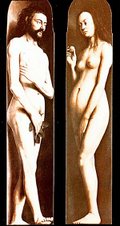
Fave Painting: Eden

Fave Painting:  Eden

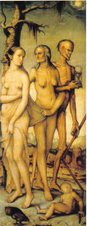
Fave Painting: The Three Ages of Man and Death

Fave Painting:  The Three Ages of Man and Death
by Albrecht Dürer

From the First Chapter

The Secret of Hurricanes : That article in the Waterville Scout said it was Shake- spearean, all that fatalism that guides the Kennedys' lives. The likelihood of untimely death. Recently, another one died in his prime, John-John in an airplane. Not long before that, Bobby's boy. While playing football at high speeds on snow skis. Those Kennedys take some crazy chances. I prefer my own easy ways. Which isn't to say my life hasn't been Shake-spearean. By the time I was sixteen, my life was like the darkened stage at the end of Hamlet or Macbeth. All littered with corpses and treachery.

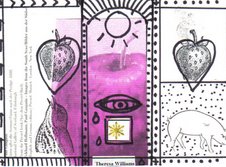
My Original Artwork: Triptych

My Original Artwork:  Triptych

Wishing

Wishing

Little Deer

Little Deer

Transformation

Transformation

Looking Forward, Looking Back

Looking Forward, Looking Back
CURRENT MOON
Powered By Blogger

Labels