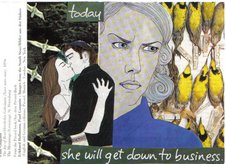
Tonight I watched Faith and Doubt at Ground Zero on PBS for the second time. The first time I saw it was several months ago. It's a powerful exploration of how people's belief in God changed after 9/11. Kirk Varnedoe, the former director of the Museum of Modern Art, had the following to say about art and religion:
People say art is a substitute religion, and I thought about a lot about that in the aftermath of 9/11. It's true that art transports you, that it gives you the sense that you can find other worlds than the ones that you know are inside of you. There are so many imagined worlds. Each artist creates a world with its own logic and its own set of rules in which you can move in and inhabit. They find form that lets you imaginatively take part in experiences with which you may not have had any contact, and for a moment, conceive of a world as pearlescent and as beautifully, rectilinearly ordered as a Piero. To feel these things through art expands the reach of who you are.
But art doesn't only transport you to new, imagined places. It also, in the best sense, narrows your vision, focuses with a new immediacy on the things that may be the most familiar to you. It gives a new spiritual dimension to the objects that you touch, to the room that you inhabit. And this is not just a tidy or comfortable experience but can be suffused with a kind Dionysian pleasure, in the sense of the small world controlled and the poetry of the world possessed, this crossing over of the line between what is the love of the material thing, of the dust mote in the sunlight or the sheen of the porcelain, of the look of the ivy winding around the bowl of fish, you know, this sort of pleasure in the daily small things. In art, through art, I think, transmutes itself into a form of spirituality, one to which I respond very, very strongly. --KIRK VARNEDOE, former directer of MoMA
I believe this transport was also experienced by van Gogh. In his letters he speaks so much about the power of color to transport him; he had a special affinity for yellow. Van Gogh's experience with art is particularly intriguing, since he once wanted to go into the ministry. Can it be that art became his religion?
The poets Dickey, Roethke, and James Wright spoke of poetry transporting them. Dickey described being on a city street with Wright and Robert Bly and sinking to his knees in awe of poetry. I've read many of James Wright's letters, in which he speaks of reading, or writing, a poem and of transcending the ordinary. James Agee, who also wrote poetry, but who is mostly known for his prose works, like Death in the Family, also wrote of how his struggle with art led him to ephiphany.
In my own case, I feel a sense of rightness and connectedness when the writing is going well. It's as though the neurons in my brain are firing in just the right pattern, allowing me to experience many things at once, and through this explosive integration, I'm able to see the "truth." (In a recent Sun article, the author says scientists have actually observed this phenomenon in the brain.) Joseph Campbell called this a "peak" moment, and he connected it with the transcendent. When I reach this point while writing, it feels similar to moments I used to have in church back in the late 1970s when I felt a sudden rush of love.
I have to think about whether I agree that art is a "substitute" religion. Vernedoe doesn't say whether or not he agrees, but he does say that we can experience a form of spirituality through art. I do really like what Varnedoe says about what art does, that it expands the imagination and at the same time it narrows your vision. It gives you a chance to focus on very specific things so that you can see how sacred they are. At the same time, it opens you to mystery. Yes, I really like that explanation.
Showing posts with label James Agee. Show all posts
Showing posts with label James Agee. Show all posts
Tuesday, September 12, 2006


Friday, February 03, 2006
Let Us Now Praise Famous Men
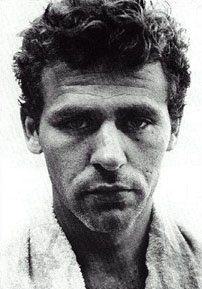
Some of you who used to visit my AOL Journal (before AOL tacked Ads on our journals and many of us left), may remember that I did an entry on James Agee. In that entry, I wrote of how I'd loved his novel, A Death In The Family from my first reading of it when I was 13. I'm writing about Agee again because I've just finished reading Let Us Now Praise Famous Men, which can be bought in a gorgeous Library of America edition. This edition also includes A Death In The Family and other Agee writings.
The blurb on the back of the book says: "In Let Us Now Praise Famous Men, Agee invented a new genre to convey his stark vision of the lives of Alabama tenant farmers." We are all used to blurbs being exaggerations; however this claim "new genre" is not an exaggeration. I have never see anything like Famous Men before.
I implore you, do not, do not be swayed by the negative reviews of Let Us Now Praise Famous Men. If you are looking for a book that is deeply engrossing, challenging, different, and enlightening, then this is a book you should read. It's not for the squeamish, nor for those who don't like to pry up the rotting boards and peer into the darkness.
In Famous Men, Agee addresses the difference between fiction and non-fiction by saying: "In a novel, a house or person has his meaning, his existence, entirely through the writer. Here, a house or a person has only the most limited of his meaning through me: his true meaning is much huger." It's perhaps this interest of mine in the craft of writing itself that has made Famous Men so fascinating to me. This is at once a book about the tenant farmers and a book about the difficulty of writing about them.
Another thing: In the beginning pages, Agee writes with absolute humility towards his own writing and his subject matter. This was stunning to me, because I've also read Agee's movie reviews, and in those writings Agee is witty, merciless, honest, and very confident in his own opinion. In short, they are some of the best movie reviews I have ever read.
However, Famous Men is another kind of writing altogether. As Agee admits, his efforts to capture his subject matter through words were a failure. Words are inefficient, inadequate in matters so huge. He wrote: "If I could do it, I'd do no writing at all here. It would be photographs; the rest would be fragments of cloth, bits of cotton, lumps of earth, records of speech, pieces of wood and iron, phials of odors, plates of food and of excrement."
That Famous Men is not more popular does not surprise me, nor was Agee surprised, I think, when the book got bad reviews and suffered poor sales. Famous Men, I think, is not the sort of book that would ever gain wide acceptance. It is a flawed masterpiece that takes a lot of work to absorb, but well worth the effort. I don't know the extent to which Agee may have been devastated, nonetheless, at the way America turned its back on his masterpiece. I do know that Agee seemed to suggest in the early pages of Famous Men that the worst thing that can happen to any artist is mass acceptance.
Perhaps mass acceptance is something the writer both wants and fears; I don't know. But Agee does say in Famous Men that he felt that as soon as, say, Beethoven's music is used as a form of relaxation or as a background to the mundane activities human beings inevitably become so wrapped up in, then the music has lost its vitality.
That is why Agee suggests in Famous Men: "Get a radio or a phonograph capable of the most extreme loudness possible, and sit down to listen to a performance of Beethoven's Seventh Symphony or of Schubert's C-Major Symphony. But I don't mean just sit down and listen. I mean this: Turn it on as loud as you can get it. Then get down onto floor and jam your ear as close into the loudspeaker as you can get it and stay there, breathing as lightly as possible, and not moving, and neither eating nor smoking nor drinking. Concentrate everything you can into your hearing and into your body. You won't hear it nicely. If it hurts you, be glad of it."
The same might be said for Famous Men. If you concentrate, you will hear Famous Men in your whole body. And if it hurts you, you will be glad.
Subscribe to:
Posts (Atom)
Subscribe To


 Posts
All Comments
Dreaming
About Me
- Theresa Williams
- Northwest Ohio, United States
- "I was no better than dust, yet you cannot replace me. . . Take the soft dust in your hand--does it stir: does it sing? Has it lips and a heart? Does it open its eyes to the sun? Does it run, does it dream, does it burn with a secret, or tremble In terror of death? Or ache with tremendous decisions?. . ." --Conrad Aiken
Facebook Badge

Subscribe
Posts
All Comments
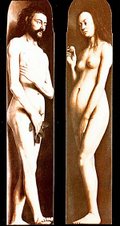
Fave Painting: Eden
Fave Painting: The Three Ages of Man and Death
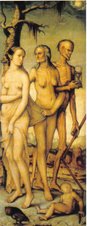
by Albrecht Dürer
My Original Artwork: Triptych
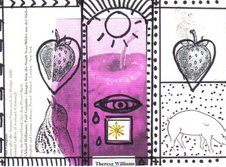
Wishing
Little Deer
Transformation
Looking Forward, Looking Back