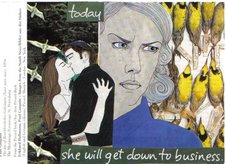
The discussions with the two classes about The Bridge went very well. As usual, I was more on my game in the second class. By then I had found the true center of what I wanted to say and was able to lead the discussion more efficiently. However, both classes dealt with the difficult subject matter admirably. I was proud of them.
The Bridge does not seek to answer why people jump from the Golden Gate Bridge, but it does seek to explore how we deal with the suffering of others.
Showing posts with label suffering. Show all posts
Showing posts with label suffering. Show all posts
Tuesday, April 01, 2008


Monday, March 31, 2008
30/50
Last night on 60 Minutes, Al Gore talked about his disappointment about losing the 2000 presidential race with George Bush. But he also talked about how that disappointment had led him into his new direction as an environmentalist. He said that we grow wise as a result of our disappointments and suffering.
I am reminded of Siddhartha, who was shielded from human suffering but who willingly left the fortress of his home and his imagination in order to experience it. He wanted to understand. He wanted wisdom.
I think that literature can also give us the experience of human suffering. Literature can make us more empathetic, more wise.
Like everyone, I've had many disappointments, and I can truly say that I don't regret them because I've grown as a result of them, not grown into bitterness but into a fuller realization of the human experience.
Today I will talk with two of my classes about the documentary The Bridge. I hope I can do a good job of it.
I am reminded of Siddhartha, who was shielded from human suffering but who willingly left the fortress of his home and his imagination in order to experience it. He wanted to understand. He wanted wisdom.
I think that literature can also give us the experience of human suffering. Literature can make us more empathetic, more wise.
Like everyone, I've had many disappointments, and I can truly say that I don't regret them because I've grown as a result of them, not grown into bitterness but into a fuller realization of the human experience.
Today I will talk with two of my classes about the documentary The Bridge. I hope I can do a good job of it.
Wednesday, July 25, 2007
Seeking
This is a repost from my old AOL Journal which I left after AOL put Ads on the journals of its paying members. That's why, by the way, this blog is called "exile edition."
Cynthia recently posted something about having a "calling" and I thought I remembered doing an entry at the AOL Journal about "the call." I wanted to repost it for her. But I couldn't find it. However, I did find this one. I wrote it back in 2004, not long after I started the journal. It seems to me to be relevant to a good number of things in my life right now:
________________________________
The word "seek" is etymologically related, not to "see," as might appear to be the case, but to "sagacious." What is needed is not simply seeing but a quality of discernment regarding what is seen, a piercing insight that looks deeper than mere surface appearances. --Natalie Baan
Being a writer also means being a seeker. This means finding the clear path to my creativity, which is the same as finding a clear path to my "self."
Life's troubles, like the devil, can waylay you as you try to walk the path. The path is the way, in other words, freedom. The Chinese call this concept tao. They were well aware how easy it is to lose one's path. Lao-tzu wrote, "Heaven and earth are ruthless. To them the ten thousand things are but strawdogs. Life imposes its troubles on us and is indifferent to our longings and fears."
As a writer I want to aspire to be a sage, one who understands the tao of things and is not unduly disturbed. I don't want to become entangled with everything I meet and become untrue to myself. Chuang-tzu says of people who are untrue to themselves: "Day after day they use their minds in strife. Their little fears are mean and trembly; their great fears are stunned and overwhelming."
I want to become a person true to myself, my path. "The 'True Person'of Lao-tzu and Chuang-tzu lives fully in the world without being overwhelmed by its frenzy and muddle. He is impervious to the social pressures bearing down on him. 'He can commit an error and not regret it, meet with success and not make a show.'"
Lao-tzu says the way of the sage is like water, which "benefits the ten thousand creatures; yet itself does not scramble, but is content with the places that all men disdain."
Can the way of the writer, then, be like water? A flowing and nourishing act? That is how I would like writing to be for me.
Everything is a pitfall for the unwary and the faithless. And nothing is a pitfall for the courageous seeker who just shakes it off like a bear. --Shri Parthasarathi Rajagopalachari
Ideas about tao taken from Stephen Batchelor's "The Devil in the Way."
Cynthia recently posted something about having a "calling" and I thought I remembered doing an entry at the AOL Journal about "the call." I wanted to repost it for her. But I couldn't find it. However, I did find this one. I wrote it back in 2004, not long after I started the journal. It seems to me to be relevant to a good number of things in my life right now:
________________________________
The word "seek" is etymologically related, not to "see," as might appear to be the case, but to "sagacious." What is needed is not simply seeing but a quality of discernment regarding what is seen, a piercing insight that looks deeper than mere surface appearances. --Natalie Baan
Being a writer also means being a seeker. This means finding the clear path to my creativity, which is the same as finding a clear path to my "self."
Life's troubles, like the devil, can waylay you as you try to walk the path. The path is the way, in other words, freedom. The Chinese call this concept tao. They were well aware how easy it is to lose one's path. Lao-tzu wrote, "Heaven and earth are ruthless. To them the ten thousand things are but strawdogs. Life imposes its troubles on us and is indifferent to our longings and fears."
As a writer I want to aspire to be a sage, one who understands the tao of things and is not unduly disturbed. I don't want to become entangled with everything I meet and become untrue to myself. Chuang-tzu says of people who are untrue to themselves: "Day after day they use their minds in strife. Their little fears are mean and trembly; their great fears are stunned and overwhelming."
I want to become a person true to myself, my path. "The 'True Person'of Lao-tzu and Chuang-tzu lives fully in the world without being overwhelmed by its frenzy and muddle. He is impervious to the social pressures bearing down on him. 'He can commit an error and not regret it, meet with success and not make a show.'"
Lao-tzu says the way of the sage is like water, which "benefits the ten thousand creatures; yet itself does not scramble, but is content with the places that all men disdain."
Can the way of the writer, then, be like water? A flowing and nourishing act? That is how I would like writing to be for me.
Everything is a pitfall for the unwary and the faithless. And nothing is a pitfall for the courageous seeker who just shakes it off like a bear. --Shri Parthasarathi Rajagopalachari
Ideas about tao taken from Stephen Batchelor's "The Devil in the Way."
Wednesday, July 04, 2007
About Suffering They Were Right, The Old Masters
 Landscape With The Fall of Icarus by Pieter Brueghel
Icarus's legs are just barely showing. They are in the bottom half of the painting, sticking up out of the water .
 The Golden Gate Bridge
On the evening of July 2, I watched a powerful film, The Bridge. It is a documentary about the San Francisco Golden Gate Bridge and its allure to people contemplating suicide. The film, made by Eric Steel, was inspired by a 2003 New Yorker article called "Jumpers" by Tad Friend.
The most disturbing , and the most controversial, aspect of the film is that you witness actual suicides as they take place. Steel was able to capture nearly all the suicides that took place in 2004 by setting up cameras and letting them run. Steel then interviewed friends and family members of people who jumped. What emerges is a story about intense pain and desperation, people who felt they were somehow on the outside of life. What also emerges is a story about the rest of us who really don't want to know about such things because they bring us pain.
The most disturbing , and the most controversial, aspect of the film is that you witness actual suicides as they take place. Steel was able to capture nearly all the suicides that took place in 2004 by setting up cameras and letting them run. Steel then interviewed friends and family members of people who jumped. What emerges is a story about intense pain and desperation, people who felt they were somehow on the outside of life. What also emerges is a story about the rest of us who really don't want to know about such things because they bring us pain.
I haven't been able to shake the memory of the film and several ideas keep rising to the surface as being important to me. One idea concerns the creative process, a topic I've written about on the blog before. But as I sit here, trying to write this entry, I find that I can't yet be dispassionate enough to write what I want and need to write about creativity. I'm still haunted by the images in the film, the people, many of them young, who jumped from that bridge. I can't shake the thought that I witnessed their last act. One of them was a young man named Gene. I keep seeing him in my mind's eye, walking up and down the railing, his long black hair flying in the wind, waiting, searching, for the right moment to jump.
This, of course, is Eric Steel's intent: I'm not supposed to be able to shake the images. I'm supposed to be disturbed.
Watching, I thought of W.H. Auden's poem:
Musee des Beaux Arts W.H. Auden
About suffering they were never wrong,
About suffering they were never wrong,
The Old Masters; how well, they understood
Its human position; how it takes place
While someone else is eating or opening
a window or just walking dully along;
How, when the aged are reverently, passionately waiting
For the miraculous birth, there always must be
Children who did not specially want it to happen, skating
On a pond at the edge of the wood:
They never forgot
That even the dreadful martyrdom must run its course
Anyhow in a corner, some untidy spot
Where the dogs go on with their doggy life and the torturer's horse
Scratches its innocent behind on a tree.
In Breughel's Icarus, for instance: how everything turns away
Quite leisurely from the disaster; the ploughman may
Have heard the splash, the forsaken cry,
But for him it was not an important failure; the sun shone
As it had to on the white legs disappearing into the green
Water; and the expensive delicate ship that must have seen
Something amazing, a boy falling out of the sky,
had somewhere to get to and sailed calmly on.
1940
Of course Steel wants me to think of Auden's poem. The imagery is all there. The suggestion is there several times that suffering takes place all around us. Yet we don't notice because we have "somewhere to get to." We sail "calmly on."
After watching the film, I ran across this comment online by Graham Leggat: The heartrending truths in Auden and Brueghel's works—that people suffer largely unnoticed while the rest of the world goes about its business—are brought literally and painfully home in Eric Steel's The Bridge, a documentary exploration of the mythic beauty of the Golden Gate Bridge, the most popular suicide destination in the world, and the unfortunate souls drawn by its siren call.
So, it is very clear, Auden's poem is at the heart of The Bridge.
I just can't yet write about this film in the way I would like. I like the film very much, but there's much to digest, so I'll be thinking on it a while.
Subscribe to:
Posts (Atom)
Subscribe To


 Posts
All Comments
Posts
All Comments
Dreaming
About Me
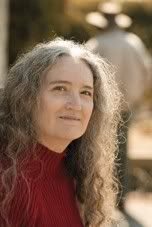
- Theresa Williams
- Northwest Ohio, United States
- "I was no better than dust, yet you cannot replace me. . . Take the soft dust in your hand--does it stir: does it sing? Has it lips and a heart? Does it open its eyes to the sun? Does it run, does it dream, does it burn with a secret, or tremble In terror of death? Or ache with tremendous decisions?. . ." --Conrad Aiken
Facebook Badge

Subscribe
Posts
All Comments
Fave Painting: Eden
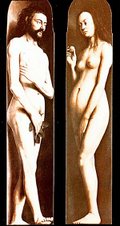
Fave Painting: The Three Ages of Man and Death
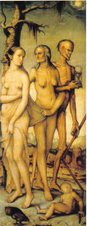
by Albrecht Dürer
My Original Artwork: Triptych
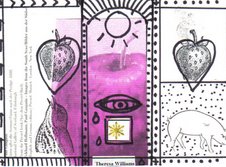
Wishing
Little Deer
Transformation
Looking Forward, Looking Back