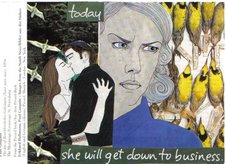
"The self must be a bridge, not a pit."
"I like to think a thing part way through and feel the rest of the way."
"To be weary of one's own individuality--is that to die?"
"How bleak and black and dead-ended can be the literal approach to experience: the eye is not enough."
--Theodore Roethke, Straw for the Fire
Showing posts with label Theodore Roethke. Show all posts
Showing posts with label Theodore Roethke. Show all posts
Monday, October 06, 2008
Saturday, September 20, 2008
Starting from the Lowest Possible Place
"I must lie down where all the ladders start," wrote Yeats in The Circus Animals' Desertion, "In the foul rag and bone shop of the heart."
This poem, one of his last, shows a poet searching for inspiration. The speaker concludes it may be found not in the beauty of the heart's core but within "a mound of refuse or the sweepings of a street, / Old kettles, old bottles, and a broken can, / Old iron, old bones, old rags ..."
In this stanza, Yeats reveals an important life truth. It is one he has explored before; In his poem, The Coming of Wisdom with Time, Yeats wrote that "leaves are many" but "the root is one." As a youth, the speaker "swayed my leaves and flowers in the sun" but now says it may be time to "wither into the truth." No matter how showy the leaves, the root that taps the earth for water and nourishment is the true place. It is also a dark place.
In both poems, Yeats rejects the romanticism of his earlier work. As he wrote in a letter to Lady Gregory: "We must accept the baptism of the gutter." The human condition need not be transcended if one learns to accept it with gusto.
Years later, the poet Theodore Roethke would also recognize that his most masterful poetry came from a primal place. Roethke, like Yeats, wanted to achieve human sanctity. In Roethke's mature work, inspiration often came from the most lowly of places, such as when he wrote of the worm climbing up the winding stair. Nature might also be menacing as in his poem Orchids:
They lean over the path,
Adder-mouthed,
Swaying close to the face,
Coming out, soft and deceptive,
Limp and damp, delicate as a young bird's tongue;
Their fluttery fledgling lips
Move slowly,
Drawing in the warm air.
In the second stanza, the orchids are described as "So many devouring infants" with "Lips neither dead nor alive" and "Loose ghostly mouths / Breathing."
Yeats's baptism of the gutter is made real in Roethke's poem Cuttings (later):
This urge, wrestle, resurrection of dry sticks,
Cut stems struggling to put down feet,
What saint strained so much,
Rose on such lopped limbs to a new life?
I can hear, underground, that sucking and sobbing,
In my veins, in my bones I feel it, --
The small waters seeping upward,
The tight grains parting at last.
When sprouts break out,
Slippery as fish,
I quail, lean to beginnings, sheath-wet.
The second stanza is lusty. It mirrors Yeats's thought that if we can accept the limitations of life boldly, we will find inspiration aplenty. Yeats said that such acceptance allows us to come into our "force."
We come into our strength as artists and as people when we quit trying to transform ugliness into beauty. Ugliness is what it is. Learn to live with it. Lift it up. Study and reveal it. Let it give you life, just as beauty does.
This poem, one of his last, shows a poet searching for inspiration. The speaker concludes it may be found not in the beauty of the heart's core but within "a mound of refuse or the sweepings of a street, / Old kettles, old bottles, and a broken can, / Old iron, old bones, old rags ..."
In this stanza, Yeats reveals an important life truth. It is one he has explored before; In his poem, The Coming of Wisdom with Time, Yeats wrote that "leaves are many" but "the root is one." As a youth, the speaker "swayed my leaves and flowers in the sun" but now says it may be time to "wither into the truth." No matter how showy the leaves, the root that taps the earth for water and nourishment is the true place. It is also a dark place.
In both poems, Yeats rejects the romanticism of his earlier work. As he wrote in a letter to Lady Gregory: "We must accept the baptism of the gutter." The human condition need not be transcended if one learns to accept it with gusto.
Years later, the poet Theodore Roethke would also recognize that his most masterful poetry came from a primal place. Roethke, like Yeats, wanted to achieve human sanctity. In Roethke's mature work, inspiration often came from the most lowly of places, such as when he wrote of the worm climbing up the winding stair. Nature might also be menacing as in his poem Orchids:
They lean over the path,
Adder-mouthed,
Swaying close to the face,
Coming out, soft and deceptive,
Limp and damp, delicate as a young bird's tongue;
Their fluttery fledgling lips
Move slowly,
Drawing in the warm air.
In the second stanza, the orchids are described as "So many devouring infants" with "Lips neither dead nor alive" and "Loose ghostly mouths / Breathing."
Yeats's baptism of the gutter is made real in Roethke's poem Cuttings (later):
This urge, wrestle, resurrection of dry sticks,
Cut stems struggling to put down feet,
What saint strained so much,
Rose on such lopped limbs to a new life?
I can hear, underground, that sucking and sobbing,
In my veins, in my bones I feel it, --
The small waters seeping upward,
The tight grains parting at last.
When sprouts break out,
Slippery as fish,
I quail, lean to beginnings, sheath-wet.
The second stanza is lusty. It mirrors Yeats's thought that if we can accept the limitations of life boldly, we will find inspiration aplenty. Yeats said that such acceptance allows us to come into our "force."
We come into our strength as artists and as people when we quit trying to transform ugliness into beauty. Ugliness is what it is. Learn to live with it. Lift it up. Study and reveal it. Let it give you life, just as beauty does.
Friday, May 02, 2008
Provincetown / 5
I meditated on another Theodore Roethke poem before I went to bed last night. The poem is "Memory."
Then during the night I dreamed that I was in Provincetown asking many strangers what was wrong with my "new" book, asking them to help me right it.
Memory
by Theodore Roethke
In the slow world of dream,
We breathe in unison.
The outside dies within,
And she knows all I am.
She turns, as if to go,
Half-bird, half-animal.
The wind dies on the hill.
Love's all. Love's all I know.
A doe drinks by a stream,
A doe and its fawn.
When I follow after them,
The grass changes to stone.
Then during the night I dreamed that I was in Provincetown asking many strangers what was wrong with my "new" book, asking them to help me right it.
Memory
by Theodore Roethke
In the slow world of dream,
We breathe in unison.
The outside dies within,
And she knows all I am.
She turns, as if to go,
Half-bird, half-animal.
The wind dies on the hill.
Love's all. Love's all I know.
A doe drinks by a stream,
A doe and its fawn.
When I follow after them,
The grass changes to stone.
Thursday, May 01, 2008
Provincetown / 3
Like Theodore Roethke, "I dream of journeys repeatedly." Most of the time, these journeys end in disaster or are impeded by obstacles impossible to overcome. I cross bridges: they are full of holes and fall apart. They have huge gaps I cannot jump. I climb steps: they end. They break apart and sway perilously. Doors will not open.
I have dreamed about Provincetown, too. I see a road that circles around. Inside the circle is a monument. Trees. I am lost.
As far as the real Provincetown: I am hoping to find myself there.
from The Far Field
by Theodore Roethke
I dream of journeys repeatedly:
Of flying like a bat deep into a narrowing tunnel,
Of driving alone, without luggage, out a long peninsula,
The road lined with snow-laden second growth,
A fine dry snow ticking the windshield,
Alternate show and sleet, no on-coming traffic,
And no lights behind, in the blurred side-mirror,
The road changing from glazed tarface to a rubble of stone,
Ending at last in a hopeless sand-rut,
Where the car stalls,
Churning in a snowdrift
Until the headlights darken. ...
The lost self changes,
Turning toward the sea,
A sea-shape turning around, --
As old man with his feet before the fire,
In robes of green, in garments of adieu. ...
All finite things reveal infinitude:
The mountain with its singular bright shade
Like the blue shine on freshly frozen snow,
The after-light upon ice-burdened pines;
Odor of basswood on the mountain-slope,
A scent beloved of bees;
Silence of water above a sunken tree:
The pure serene of memory in one man, --
A ripple widening from a single stone
Winding around the waters of the world.
I have dreamed about Provincetown, too. I see a road that circles around. Inside the circle is a monument. Trees. I am lost.
As far as the real Provincetown: I am hoping to find myself there.
from The Far Field
by Theodore Roethke
I dream of journeys repeatedly:
Of flying like a bat deep into a narrowing tunnel,
Of driving alone, without luggage, out a long peninsula,
The road lined with snow-laden second growth,
A fine dry snow ticking the windshield,
Alternate show and sleet, no on-coming traffic,
And no lights behind, in the blurred side-mirror,
The road changing from glazed tarface to a rubble of stone,
Ending at last in a hopeless sand-rut,
Where the car stalls,
Churning in a snowdrift
Until the headlights darken. ...
The lost self changes,
Turning toward the sea,
A sea-shape turning around, --
As old man with his feet before the fire,
In robes of green, in garments of adieu. ...
All finite things reveal infinitude:
The mountain with its singular bright shade
Like the blue shine on freshly frozen snow,
The after-light upon ice-burdened pines;
Odor of basswood on the mountain-slope,
A scent beloved of bees;
Silence of water above a sunken tree:
The pure serene of memory in one man, --
A ripple widening from a single stone
Winding around the waters of the world.
Tuesday, April 29, 2008
Provincetown / 2
I've thought how to explain what the Provincetown Residency means to me. My ideas for how to express it seemed too shallow. Today, my eyes fell upon a Theodore Roethke poem. My good friend Roethke will help me to explain. His poem, "The Right Thing" speaks my inner thoughts today:
The Right Thing
by Theodore Roethke
Let others prove the mystery if they can.
Time-harried prisoners of Shall and Will--
The right thing happens to the happy man.
Yes, I have been that prisoner of "Shall" and "Will." I have let my brain be torn apart by fear and doubt. I have had a preconceived idea about what is "the right thing" for me. I have tried to second-guess life. This year when I filled out the application for the residency, I just told the truth and let the chips fall where they may. I wasn't nervous or afraid or lacking in confidence. I was calm and peaceful and confident. When I chose my writing sample, I didn't second-guess. I sent a recent story that is simple and true. In short, I was happy. The Provincetown Residency will be the vehicle for helping me to live in that place for an extended period of time. I won't find it and then be jerked out of it by obligations or other realities.
The bird flies out, the bird flies back again;
The hill becomes the valley, and is still;
Let others delve that mystery if they can.
I try too hard. Obligations take me out of my soul. The bird flies back to my soul. It is a rending, a tearing. Sometimes I think it will make me mad. One day I'm on a hill, confident, exuberant; then right behind that is the valley, doubts and darkness. But what if the hill and the valley were the same? What if there is no right or wrong; it is the same thing? It is all "right" if we accept that it is right, feel that.
As Yoda said, there is no try, only do. In that moment of doing, all is right.
God bless the roots!--Body and soul are one!
The small become the great, the great the small;
The right thing happens to the happy man.
Perfect balance.
Child of the dark, he can out leap the sun,
His being single, and that being all:
The right thing happens to the happy man.
Perfect balance.
Or he sits still, a solid figure when
The self-destructive shake the common wall;
Takes to himself what mystery he can,
Put the currency of the soul in the bank, so when you feel ready to give in to doubt and fear, you can plumb the mystery again of perfect balance.
And praising change as the slow night comes on,
Wills what he would, surrendering his will
Till mystery is no more: No more he can.
The right thing happens to the happy man.
Acceptance. Complete acceptance. Pure acceptance. Whether the slow night is doubt and fear or the passing of time towards mortality, you do your best. Make changes where you can, surrender you will when you cannot. It is not a mystery; just be. Find that true place. Live from there. Then you are happy. Everything, no matter what, is the right thing.
The Provincetown Residency will take me on this voyage, into the true place where everything is the right thing. What a gift.
The Right Thing
by Theodore Roethke
Let others prove the mystery if they can.
Time-harried prisoners of Shall and Will--
The right thing happens to the happy man.
Yes, I have been that prisoner of "Shall" and "Will." I have let my brain be torn apart by fear and doubt. I have had a preconceived idea about what is "the right thing" for me. I have tried to second-guess life. This year when I filled out the application for the residency, I just told the truth and let the chips fall where they may. I wasn't nervous or afraid or lacking in confidence. I was calm and peaceful and confident. When I chose my writing sample, I didn't second-guess. I sent a recent story that is simple and true. In short, I was happy. The Provincetown Residency will be the vehicle for helping me to live in that place for an extended period of time. I won't find it and then be jerked out of it by obligations or other realities.
The bird flies out, the bird flies back again;
The hill becomes the valley, and is still;
Let others delve that mystery if they can.
I try too hard. Obligations take me out of my soul. The bird flies back to my soul. It is a rending, a tearing. Sometimes I think it will make me mad. One day I'm on a hill, confident, exuberant; then right behind that is the valley, doubts and darkness. But what if the hill and the valley were the same? What if there is no right or wrong; it is the same thing? It is all "right" if we accept that it is right, feel that.
As Yoda said, there is no try, only do. In that moment of doing, all is right.
God bless the roots!--Body and soul are one!
The small become the great, the great the small;
The right thing happens to the happy man.
Perfect balance.
Child of the dark, he can out leap the sun,
His being single, and that being all:
The right thing happens to the happy man.
Perfect balance.
Or he sits still, a solid figure when
The self-destructive shake the common wall;
Takes to himself what mystery he can,
Put the currency of the soul in the bank, so when you feel ready to give in to doubt and fear, you can plumb the mystery again of perfect balance.
And praising change as the slow night comes on,
Wills what he would, surrendering his will
Till mystery is no more: No more he can.
The right thing happens to the happy man.
Acceptance. Complete acceptance. Pure acceptance. Whether the slow night is doubt and fear or the passing of time towards mortality, you do your best. Make changes where you can, surrender you will when you cannot. It is not a mystery; just be. Find that true place. Live from there. Then you are happy. Everything, no matter what, is the right thing.
The Provincetown Residency will take me on this voyage, into the true place where everything is the right thing. What a gift.
Monday, January 21, 2008
8/50
We Think by Feeling, What is there to Know? (Theodore Roethke)
There must be different qualities of feeling. There is a kind of feeling which is unthinking, immediate, such as what happens when we are manipulated and give in to jingoistic tendencies.
I know there is a quality of feeling that can cause a sort of blindness: love can be like that. It must be why the ancients compared it to the moon, luna, lunatic. It makes one totally unreasonable and vulnerable. Anger can cause blindness and tragedy, so can its cousin, jealousy.
But there *is* a quality of feeling, which is more like intuition, perhaps, which I believe is almost synonymous with the imagination, that mysterious force authors have talked about for centuries. This is the kind of feeling Roethke sought to tap into, that vast river of feeling that connects us to the cosmos. To "think" with this kind of "feeling" is to be whole, connected, intuitive, and spirit-filled. It is the quality of feeling I seek and hope to be guided by.
There must be different qualities of feeling. There is a kind of feeling which is unthinking, immediate, such as what happens when we are manipulated and give in to jingoistic tendencies.
I know there is a quality of feeling that can cause a sort of blindness: love can be like that. It must be why the ancients compared it to the moon, luna, lunatic. It makes one totally unreasonable and vulnerable. Anger can cause blindness and tragedy, so can its cousin, jealousy.
But there *is* a quality of feeling, which is more like intuition, perhaps, which I believe is almost synonymous with the imagination, that mysterious force authors have talked about for centuries. This is the kind of feeling Roethke sought to tap into, that vast river of feeling that connects us to the cosmos. To "think" with this kind of "feeling" is to be whole, connected, intuitive, and spirit-filled. It is the quality of feeling I seek and hope to be guided by.
Monday, November 12, 2007
On Nov. 12
On this day in 1935, 27-year-old Theodore Roethke was hospitalized for the first of the manic-depressive breakdowns that would recur throughout his life. Roethke had just begun a teaching post at Michigan State University and, according to colleagues, had been drinking heavily all semester, dozens of cups of coffee and bottles of cola a day as well as alcohol. On the previous evening, a cold one, he had taken a long walk in the woods without a coat and eventually with only one shoe; the next morning, after deciding "to cut my eight o'clock class deliberately just to see how long they would stick around," Roethke took another walk in the woods, also coatless. He was shivering and delirious when he arrived at the dean's office, where he planned "to explain one or two things about this experiment"; the dean, trained as a mathematician, called for the doctors. Roethke later told friends that while on his first walk he had had a mystical experience with a tree -- even pointed out the tree, while retrieving his shoe. The tree taught him "the secret of Nijinsky," he said, perhaps referring to that passage in Nijinsky's diary -- written while Nijinsky was a mental patient -- that describes learning from a tree that "human beings do not understand feelings."
Sunday, October 21, 2007
Saturday, October 20, 2007
Friday, October 19, 2007
Oyster River
There is a movement toward spiritual unity in Theodore Roethke's "Meditation at Oyster River."
There is a tension in the poem between disunity/unity, and there also is a fear of death being expressed in the poem.
The poem is Whitmanesque for me in the way opposites come together, such as here: "A twilight wind, light as a child's breath / Turning not a leaf, not a ripple. / The dew revives on the beach-grass; / The salt-soaked wood of the fire crackles; / A fish raven turns on its perch (a dead tree in the rivermouth), / Its wings catching a last glint of the reflected sunlight."
The image of twilight (endings) juxtaposed with that ofchildhood (beginnings), the fish raven (fish = infinity or God) with the dead tree. The wings of the raven catching the "last glint" of reflected sunlight.
While this juxtaposition of opposites is Whitmanesque, Roethke is not nearly so optimistic as Whitman. There is something malevolent in nature, in the life force, and life is tinged by the inevitability of death:
In the next stanza, Roethke says:
"The self persists like a dying star, / In sleep, afriad. Death's face rises afresh, / Among the shy beasts..." and then the tide comes in, "tongues of water, creeping in, quietly." This is where a transformation occurs.
I deeply appreciate: "In this hour, / In this first heaven of knowing..."We understand Roethke is reaching his "paradise," his moment of unity.
Even better are the lines: "I rise and fall, and time folds / Into a long moment; / And I hear the lichen speak, / And the ivy advance with its white lizard feet-- / On the shimmering road, / On the dusty detour."
Talk about permeable boundaries.
The last two stanzas can be contrasted to Eliot's "The Waste Land" quite neatly. Eliot's landscape is dry; Roethke's is wet, and water equals life. Roethke even says: "Water's my will, and my way, / And the spirit runs, intermittently, / In and out of the small waves, Runs with the intrepid shorebirds--"
Yet something dark remains: "How graceful the small before danger!"
There is a tension in the poem between disunity/unity, and there also is a fear of death being expressed in the poem.
The poem is Whitmanesque for me in the way opposites come together, such as here: "A twilight wind, light as a child's breath / Turning not a leaf, not a ripple. / The dew revives on the beach-grass; / The salt-soaked wood of the fire crackles; / A fish raven turns on its perch (a dead tree in the rivermouth), / Its wings catching a last glint of the reflected sunlight."
The image of twilight (endings) juxtaposed with that ofchildhood (beginnings), the fish raven (fish = infinity or God) with the dead tree. The wings of the raven catching the "last glint" of reflected sunlight.
While this juxtaposition of opposites is Whitmanesque, Roethke is not nearly so optimistic as Whitman. There is something malevolent in nature, in the life force, and life is tinged by the inevitability of death:
In the next stanza, Roethke says:
"The self persists like a dying star, / In sleep, afriad. Death's face rises afresh, / Among the shy beasts..." and then the tide comes in, "tongues of water, creeping in, quietly." This is where a transformation occurs.
I deeply appreciate: "In this hour, / In this first heaven of knowing..."We understand Roethke is reaching his "paradise," his moment of unity.
Even better are the lines: "I rise and fall, and time folds / Into a long moment; / And I hear the lichen speak, / And the ivy advance with its white lizard feet-- / On the shimmering road, / On the dusty detour."
Talk about permeable boundaries.
The last two stanzas can be contrasted to Eliot's "The Waste Land" quite neatly. Eliot's landscape is dry; Roethke's is wet, and water equals life. Roethke even says: "Water's my will, and my way, / And the spirit runs, intermittently, / In and out of the small waves, Runs with the intrepid shorebirds--"
Yet something dark remains: "How graceful the small before danger!"
Thursday, October 18, 2007
Something more...
"Not the boring moments, the small gratifications, but the struggle where we become something more than shadows."--Theodore Roethke, Straw for the Fire
Saturday, September 15, 2007
The Long Journey
 Along Highway 1, near Big Sur, California. This is me standing at the base of one of the most curious land features along this highway.
Many people come to the Esalen Workshops in order to put their experiences into a context. They want to express their pain without being trite or luridly confessional.
During my workshops, I saw people dealing with all the aspects of the human experience with perseverence, courage, and dignity. I saw people laugh (great celebratory laughter) and I saw them weep at what they had written. It all happened in the most supportive atmosphere I have ever experienced.
Big Sur is an excellent setting for writing because so much of what is going on in the landscape mirrors our own interior journey. The ocean and the rocks are important symbols of experience; however I found this roadside phenomenon to be most characteristic of people's experience at Esalen. This is not stone; it is a mixture of sand, clay, and small stones, shaped by the wind and the rain. It crumbles easily and yet it has a deceptive appearance of solidity. This geographical feature is right next to the highway, and it makes me recall one of my favorite poems by Theodore Roethke:
In the long journey out of the self,
There are many detours, washed-out interrupted raw places
Where the shale slides dangerously
And the back wheels hang almost over the edge
At the sudden veering, the moment of turning.
Better to hug close, wary of rubble and falling stones. ...
--excerpted from "Journey Into the Interior" by Theodore Roethke
Sunday, November 12, 2006
On November 12
I know the following seems like an odd thing to commemorate, but I have a few reasons for doing so. The reason I can talk about here is that I plan on talking about Theodore Roethke next semester in my seminar, "From Angst to Art." Maybe I will write about the seminar in this blog, examining how my thoughts shift and grow over the course of the semester.
I've always wanted to teach a course on literature and survival or writing and healing. I don't believe that all artists create because they are striving through their art to be whole, but the artists who are most interesting to me do. For a long time, I was ashamed to admit my writing was a form of healing; I was afraid my work would be diminished in others' eyes because of that. After researching, however, I've become emboldened to talk about it and to weave this philosophy into my teaching.
For a short time, I kept a separate blog on my teaching life. I did this because I felt my teaching life was destroying my creative life. Thankfully, my position at the University has changed, and I'm getting more opportunity to teach literature and creative writing all the time. In fact, after this academic year, I will no longer teach freshman composition at all. I love teaching freshmen, and I don't mind teaching composition, but it's so much work, so much grading, so much attention to technical detail and departmental requirements, that I feel wrung out like a washcloth by the time each semester ends. Now, my "two lives" can become the same, so I will soon be deleting the teaching blog and will talk more about my teaching here.
For over a year now, Roethke's life and work have consumed my attention. I've been on Amazon and ordered every book, new or used, that has been written about him. I'd known his poem, "The Waking" for many years, of course, but I really knew little about Roethke until quite recently. Roethke was a dynamic man, passionate and driven.
When he was in his late twenties, he had a psychotic episode, and he was to continue to have trouble and be in and out of hospitals all his life. He even had shock treatments at one point. Through it all, he kept writing. It has been fascinating for me over the past year to read of how his poetry helped him to know himself better, to tunnel toward the divine. "We think by feeling," he wrote in "The Waking." I remember this line every day of my life because that's how I want to live my life, that's the kind of teacher I want to be.
I love the month of November. The earth goes into hibernation and the rain and snow break down the leaves into mulch for worms. The hardwoods stand naked and you start to get the first really cold days and nights of the season. I wonder what it was like for Roethke, a young man just starting out in his career as a teacher and poet, wandering around on that cold November night, losing his shoe and thinking he'd suddenly found himself closer to God?
Bless you, Ted Roethke, wherever your spirit may be. Bless you and thank you for your poems.
-------------------------------------
From the Literary Notebook:
On this day in 1935, 27-year-old Theodore Roethke was hospitalized for the first of the manic-depressive breakdowns that would recur throughout his life. Roethke had just begun a teaching post at Michigan State University and, according to colleagues, had been drinking heavily all semester, dozens of cups of coffee and bottles of cola a day as well as alcohol. On the previous evening, a cold one, he had taken a long walk in the woods without a coat and eventually with only one shoe; the next morning, after deciding "to cut my eight o'clock class deliberately just to see how long they would stick around," Roethke took another walk in the woods, also coatless. He was shivering and delirious when he arrived at the dean's office, where he planned "to explain one or two things about this experiment"; the dean, trained as a mathematician, called for the doctors. Roethke later told friends that while on his first walk he had had a mystical experience with a tree -- even pointed out the tree, while retrieving his shoe. The tree taught him "the secret of Nijinsky," he said, perhaps referring to that passage in Nijinsky's diary -- written while Nijinsky was a mental patient -- that describes learning from a tree that "human beings do not understand feelings."
I've always wanted to teach a course on literature and survival or writing and healing. I don't believe that all artists create because they are striving through their art to be whole, but the artists who are most interesting to me do. For a long time, I was ashamed to admit my writing was a form of healing; I was afraid my work would be diminished in others' eyes because of that. After researching, however, I've become emboldened to talk about it and to weave this philosophy into my teaching.
For a short time, I kept a separate blog on my teaching life. I did this because I felt my teaching life was destroying my creative life. Thankfully, my position at the University has changed, and I'm getting more opportunity to teach literature and creative writing all the time. In fact, after this academic year, I will no longer teach freshman composition at all. I love teaching freshmen, and I don't mind teaching composition, but it's so much work, so much grading, so much attention to technical detail and departmental requirements, that I feel wrung out like a washcloth by the time each semester ends. Now, my "two lives" can become the same, so I will soon be deleting the teaching blog and will talk more about my teaching here.
For over a year now, Roethke's life and work have consumed my attention. I've been on Amazon and ordered every book, new or used, that has been written about him. I'd known his poem, "The Waking" for many years, of course, but I really knew little about Roethke until quite recently. Roethke was a dynamic man, passionate and driven.
When he was in his late twenties, he had a psychotic episode, and he was to continue to have trouble and be in and out of hospitals all his life. He even had shock treatments at one point. Through it all, he kept writing. It has been fascinating for me over the past year to read of how his poetry helped him to know himself better, to tunnel toward the divine. "We think by feeling," he wrote in "The Waking." I remember this line every day of my life because that's how I want to live my life, that's the kind of teacher I want to be.
I love the month of November. The earth goes into hibernation and the rain and snow break down the leaves into mulch for worms. The hardwoods stand naked and you start to get the first really cold days and nights of the season. I wonder what it was like for Roethke, a young man just starting out in his career as a teacher and poet, wandering around on that cold November night, losing his shoe and thinking he'd suddenly found himself closer to God?
Bless you, Ted Roethke, wherever your spirit may be. Bless you and thank you for your poems.
-------------------------------------
From the Literary Notebook:
On this day in 1935, 27-year-old Theodore Roethke was hospitalized for the first of the manic-depressive breakdowns that would recur throughout his life. Roethke had just begun a teaching post at Michigan State University and, according to colleagues, had been drinking heavily all semester, dozens of cups of coffee and bottles of cola a day as well as alcohol. On the previous evening, a cold one, he had taken a long walk in the woods without a coat and eventually with only one shoe; the next morning, after deciding "to cut my eight o'clock class deliberately just to see how long they would stick around," Roethke took another walk in the woods, also coatless. He was shivering and delirious when he arrived at the dean's office, where he planned "to explain one or two things about this experiment"; the dean, trained as a mathematician, called for the doctors. Roethke later told friends that while on his first walk he had had a mystical experience with a tree -- even pointed out the tree, while retrieving his shoe. The tree taught him "the secret of Nijinsky," he said, perhaps referring to that passage in Nijinsky's diary -- written while Nijinsky was a mental patient -- that describes learning from a tree that "human beings do not understand feelings."
Tuesday, September 12, 2006
Expanding the reach of who you are
Tonight I watched Faith and Doubt at Ground Zero on PBS for the second time. The first time I saw it was several months ago. It's a powerful exploration of how people's belief in God changed after 9/11. Kirk Varnedoe, the former director of the Museum of Modern Art, had the following to say about art and religion:
People say art is a substitute religion, and I thought about a lot about that in the aftermath of 9/11. It's true that art transports you, that it gives you the sense that you can find other worlds than the ones that you know are inside of you. There are so many imagined worlds. Each artist creates a world with its own logic and its own set of rules in which you can move in and inhabit. They find form that lets you imaginatively take part in experiences with which you may not have had any contact, and for a moment, conceive of a world as pearlescent and as beautifully, rectilinearly ordered as a Piero. To feel these things through art expands the reach of who you are.
But art doesn't only transport you to new, imagined places. It also, in the best sense, narrows your vision, focuses with a new immediacy on the things that may be the most familiar to you. It gives a new spiritual dimension to the objects that you touch, to the room that you inhabit. And this is not just a tidy or comfortable experience but can be suffused with a kind Dionysian pleasure, in the sense of the small world controlled and the poetry of the world possessed, this crossing over of the line between what is the love of the material thing, of the dust mote in the sunlight or the sheen of the porcelain, of the look of the ivy winding around the bowl of fish, you know, this sort of pleasure in the daily small things. In art, through art, I think, transmutes itself into a form of spirituality, one to which I respond very, very strongly. --KIRK VARNEDOE, former directer of MoMA
I believe this transport was also experienced by van Gogh. In his letters he speaks so much about the power of color to transport him; he had a special affinity for yellow. Van Gogh's experience with art is particularly intriguing, since he once wanted to go into the ministry. Can it be that art became his religion?
The poets Dickey, Roethke, and James Wright spoke of poetry transporting them. Dickey described being on a city street with Wright and Robert Bly and sinking to his knees in awe of poetry. I've read many of James Wright's letters, in which he speaks of reading, or writing, a poem and of transcending the ordinary. James Agee, who also wrote poetry, but who is mostly known for his prose works, like Death in the Family, also wrote of how his struggle with art led him to ephiphany.
In my own case, I feel a sense of rightness and connectedness when the writing is going well. It's as though the neurons in my brain are firing in just the right pattern, allowing me to experience many things at once, and through this explosive integration, I'm able to see the "truth." (In a recent Sun article, the author says scientists have actually observed this phenomenon in the brain.) Joseph Campbell called this a "peak" moment, and he connected it with the transcendent. When I reach this point while writing, it feels similar to moments I used to have in church back in the late 1970s when I felt a sudden rush of love.
I have to think about whether I agree that art is a "substitute" religion. Vernedoe doesn't say whether or not he agrees, but he does say that we can experience a form of spirituality through art. I do really like what Varnedoe says about what art does, that it expands the imagination and at the same time it narrows your vision. It gives you a chance to focus on very specific things so that you can see how sacred they are. At the same time, it opens you to mystery. Yes, I really like that explanation.
People say art is a substitute religion, and I thought about a lot about that in the aftermath of 9/11. It's true that art transports you, that it gives you the sense that you can find other worlds than the ones that you know are inside of you. There are so many imagined worlds. Each artist creates a world with its own logic and its own set of rules in which you can move in and inhabit. They find form that lets you imaginatively take part in experiences with which you may not have had any contact, and for a moment, conceive of a world as pearlescent and as beautifully, rectilinearly ordered as a Piero. To feel these things through art expands the reach of who you are.
But art doesn't only transport you to new, imagined places. It also, in the best sense, narrows your vision, focuses with a new immediacy on the things that may be the most familiar to you. It gives a new spiritual dimension to the objects that you touch, to the room that you inhabit. And this is not just a tidy or comfortable experience but can be suffused with a kind Dionysian pleasure, in the sense of the small world controlled and the poetry of the world possessed, this crossing over of the line between what is the love of the material thing, of the dust mote in the sunlight or the sheen of the porcelain, of the look of the ivy winding around the bowl of fish, you know, this sort of pleasure in the daily small things. In art, through art, I think, transmutes itself into a form of spirituality, one to which I respond very, very strongly. --KIRK VARNEDOE, former directer of MoMA
I believe this transport was also experienced by van Gogh. In his letters he speaks so much about the power of color to transport him; he had a special affinity for yellow. Van Gogh's experience with art is particularly intriguing, since he once wanted to go into the ministry. Can it be that art became his religion?
The poets Dickey, Roethke, and James Wright spoke of poetry transporting them. Dickey described being on a city street with Wright and Robert Bly and sinking to his knees in awe of poetry. I've read many of James Wright's letters, in which he speaks of reading, or writing, a poem and of transcending the ordinary. James Agee, who also wrote poetry, but who is mostly known for his prose works, like Death in the Family, also wrote of how his struggle with art led him to ephiphany.
In my own case, I feel a sense of rightness and connectedness when the writing is going well. It's as though the neurons in my brain are firing in just the right pattern, allowing me to experience many things at once, and through this explosive integration, I'm able to see the "truth." (In a recent Sun article, the author says scientists have actually observed this phenomenon in the brain.) Joseph Campbell called this a "peak" moment, and he connected it with the transcendent. When I reach this point while writing, it feels similar to moments I used to have in church back in the late 1970s when I felt a sudden rush of love.
I have to think about whether I agree that art is a "substitute" religion. Vernedoe doesn't say whether or not he agrees, but he does say that we can experience a form of spirituality through art. I do really like what Varnedoe says about what art does, that it expands the imagination and at the same time it narrows your vision. It gives you a chance to focus on very specific things so that you can see how sacred they are. At the same time, it opens you to mystery. Yes, I really like that explanation.
Saturday, August 05, 2006
Thanks
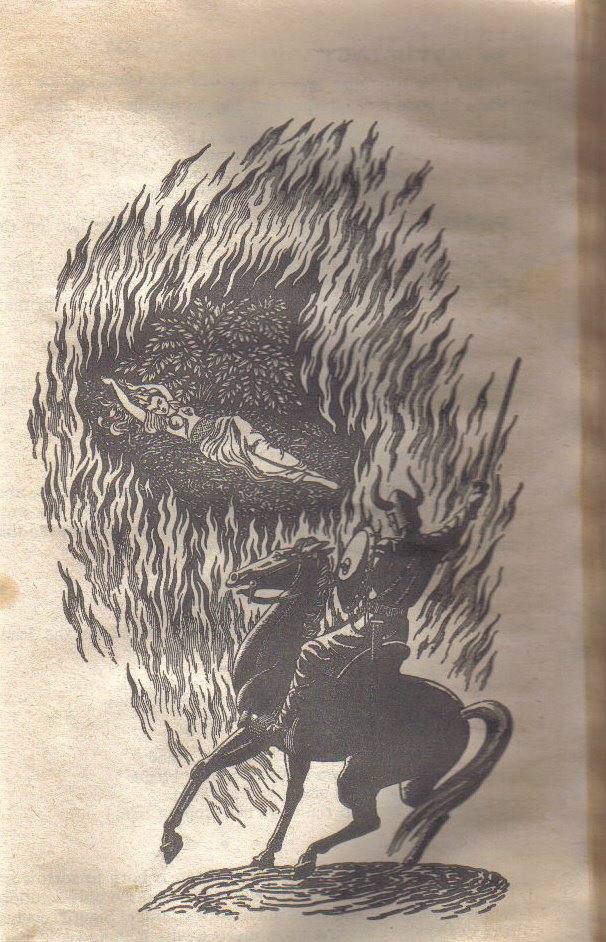
Photo from my high school edition of Edith Hamilton's Mythology.
I have partaken the heavenly food;
I have received the message from the place of perfection--
...I have found my deeper life.
--Theodore Roethke, from his notebooks (published in book form under the title: Straw for the Fire.)
I'd like to thank those who commented on the last few blog entries here. In particular, I'd like to thank Beth, Christina, Gretchen, and Vince who pointed out things about the entries I hadn't noticed. Gretchen also often sends to me original poems that inspire me.
Your caring and astute comments led me to some important revelations and as a result I wrote 8 double spaced pages tonight about a subject I've been avoiding. In one of those magical moments, my recent and prolific reading, my experiences, and the bits and pieces I wrote in my blog came together to form something that I think makes some sense.
In my life I try to keep things in certain tidy piles. This blog is about the creative life, so I don't talk about my personal or family life unless it illustrates some aspect of creativity. I save all my turmoil, raw emotion, and all I need to come to terms with for my poetry, fiction, or creative non-fiction writing, which may or may not get published. I don't deal with those things here because it saps my energy I need to create the works.
But to my surprise, the piles spread out and touched each other tonight, thanks to the efforts of good friends who care about the writing life.
Thank you!


Sunday, November 20, 2005
Open House

OPEN HOUSE
by Theodore Roethke
My secrets cry aloud.
I have no need for tongue.
My heart keeps open house,
My doors are widely swung.
An epic of the eyes
My love, with no disguise.
My truths are all foreknown,
This anguish self-revealed.
I'm naked to the bone,
With nakedness my shield.
Myself is what I wear:
I keep the spirit spare.
The anger will endure,
The deed will speak the truth
In language strict and pure.
I stop the lying mouth;
Rage warps my dearest cry
To witness agony.
~~~~~~~~
I just posted my very last entry on my AOL Journal. I quoted Theodore Roethke's "Open House" as a way of trying to explain why I find the ads so offensive. My blog is my house. My thoughts are the opening of my house to the world. This makes my blog hallowed ground, no less hallowed than Gettysburg.
I don't think I'm going to transfer my complete AOL Journal here. I think I will just make a new start here and see where the experience takes me.
To all my AOL friends: please be patient with me. I'm slow to learn. HTML? What is that? This whole experience has been quite overwhelming. If you don't hear from me for a while, please understand I haven't forgotten you. It's just that I'm trying to find my way in new territory.
Also, I look forward to making new friends here at Blogger.
Please know that I cherish each and every comment and that your comments give me strength.
Subscribe to:
Posts (Atom)
Subscribe To


 Posts
All Comments
Posts
All Comments
Dreaming
About Me
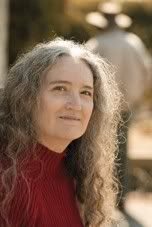
- Theresa Williams
- Northwest Ohio, United States
- "I was no better than dust, yet you cannot replace me. . . Take the soft dust in your hand--does it stir: does it sing? Has it lips and a heart? Does it open its eyes to the sun? Does it run, does it dream, does it burn with a secret, or tremble In terror of death? Or ache with tremendous decisions?. . ." --Conrad Aiken
Facebook Badge

Subscribe
Posts
All Comments
Fave Painting: Eden
Fave Painting: The Three Ages of Man and Death
by Albrecht Dürer
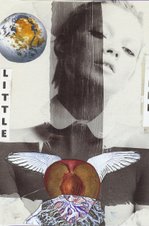
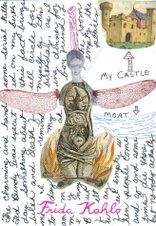
My Original Artwork: Triptych
Wishing
Little Deer
Transformation
Looking Forward, Looking Back