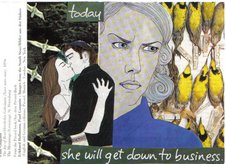
From a poem by Hy Sobiloff:
Speak to me child speak to me
You are learning
Yet you may teach me again the sweetness and the curdle
And tell me of the kid that is nursing under the sapodilla tree
And of the seashell I lost
And of those first scenes that I've forgotten
Speak to me of the innocence in the wading pond
That survives somewhere (I shall comment on the miracle)
Open your secrets to me
While I stare at your stare
Show me the buzzard ugly enough to die
The ground dove that has a hermitage
Tell me of the dogs that are better than cats
Cats cannot catch goats
Explain why that child is sitting by the road
Nodding and shaking and no-one there
I shall give you a biscuit
And let you eat it with dirty hands...
Promise me child before you disappear in hide-and-seek
That your next step will be the fiction of this world
That when you leave the broken wall
You will keep your lizard spontaneities...
-----------------------------------------
In 1963, the poet James Wright wrote an introduction to Hyman Sibiloff's poetry collection "Breathing of First Things." In this introduction, Wright seems to chide those who see the quest for the child within as naive or, worse (for Wright), unmanly. Wright says that the rediscovery of what he calls the true self, with its healing powers, necessarily involves a search for the child within, which he equates with the ability to experience wonder through the senses, the ability to see the miraculousness of things, to feel truly alive. In the introduction, Wright says:
"[...] the struggle to be true to one's own self involves a good deal more than the rediscovery of a childlike radiance and joy, though that rediscovery may lie at the end of the journey. The journey itself is a dark one. It is neither more nor less than the attempt to locate and reclaim those healing powers within one's self that are able to provide sufficient courage and literal physical strength for one to confront and overcome the agonies of the world which exists beyond the womb and which, for better or worse, does not happen to be shaped and arranged in a pattern identical with the orchards and rivers and meadows of that earliest garden, sunken now almost below the memory and, whether wasted or redeemed, lost somewhere between the morning of dancing animals and the tousled dusk of sorrowing human faces. Beyond that garden we live a good deal of our death. We may insist on returning to seek it by trying to ignore the shocks and miseries that obstruct the only true way back home; and such evasions really amount to a mere refusal to live. The refusal, the negation, the despair--these are our constant familiar spirits in the twentieth century."
---------------------------------------
Wright describes the journey back to self as a dark one; I think I agree with him. But there are moments of epiphany, of light. An example is found in Sobiloff's poem. The lines in Sobiloff's poem that speak to me the most are: "I shall give you a biscuit/
And let you eat it with dirty hands..."
The reason why those lines are meaningful to me is that I got an immediate image, upon reading them, of myself, very small, innocently eating a biscuit with my dirty hands. I remembered having eaten food with dirty hands, after just coming in from a hard day of play, good play, my hands scooping dirt and all my senses alive, picking up things, exploring them with my hands, feet, and mouth. There is such an honesty in the image of a child with dirty hands. Wright also points out that Rilke understood the power of returning to a child's wonder: "'Every door in me opens,' said Rilke, 'and my whole childhood stands all around me.'"
In one of Wright's own poems, "The Journey," in the final stanza, he writes:
...The secret
of this journey is to let the wind
Blow its dust all over your body,
To let it go on blowing, to step lightly, lightly
All the way through your ruins ...
Such a gorgeous, sensory moment.
I have more to say about this topic, but I need to let my thoughts compost a while longer.
Saturday, December 02, 2006
Tuesday, November 28, 2006
Quotes by Archibald MacLeish
Another poet I've been paying some attention to lately is Archibald MacLeish. Googling around, I found these quotes by him on Wikipedia. I like them:
"We are deluged with facts, but we have lost or are losing our human ability to feel them".
"What is more important in a library than anything else — is the fact that it exists".
"A man who lives, not by what he loves but what he hates, is a sick man".
"We are deluged with facts, but we have lost or are losing our human ability to feel them".
"What is more important in a library than anything else — is the fact that it exists".
"A man who lives, not by what he loves but what he hates, is a sick man".


Monday, November 27, 2006
Bars of My Own Body
 Photo: Randall Jarrell
-Oh, bars of my own body, open, open!
The world goes by my cage and never sees me.
--From: "The Woman at the Washington Zoo," by Randall Jarrell
(1960)
--------------------------------------------------
As a freshman in college, I read two poems by Randall Jarrell that I remember: "Death of the Ball Turret Gunner" and "The Woman at the Washington Zoo." I remember getting a great adrenaline rush upon reading about the gunner who hunched in the turret until his "wet fur froze." It is a harrowing poem about the death of a young man, unceremoniously washed out of the airplane's belly "with a hose." Back then, I didn't know poems could be written about such things.
I had almost no reaction at all to "The Woman at the Washington Zoo." I only remember reading it because our instructor, a young man with writing aspirations of his own, loved Randall Jarrell and spoke at some length about him.
Reading "The Woman at the Washington Zoo" this evening, the lines jumped out at me: "Oh, bars of my own body, open, open!" How is it I didn't notice this before, sitting in that classroom so many years ago, listening to that eager young instructor? I wonder.
Sunday, November 26, 2006
My Present Obsession with John Berryman
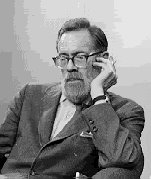 Photo: John Berryman
Well, I hate to see Thanksgiving vacation end. It has been a restful few days. There are actually just three weeks of classes left, including final exam week, so we are racing to the wire. And then another break, during which I need to apply for a couple of grants and do my preparation for next semester's classes.
John Berryman's life and work have been preoccupations of mine lately. I plan to discuss him in the seminar next semester. As I read about him, I find he is far more interesting to me than I expected he would be. Berryman was intelligent, a teacher and a scholar as well as a poet. He published essays on Shakespeare, which I plan to read over break. Looking at samples of them on Amazon, I saw that he brings a poet's sensibility to Shakespeare. I look forward to reading them. I also ordered a used copy of his letters to his mother (no longer in print). I've seen excerpts and they look fascinating.
Berryman articulated his ideas plainly about what writing meant to him, and it is clear to me that he equated writing with life itself, with his survival. That he did commit suicide in his 60's is regrettable, however not a contradiction, I think. Some people have said he "paid a price" for writing so close to the bone and soul of his existence; rather, I would say it was his writing that kept him alive for so many years (he had also attempted suicide very early in his life).
Berryman's wife, in her book Poets in Their Youth, explains: "It was the poetry that kept him alive... his certainty that there were all those poems still be be written." Always, Berryman was searching for a way to express his "unsayable centre."
Berryman, like John Gardner (author of Grendel), whom I've written about in my blog before because he was so smart and so wild and so authentic, and because taught me everything about writing when I was first beginning, believed that a writer was helped by a psychic wound, a tragic experience that has helped shape the writer's consciousness.
Berryman's psychic wound was the suicide of his father (Berryman found the body). Berryman was named after his father. His birth name was John Allyn Smith, Jr. After his father's suicide, Berryman's mother married her lover, John Allyn McAlpin Berryman and changed her son's name to Berryman. As a result of these experiences, John Berryman the poet would have a lifelong obsession with the idea of identity.
Berryman wrote essays, in addition to poetry, on many subjects, including Stephen Crane and even Anne Frank.
Berryman believed that "the mistress of [Crane's] mind was fear [of abandonment, uncertainty, death]." This statement is important because Berryman believed that writing is a ritual that helps to dispel fear of the unexplainable and the uncertain. He believed that the ritual of writing has power to objectify experience. Through writing poetry, Berryman was able to dispel his own fears and disappoinments.
He also believed that through the ritual of writing, Anne Frank was able to dispel her own fears and create not just a diary but a work of art. He thought that when certain pressures are exerted on writers, their work is elevated to a new, higher level. This is why Frank's diary is more than just adolescent ramblings. Berryman said in his essay "The Development of Anne Frank": "It took...a special pressure forcing [her] child-adult conversion, and exceptional self-awareness and exceptional candour and exceptional powers of expression, to bring that...change into view."
This observation goes along with what Louise DeSalvo says in her book, Writing as a Way of Healing. She says that certain pressures can create a sense of new clarity in our writing.
As Charles Thornbury says, Berryman believed the function of a poem is, in Berryman's own words, "to seize an object and make it visible."
Thornbury says, "The use of ritual--this act of making something visible and thus objectifying it--and what it does for the poet (and the reader) gradually became [Berryman's] fundamental principle."
Berryman also believed that poetry "aims ... at the reformation of the poet." He equates poetry to prayer in this fascinating passage:
"Poetry is a terminal activity, taking place out near the end of things, where the poet's soul addresses one other soul only, never mind when. And it aims--never mind either communication or expression--at the reformation of the poet, as prayer does. In grand cases--as in our century, yeats and Eliot--it enables the poet gradually, again and again, to become almost another man; but something of that sort happens, on a small scale, a freeing, with the creation of every real poem."
With all that said, I'd like to share one of my favorite Berryman poems. It is about, of all things, boredom. I have often wondered whether writing this poem helped to lift Berryman out of his boredom, whether writing this poem was "freeing." We can't know. But I love the poem because it shows me that even great writers like Berryman sometimes feel like hanging it all up and quitting.
John Berryman
Dream Song 14
Life, friends, is boring. We must not say so.
After all, the sky flashes, the great sea yearns,
we ourselves flash and yearn,
and moreover my mother told me as a boy
(repeatingly) "Ever to confess you're bored
means you have no
Inner Resources." I conclude now I have no
inner resources, because I am heavy bored.
Peoples bore me,
literature bores me, especially great literature,
Henry bores me, with his plights & gripes
as bad as Achilles,
who loves people and valiant art, which bores me.
And the tranquil hills, & gin, look like a drag
and somehow a dog
has taken itself & its tail considerably away
into the mountains or sea or sky, leaving
behind: me, wag.
Tuesday, November 21, 2006
Driving a Pack of Hounds
Most of my students have left for home already. I do have a 6:00 class which I must get to in just a moment--maybe there are one or two students left who need me. In between classes, I've been reading about the poet John Berryman, one of the "confessional" poets I plan to discuss in "From Angst to Art" next semester. In the Introduction to Berryman's collected poems, Charles Thornbury reveals that Berryman was a man of great intensity, even when he read. In a letter to his mother, Berryman describes reading Crime and Punishment:
How shall I tell you how I am reading it? As if I were driving a pack of hounds through a wood, feverishly; only every tree and bush is so unbearably interesting and exciting that I'd like to stop and examine it for a long time, but the hounds are off ahead and won't stop. ... My faculties are raging out in front of me. I haven't felt so powerfully in a long time. Even my unhappiness is acute, sharp, engaging.
Here, I think, Berryman does describe what it feels like to read a great book.
Subscribe to:
Posts (Atom)
Subscribe To


 Posts
All Comments
Dreaming
About Me
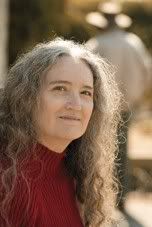
- Theresa Williams
- Northwest Ohio, United States
- "I was no better than dust, yet you cannot replace me. . . Take the soft dust in your hand--does it stir: does it sing? Has it lips and a heart? Does it open its eyes to the sun? Does it run, does it dream, does it burn with a secret, or tremble In terror of death? Or ache with tremendous decisions?. . ." --Conrad Aiken
Facebook Badge

Subscribe
Posts
All Comments
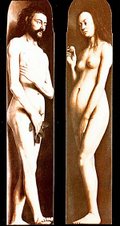
Fave Painting: Eden
Fave Painting: The Three Ages of Man and Death
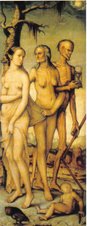
by Albrecht Dürer
My Original Artwork: Triptych
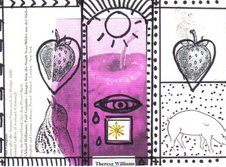
Wishing
Little Deer
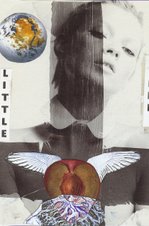
Transformation
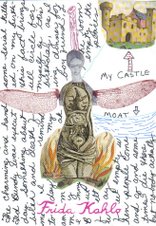
Looking Forward, Looking Back