Monday, January 15, 2007

"The Poet"

Photo: Delmore Schwartz

Gretchen mentioned Delmore Schwartz's "The Poet." I went back to read it, too, and I decided to post it.

The Poet

The riches of the poet are equal to his poetry
His power is his left hand
It is idle weak and precious
His poverty is his wealth, a wealth which may destroy him
like Midas Because it is that laziness which is a form of impatience
And this he may be destroyed by the gold of the light

which never was
On land or sea.
He may be drunken to death, draining the casks of excess
That extreme form of success.
He may suffer Narcissus' destiny
Unable to live except with the image which is infatuation
Love, blind, adoring, overflowing
Unable to respond to anything which does not bring love
quickly or immediately....

The poet must be innocent and ignorant
But he cannot be innocent since stupidity is not his strong
point
Therefore Cocteau said, "What would I not give
To have the poems of my youth withdrawn from
existence?I would give to Satan my immortal soul."
This metaphor is wrong, for it is his immortal soul which
he wished to redeem,
Lifting it and sifting it, free and white, from the actuality of
youth's banality, vulgarity,
pomp and affectation of his early
works of poetry.

So too in the same way a Famous American Poet
When fame at last had come to him sought out the fifty copies
of his first book of poems which had been privately printed
by himself at his own expense.
He succeeded in securing 48 of the 50 copies, burned them
And learned then how the last copies were extant,
As the law of the land required, stashed away in the national capital,
at the Library of Congress.
Therefore he went to Washington, therefore he took out the last two
copies
Placed them in his pocket, planned to depart
Only to be halted and apprehended. Since he was the author,
Since they were his books and his property he was reproached
But forgiven. But the two copies were taken away from him
Thus setting a national precedent.

For neither amnesty nor forgiveness is bestowed upon poets, poetry and poems,
For William James, the lovable genius of Harvard
spoke the terrifying truth: "Your friends may forget, God
may forgive you, But the brain cells record
your acts for the rest of eternity."
What a terrifying thing to say!
This is the endless doom, without remedy, of poetry.
This is also the joy everlasting of poetry.

Delmore Schwartz
1913-1966

Threshold

Walt Whitman
Gretchen, who so often contributes such thoughtful remarks at this blog, recently asked me to reply to her about what makes good poetry. She acted as the muse I needed to say something about that.

The best way to become a better poet is to read as much poetry as you can, to find the poets who really speak to you and read that, read lots of it, and live it as you read it. Teachers can help, but the thing is to find your voice.

I think this is why I love reading about poets whom I love, about their struggles to break away from the marble icons in order to find what it is they want to say, and how to say it. It is a journey that has joy but it also hurts. It is very intense. Each poet has that poem that represents a turn about: with Wright, I think, it is when he ended his poem by saying, "I have wasted my life." This is also what Berryman is saying when he admits he wanted to "be Yeats." Until you break through to your real self, you will never write the poetry you are meant to write.

You feel it when it happens, when you express something with great clarity and beauty (even if it is a terrible subject), and control.

Beyond that, I think we all have to work at finding the right metaphors, not to strain after the metaphors, but to find the ones that feel natural, the ones that sing. I have been reading Ask the Dust by John Fante, and his work is so simple, and the metaphors are so perfect that reading his story is effortless and at the same time exhilarating. Again, find the authors who take you to your threshold. In Poetry As Survival, Gregory Orr devotes a chapter to "The Edge as Threshold." He uses "threshold" as in psychology, to mean "the point where a stimulus is of sufficient intensity to produce an effect."


Orr says something that I have believed for a long time, that "arguments about taste, about whether a particular poem is 'great' or not, simply have to do with differences in readers' thresholds." I'm reminded of a story that Eileen Simpson tells about John Berryman and Delmore Schwartz. Once Schwartz was at the Berrymans' house and John played a record he was really hot for Delmore to hear, one by Bessie Smith. John was excessively moved by it and wanted to share it with Delmore. But as the record played, Delmore got out of his chair and moved around the room restlessly. The record just didn't bring Delmore Schwartz to his threshold; it had nothing to do with whether Bessie Smith was "great" or not. As Orr states, "The essential point is that for a poem to move us it must bring us near our own threshold."

Orr also mentions Whitman (a poet who did little for me when I was in my twenties, but now I hang on his every word). Orr says that Whitman intended for people to not just go to the threshold but "to venture further out than they were accustomed to going and thereby to stretch themselves and extend their spirits." Orr quotes from Whitman:

Long have you timidly waded holding a plank by the shore
Now I will you to be a bold swimmer,
To jump off in the midst of the sea, rise again, nod to me, shout, and
laughingly dash with your hair.
(Song of Myself)

Finally, Orr explains quite clearly what the effect of being brought to your threshold means: "That effect is both a sudden awareness of the disorder (the initiating moment of feeling destabilized) and the imagination's ordering response to it." He also says, "We must feel genuinely threatened or destabilized by the poem's vision of disordering, even as we are simultaneously reassured and convinced by its orderings."

Going back to the Whitman poem (next to which I marked "Wow" in Orr's text), I can clearly see why these words move me. It is because I am afraid of water and have a memory of taking swimming lessons and being told to let go of the ledge. I remember how scared I was, how I kept reaching for the ledge. I know I also do this in life; I am always looking for a ledge to steady me so that I'm not lost in the abyss. But I also know the joy of water. There have been moments when I've pushed off the side of the pool and gloried in the freedom of water, when I've been that "bold swimmer." That poem really hits me where I live every day.

Sunday, January 14, 2007

First Week

The Imaginative Writing class for Honors students really surprised me. It meets twice a week in the evening, 7:30-8:45. There are 15 students, all very young, in their teens or early twenties, except for man in his sixties who added the class on Wednesday as part of our SAGE program.

Monday was your run-of-the-mill first day; Wednesday was magic.

I hardly ever create a day by day syllabus for this class. I prefer to adjust the activities to the temperament and need of whatever group of students I have. So I thought and thought about what to do on Wednesday, finally coming up with what I thought was a decent idea late Tuesday night.

As with all creative exercises, I knew it would go one of two ways, flopsville or down the road of success. It was a success.

I started the class by showing that scene in Wonder Boys when Grady, James, and the literary agent play a story game. They pick out an unusual-looking person in a bar and create a story about that person. It's a really funny and entertaining scene. It doesn't hurt that I love all three of the actors, Michael Douglas, Tobey MaGuire, and Robert Downey, jr. I figured the students would enjoy seeing Tobey MaGuire in a non-Spiderman role. As it happens, none of the students had ever seen Wonder Boys.

So then I divided the class into two groups. One group came to the front of the class and pretended they were riding a bus. I asked each person to bring a prop, like a cell phone, backpack, book, etc. Then I asked, "What's their story?" The people in their seats wrote; then the groups traded places.

The real kicker was that I took my great creepy Santa and asked one student to hold it. For the other group, I asked a student to hold two potatoes, one in each hand.

After both groups had a chance to write, I played the music video on the Wonder Boys DVD, "Things Have Changed." I then let them write for 10 minutes and asked them to start their story with the line: "I used to care, but things have changed." I said they must repeat that line three times.

Then I asked each person to share something they had written. By this time, there were only about ten minutes left in the class. I was astounded at the level of creativity in this class! As you can imagine, there was a great scenario about the Santa, and several great scenarios about the two potatoes. There were also some fantastic riffs about the "I used to care..." topic.

They loved reading and listening to each other's ideas, at times laughing, at times declaring, "That was awesome!" After class, they huddled into groups and continued the conversation. As I walked across the dark courtyard to my office, one of the students called out, "Wait! I'll walk with ya!"

On the way there, my dog Buddha streaked past us, chasing a toy Allen had thrown. My family was waiting for me and I'd just had a marvelous class. Life doesn't get much better than that!

Later that night, I had an e-mail from one of the students, saying he was incredibly excited about the class. He said he kicked his roommate off the computer as soon as he got to his dorm and continued writing what he'd started in class. He said he still was randomly laughing at things that had been written and said that night.

Now, if I can just keep the momentum going!

Things are coming together more slowly in the seminar. We haven't gotten very far yet in the Native American literature class, although several students have shown a special interest in the topic. Finally, the developmental writing class is small, only 9 students, and quiet, except for a 44 year old woman coming back to school for the first time this semester. She is on the ball; she really wants it all; she is my delight.

Sunday, January 07, 2007

The Day Before the New Semester Begins


Photo: Portrait of John Berryman on dust cover of Modern Critical Views. In the background, Mistress Bradstreet.


The Spring Semester starts tomorrow. I've taught now going on 22 years if you count the time I taught as a graduate assistant at East Carolina University and graduate fellow at BGSU. I still start each semester with a sense of optimism mixed with apprehension. Next semester will bring with it new challenges and opportunities.


Today marks a strange anniversary: On this day in 1972, John Berryman committed suicide by walking off a bridge spanning the Mississippi River. I spent much of Winter Break reading about Berryman. One of the greatest books I read was Poets in Their Youth by Eileen Simpson. Simpson was Berryman's first wife. She writes of Berryman, her life with him, and other writers of that generation with such perception and grace, notwithstanding the personal pain she must have gone through as the wife of a flawed and driven man. She doesn't dwell on herself; instead, she paints a vivid picture of John Berryman, Robert Lowell, Jean Stafford, Delmore Schwartz, and Randall Jarrell, among others.

Eileen Simpson studied psychology during the last years of her marriage with Berryman and later became a psychologist. Her observations are always compassionate and thoughtful. One of the saddest things she talked about was Delmore Schwartz's death, how the once-handsome and awesome poet died in agony in a flea bag motel clutching his heart for hours before he was finally taken to a hospital, where he died. His body wasn't claimed for two days. Schwartz, like Berryman, Lowell, Stafford, and Jarrell, had some form of mental illness, such as depression or bi-polar disorder. Their agony survives in their work.

Literary critics have speculated that Berryman's writing took him to places that were too dark for him to survive. In contrast to these critics, Simpson, at the end of her book, says that it was writing that kept her husband alive for so long.

I dwell here on Berryman so long because he will play a prominent role in the seminar I'm teaching, FROM ANGST TO ART. We are going to be studying how various artists took the raw and bitter material from their lives and spun it into art. Berryman's generation had a particularly difficult time because they wrote in the shadow of the Moderns, such as Ezra Pound and T. S. Eliot. It was quite a struggle for them to break with these marble statues and to write intensely personal poetry.

Eileen Simpson's description of Berryman working on his poem about Mistress Bradstreet is both harrowing and inspirational. In that poem, Berryman finally broke away from the Moderns and it was truly like a new birth for him:

Monster you are killing me Be sure
I'll have you later Women do endure
I can can no longer
and it passes the wretched trap whelming and I am me
drencht & powerful, I did it with my body!


I ended up cutting a lot out of the seminar. I always start out much too optimistic about what can be achieved in 16-weeks! But Berryman I could not cut; in fact, I ended up getting more interested in him than I should have: I should have been working harder on my James Wright project which I hope to present to the class!

All right, tomorrow it all starts again. Here I go!

Tuesday, January 02, 2007

Throwing off routine


Top photo: Ohio River at Martins Ferry
Bottom photo: Broken shaft from the John Porter: monument to yellow fever victims at Gallipolis.

Allen and I felt we had gotten into a rut lately. So when several favorable situations converged, making travel possible over New Year's, we took a two day road trip along the Ohio River. We went to Wheeling, West Virgina and spent the night; then to Martins Ferry, OH, Parkersburg, West Virginia, Pomeroy, OH and Gallipolis, OH.

My main goal was to get some video footage of the river for a film I want to make about James Wright for my seminar next semester. That's why we started in Wheeling and Martins Ferry--that's where Wright grew up. Admittedly, I am in the rudimentary stages in my film-making abilities, but film as a vehicle for story-telling excites me just now.

The weather was unseasonably warm, cloudy and still the first day at Martins Ferry. We stood at the same spot at which we landed back in 2004 with our boat during our Ohio River journey. Just off to the right, there, is a stand of willows--that is where we spent the night in our boat back then.

Afterwards, we drove to Pomeroy and Gallipolis because we had such fond memories of both places. It was colder on the second day, and windy. The river was choppy. The second photo is a partial depiction of an unusual monument in Gallipolis to yellow fever victims. That is a broken rocker shaft from the John Porter from New Orleans. The broken shaft kept the boat from proceeding further than Gallipolis. Passengers aboard the John Porter carried Yellow Fever, which spread among the people at Gallipolis, killing 66 in 1878.

I like the monument. I remembered it after returning from the river journey, but I had no photo of it. I was happy to be able to get a photo this time. As much as being a monument to the 66 who died, this is a monument to chance. The shaft is an agent of chance. Had it never broken, history would have been different. Looking at the shaft, I'm invited to wonder at what small object might play a role in my own destiny. The shaft reminds me that I can't control every situation in my life.

We spent New Year's Eve in a motel at Parkersburg. I think this is the first time in my life I've ever spent New Year's Eve in a motel room. Maybe a motel room is the perfect symbol for where I am in my life just now. Motel rooms are at once public and private spaces. In many ways, art is the same. It comes from an intimate space, yet it occupies a public space. Somehow the artist has to reconcile these two extremes. I lay awake all night thinking of all sorts of creative projects I'd like to do. This short trip was very good for the imagination.

It's good to get away from the familiar haunts of your life now and then. The imagination thrives when you can throw off your routines and expectations.

In other words, I had fun.

Dreaming

Dreaming

About Me

My photo
Northwest Ohio, United States
"I was no better than dust, yet you cannot replace me. . . Take the soft dust in your hand--does it stir: does it sing? Has it lips and a heart? Does it open its eyes to the sun? Does it run, does it dream, does it burn with a secret, or tremble In terror of death? Or ache with tremendous decisions?. . ." --Conrad Aiken

Followers

Search This Blog

Epistle, by Archibald MacLeish

What I'm Listening To

My Music

Great Artists

www.flickr.com
This is a Flickr badge showing public photos from theresarrt7. Make your own badge here.

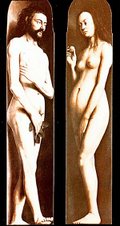
Fave Painting: Eden

Fave Painting:  Eden

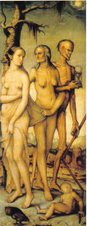
Fave Painting: The Three Ages of Man and Death

Fave Painting:  The Three Ages of Man and Death
by Albrecht Dürer

From the First Chapter

The Secret of Hurricanes : That article in the Waterville Scout said it was Shake- spearean, all that fatalism that guides the Kennedys' lives. The likelihood of untimely death. Recently, another one died in his prime, John-John in an airplane. Not long before that, Bobby's boy. While playing football at high speeds on snow skis. Those Kennedys take some crazy chances. I prefer my own easy ways. Which isn't to say my life hasn't been Shake-spearean. By the time I was sixteen, my life was like the darkened stage at the end of Hamlet or Macbeth. All littered with corpses and treachery.

My Original Artwork: Triptych

My Original Artwork:  Triptych

Wishing

Wishing

Little Deer

Little Deer

Transformation

Transformation

Looking Forward, Looking Back

Looking Forward, Looking Back
CURRENT MOON
Powered By Blogger

Labels